Monthly Archives: December 2022

Steinway Hall New York: A Tour Through History
Steinway Hall New York: A Tour Through History

Estimated reading time: 5 minutes

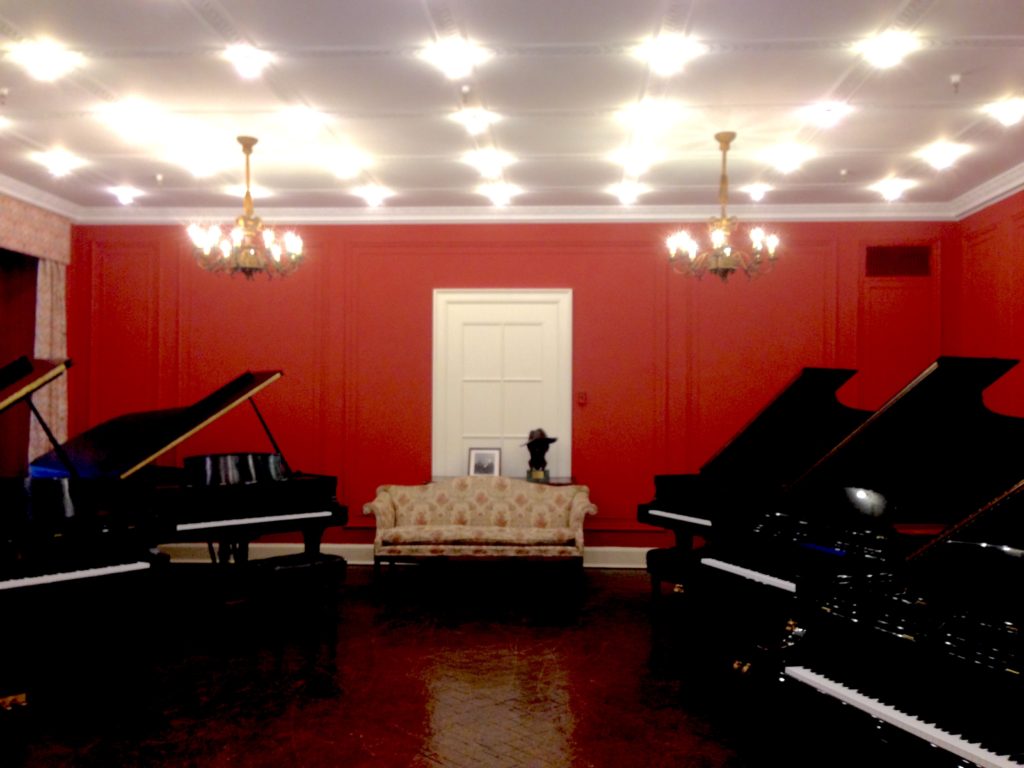
In the heart of Manhattan’s Midtown lies Steinway Hall, home to the world’s most coveted pianos. For over a century, Steinway has symbolized both musical excellence and New York’s cultural elite. Once a Rococo-style salon near Carnegie Hall, Steinway Hall has transformed into a modern architectural gem. Let’s take a look at the old Steinway Hall and its present-day piano salon in New York.

Where Is Steinway Hall Today?

The current Steinway Hall is located at:
1133 Avenue of the Americas, New York, NY 10036

Interestingly, this building once housed the International Center of Photography (ICP Museum). When I first moved to New York, I remember seeing photo books by the Japanese photographer Nobuyoshi Araki displayed in the windows. Today, those same windows reveal gleaming black Steinway grand pianos under bright lights.

In 2016, Steinway Hall relocated here after its legendary 57th Street salon closed due to a lease expiration. That move was bittersweet, as generations of musicians had cherished the old space. The historic building has since been converted into condominiums.
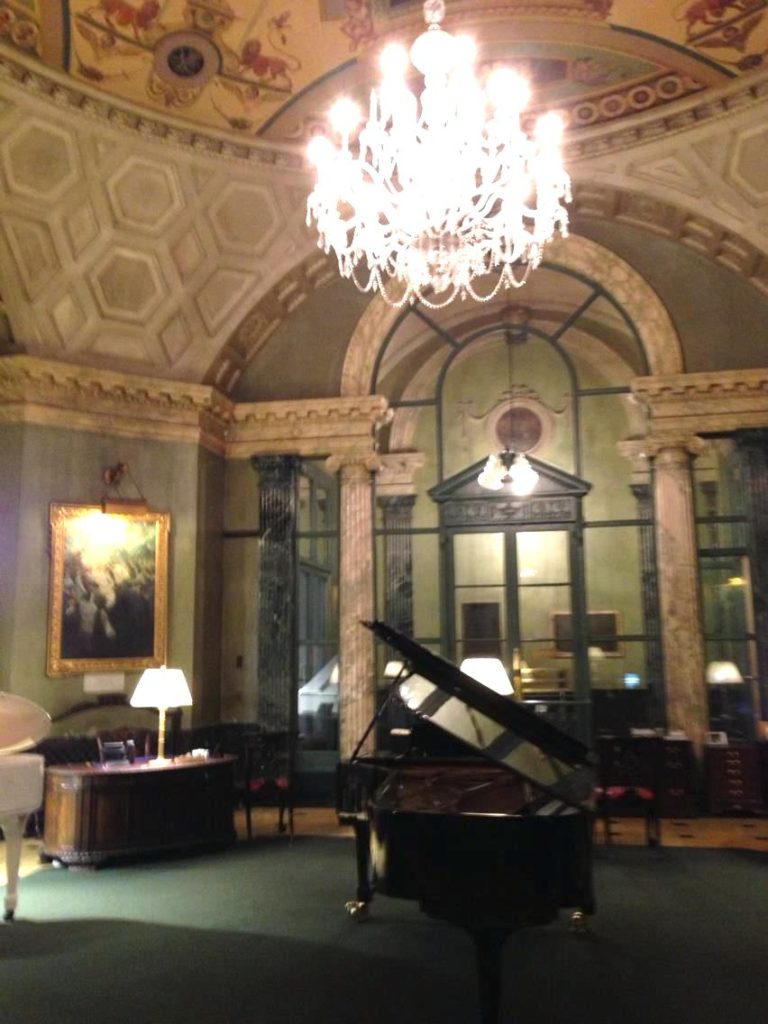
Alt="A picture of the old Steinway hall"

The Old Steinway Hall (1925–2014, 57th Street)

The former Steinway Hall on West 57th Street was a stunning Rococo-inspired interior. Its chandeliers and ornate details reflected European luxury and the grandeur of the Romantic music era.

This was not just a showroom—it was a cultural salon where pianists like Arthur Rubinstein and Vladimir Horowitz frequently performed. Even my own piano professor held his doctoral recital there.
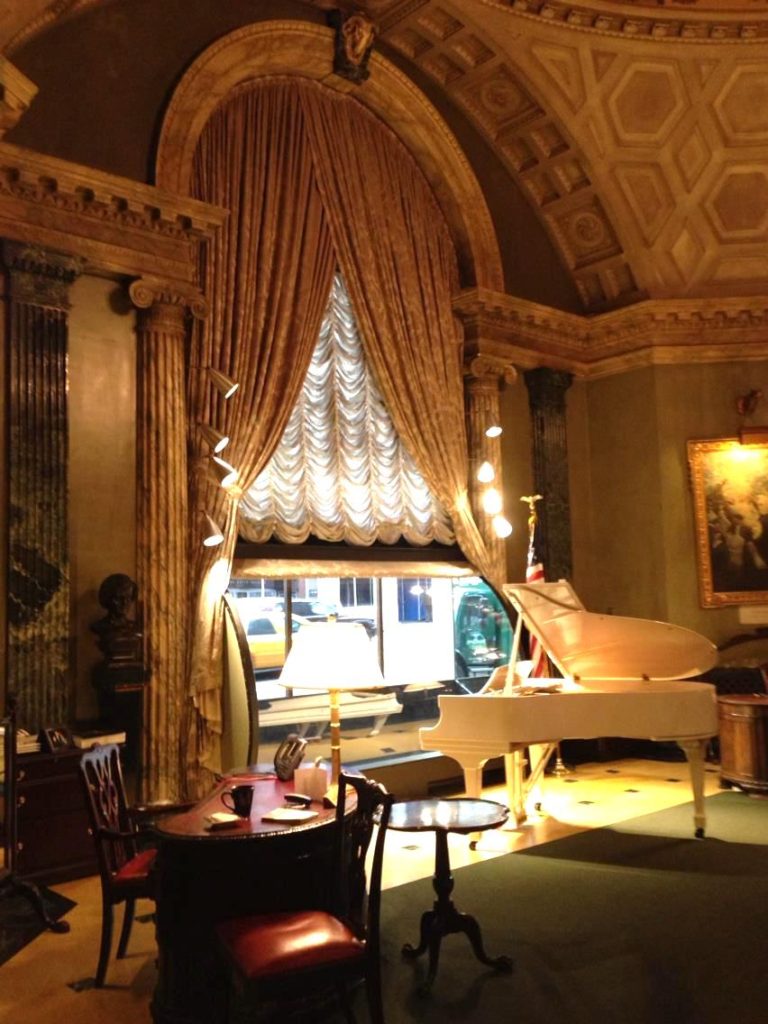
Alt="The old Steinway Hall with a beautiful white grand piano by the window"

One highlight was the Rubinstein Room, with salmon-pink walls influenced by German design. Inside, visitors could play the pianos, admire Rubinstein’s portrait, and even see a bronze cast of his hands. The atmosphere evoked both pre-war Europe and post-war New York, a mix of glamour and history.
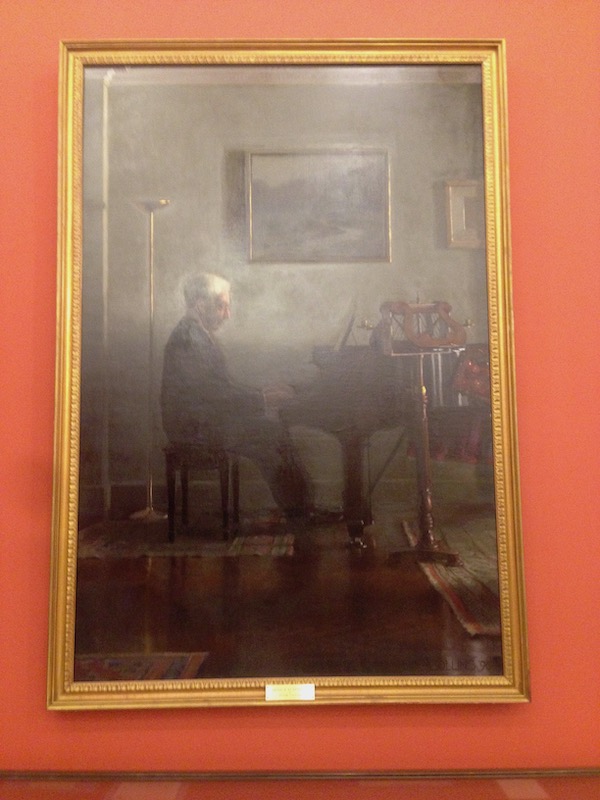
alt="A picture of Rubinstein room in salmon red"
alt="A panting of Arthur Rubinstein's portrait"

The Modern Steinway Hall (Since 2016, Midtown)

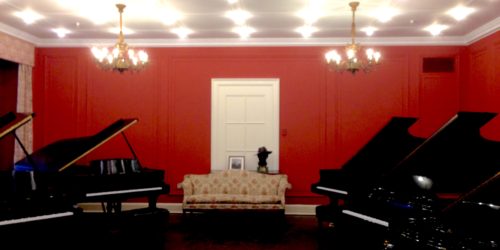
Step into today’s Steinway Hall, and you’ll find a completely different atmosphere. The chandeliers are gone, replaced by sleek minimalism.

  • Reflective black pianos line the glass walls.
  • The ceiling curves echo the shape of grand pianos.
  • The design reflects minimalist music, reminiscent of American composers like Steve Reich and Philip Glass.

Where Rubinstein and Horowitz once dominated, today you’ll find Steinway Artists such as Lang Lang and YuJa Wang featured in displays and promotional material.

A Hidden Lighting Masterpiece

One of the most breathtaking features of the new Steinway Hall is its lighting installation, inspired by Bach’s Goldberg Variations. Each hanging light represents one of the 30 variations, resembling a cascade of origami cranes.
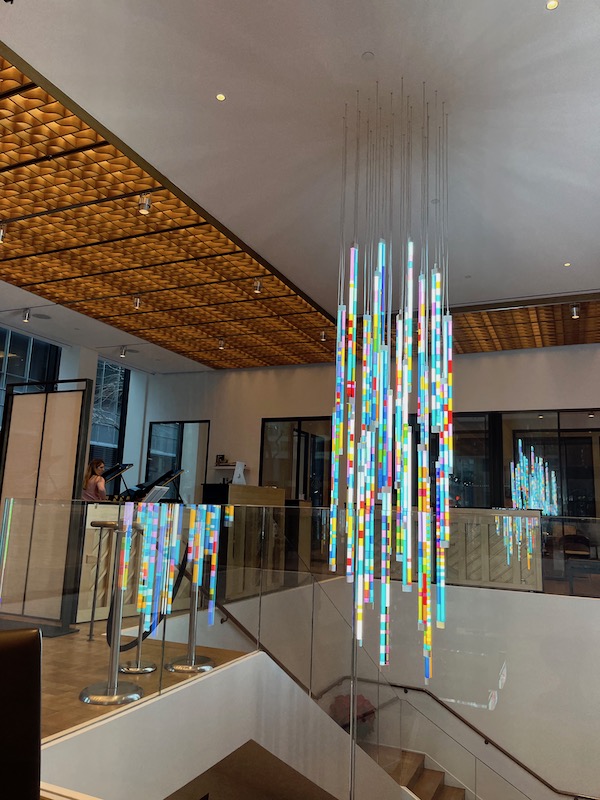
alt="new Steinway Hall's lighting installation, inspired by Bach’s Goldberg Variations"

This design is only visible if you walk to the back of the showroom, making it a delightful surprise for visitors. Architecture lovers will find this as inspiring as the pianos themselves.

Why Steinway Remains a Symbol of New York

From its Rococo origins to its sleek modern incarnation, Steinway Hall has always been more than a piano showroom. It is a space where history, music, and architecture meet.

Whether you admire its past grandeur or today’s minimalist elegance, Steinway Hall continues to represent the pinnacle of piano craftsmanship and cultural prestige in New York City.
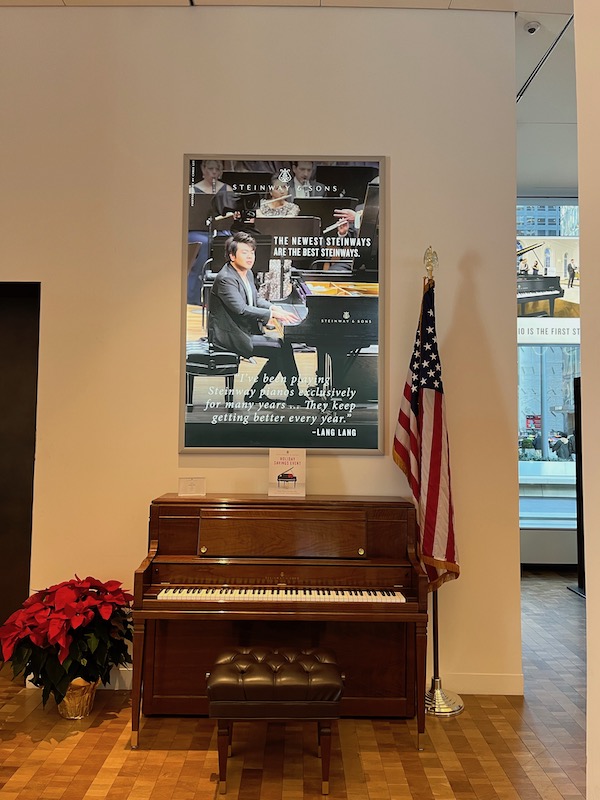
alt="the pianist Lang Lang's poster above a brown upright Steinway piano and American Flag on the side"

Conclusion

The history of Steinway Hall is deeply intertwined with Manhattan itself. From 14th Street in the 19th century, to 57th Street’s legendary salon, and now Midtown’s glass-walled modern hall, Steinway has reinvented itself while staying true to its legacy of excellence.

For musicians, music lovers, and architecture enthusiasts alike, Steinway Hall remains a must-visit destination in New York City.

Return to Home

Patagonia recycle or fix

Repair Your Patagonia Down Jacket in New York and Wear It Longer

Repair Your Patagonia Down Jacket in New York and Wear It Longer

Patagonia recycle or fix

Estimated reading time: 4 minutes

Patagonia is known for being durable, lightweight, and stylish, making it popular not only among outdoor enthusiasts but also city dwellers in winter. In this article, I’ll share how you can repair your Patagonia down jacket in New York and why this practice aligns with Patagonia’s philosophy of sustainability.

A Brand with Purpose: Yvon Chouinard’s Vision

Patagonia’s founder and philanthropist, Yvon Chouinard, transferred ownership of the company to a nonprofit group called The Holdfast Collective. This means Patagonia can no longer be publicly traded or inherited by his children. Instead, all profits (after operating costs) are directed toward protecting nature.

Chouinard lives a modest life—he drives a Subaru, wears old clothes, and dislikes being listed as a billionaire. A passionate climber and environmentalist, he has always pushed for a business model that protects the planet.

As he once said in The New York Times:

“I was in Forbes magazine listed as a billionaire, which really, really pissed me off. I don’t have $1 billion in the bank. I don’t drive Lexuses.”

How Much Does Patagonia Repair Cost?

Surprisingly, repairs are free—you only cover shipping.

  • Sending fee: You pay for shipping to Patagonia (usually under $10).
  • Return fee: A flat $5 charge.

This is far cheaper than having your jacket fixed at a local tailor.

How Long Does a Repair Take?

Patagonia’s repair service is thorough, but patience is required.

  • My husband’s jacket took 3 months to return.
  • In some cases, it can take up to a year.

If you’re planning to repair your jacket, don’t expect it back right away—prepare a backup for the winter season.

What Does the Repair Look Like?

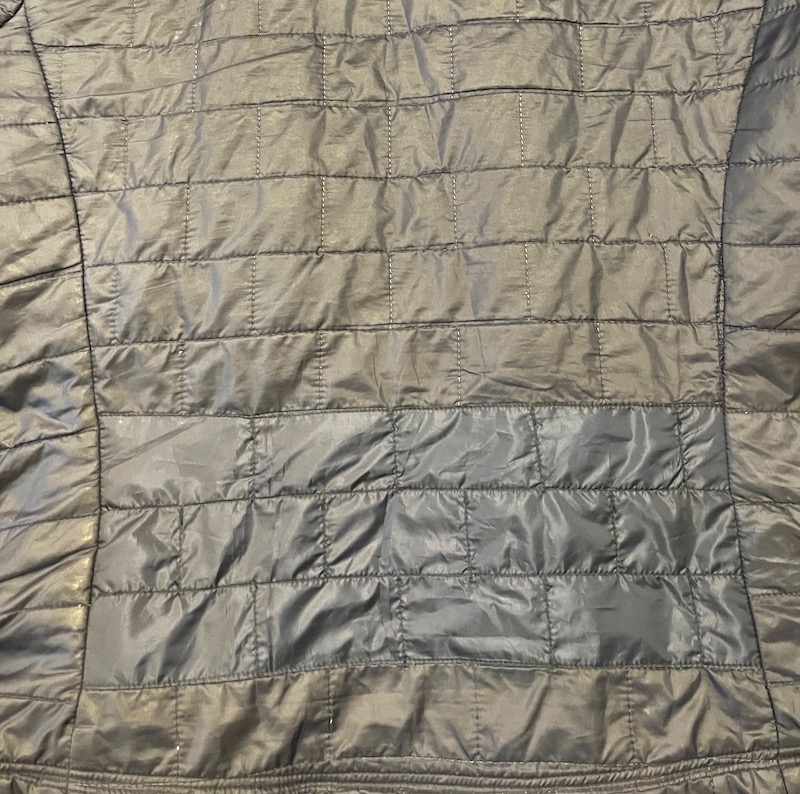
Alt=" A picture of a part of outfit after the repair"

When we received the jacket back, we noticed the repaired fabric was slightly different in color under certain light. Since it was an older model, Patagonia used newer material for the patch. But it looks ok.

To us, this wasn’t a problem. In fact, it tells a story: we care about our belongings and about the planet. Still, some people who value a “perfect” finish might find it noticeable.

Repair as a Fashion Trend

Alt="Patagonia sent me a Thank you card"
Thank you card

We live in a time when repairing and reusing clothes is becoming a fashion statement. As awareness of climate change grows, more people are moving away from fast fashion and embracing sustainable choices.

Patagonia even includes a “Thank You” card with their repairs, encouraging customers to continue supporting a culture of long-lasting clothing.

Moving Beyond Fast Fashion

The era of buying cheap clothes and throwing them away after a short time should be behind us. Fast fashion companies often overproduce, sell at massive discounts, and landfill unsold inventory.

Patagonia stands against this model by promoting long-term use and repair. Their philosophy proves that caring for clothes can also mean caring for the environment.

Conclusion

Repairing your Patagonia down jacket is not only cost-effective but also a way to participate in a sustainable lifestyle. If Yvon Chouinard had opened Patagonia to the stock market, this philosophy of “wear longer, waste less” might not have survived.

By choosing repair over replacement, we support a new kind of capitalism—one that values people and the planet over profit.

Return to Home

piano adventure slow?

Is Piano Adventures Too Slow? A Look at This Popular American Piano Method

Is Piano Adventures Too Slow? A Look at This Popular American Piano Method

piano adventure

Estimated reading time: 4 minutes

The American piano method “Piano Adventures” is sometimes criticized for being “too slow.” Some piano teachers even feel that progress takes longer compared to other books. But is that really true? And why are we in such a hurry?

In this article, I’ll explain why Piano Adventures is an excellent method book—especially for building strong music theory foundations.

Is Piano Adventures Really Too Slow?

Personally, I don’t think Piano Adventures is slow. In fact, I ask—why rush?

I think – especially in Japan where I am from, many children can technically play the piano well but lack a solid understanding of music theory. As a result, their performances often sound less purposeful of what they are playing. Piano Adventures focuses on developing both technical skill and theoretical knowledge, which ultimately produces more well-rounded piano players.

Can Students Move Faster with Piano Adventures?

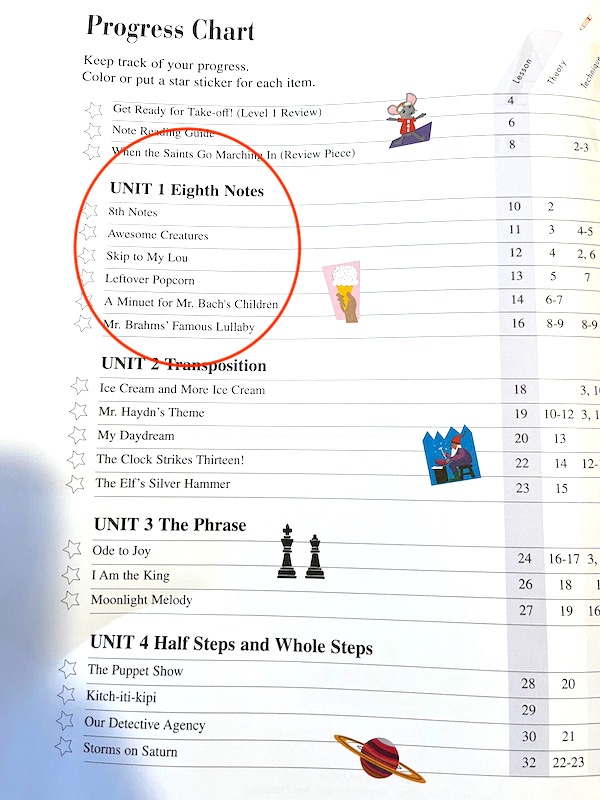
Alt="piano adventure's unit page"

Yes, the pace can be adjusted. If a child enjoys practicing, teachers can assign homework by unit instead of one page at a time. Or, it is absolutely fine to skip some pages.

For example, two of my students currently use Piano Adventures:

  • One prefers to move step by step, taking time with each piece.
  • The other progresses unit by unit and has become a much faster sight-reader.

Both approaches work—the key is that slow students build strong foundations while faster students improve fluency and reading skills.

Why Piano Adventures Is Excellent for Music Theory

One of the strongest points of Piano Adventures is its early introduction of music theory.

  • Concepts like I–V chord progressions appear as early as Book 1.
  • These theoretical elements are essential for memorizing music and understanding structure.
  • Children are introduced to concepts often taught at the conservatory level—but in a fun and accessible way with illustrations.

Skipping this foundation for the sake of speed is a mistake. Music theory helps children not only play but also understand, interpret, and memorize music effectively.

Piano Adventures: Gradual but Powerful Theory Progression

As students move through the series, the theory becomes progressively more advanced. This matters especially when it comes to memorization.

Playing a piece repeatedly until the body remembers it has limits. For complex works, students need to understand structure. Music theory acts like a map for memory—instead of relying only on repetition, they learn to rely on understanding.

Is Piano Adventures Slow or Fast? It Depends on Practice

The pace of Piano Adventures really depends on the student:

  • Some finish Book 1 in just six months.
  • Others progress more slowly but gain solid grounding in rhythm, harmony, and expression.

Many children enjoy the method because it includes a variety of styles—jazz, rock, classical, and folk tunes—which keeps learning exciting.

Should You Avoid Piano Adventures Because It’s “Slow”?

Absolutely not. Even though all beginner method books start with the basics (C–D–E–F–G), Piano Adventures stands out for its balanced approach:

  • Fun repertoire
  • Gradual progression
  • Strong music theory foundation

It’s one of the best resources for nurturing children’s musical growth at their own pace.

Final Thoughts

So, is Piano Adventures too slow? My answer is no. Progress depends on the student’s practice habits, not just the method itself. What matters most is building a solid foundation in theory and technique.

Children often experience sudden breakthroughs—so don’t rush. With patience, Piano Adventures can help them grow into expressive, confident pianists.

Return to Home

urgent care needed sick woman

Urgent Care and Insurance: What You Should Know About Rapid Tests

Urgent Care and Insurance: What You Should Know About Rapid Tests

urgent care needed sick woman

Visiting urgent care centers in the U.S. can sometimes lead to unexpected bills—especially when you have sudden injury or sickness. Recently, I experienced diagnosed with COVID, I went to a nearby urgent care for a rapid test, only to discover that my insurance didn’t fully cover the visit because it was out of network.

What Happens During a Rapid Test at Urgent Care?

At urgent care, the rapid test process was simple and quick. I wasn’t seen by a doctor, but instead by a nurse. The steps were:

  • Measuring blood oxygen levels
  • Performing a nasal swab test
  • Leaving within about 10 minutes

Later, I received the results by email within a few hours. The process itself was smooth—but the cost was not.

The Insurance Surprise: Out of Network Charges

A few days later, I logged into my insurance account and noticed a pending charge from the urgent care. Unfortunately, that urgent care center was out of network for my insurance.

The bill? $300 per person for a rapid test. Since both my husband and I got tested, the total came to $600. Even with partial coverage, we still had to pay $223 each. And this wasn’t even for a PCR test—it was just the rapid version.

Is Urgent Care Expensive?

Alt="the price of urgent care and the amount billed $300 and after insurance paid $223.49 charged"

Urgent care clinics like CityMD or ClearMD are convenient when you’re sick, but they aren’t always cheap. Before visiting, it’s important to:

  • Check if the urgent care is in-network for your insurance
  • Ask about expected costs for tests or visits
  • Compare urgent care providers in your area

With so many urgent care companies opening, prices and insurance coverage vary widely.

Urgent Care vs. Emergency Room Costs

Although urgent care isn’t cheap, it’s still far more affordable than calling an ambulance or going to the emergency room. For non-life-threatening issues, urgent care is the smarter choice. But you should always verify insurance coverage beforehand otherwise you will be in trouble.

Final Thoughts: Be Careful with Rapid Test Costs

In my case, urgent care ended up being much more expensive than I expected. The takeaway?Always check whether your urgent care is covered by insurance before you go. Avoid COVID infection if possible.

Keep a reliable home test kit available to reduce unnecessary urgent care visits.

Return to Home