Still Getting Artist Visa in the USA: Essential Guide

Still Getting Artist Visa in the USA: Essential Guide

artist visa image

Estimated reading time: 3 minutes

Many artists have been worried that the O-1 Artist Visa has become harder to obtain under the current U.S. administration. However, there’s encouraging news—musicians are still getting approved. Recently, two of my friends received their approval letters from USCIS in September and October 2025.

After watching their journey closely, I’ve noticed several key factors that helped them succeed, even when others gave up or were rejected. Here are three important points that may increase your chances of approval.

1.They Released Their Music and Got Radio Exposure

Having your own music isn’t enough—you need to be recognized by the media. In the U.S., traditional media like radio, TV, and film still hold great influence. If your music is played on a local or national radio station, it can significantly strengthen your O-1 visa case. It shows that your work is appreciated by the public and has reached American audiences.

Even podcast appearances or interviews can be a plus, but radio airplay is particularly powerful because it connects your artistry with the long-standing American music culture.

2. They Collaborate with American Musicians

One common factor among approved applicants is collaboration with U.S. artists. It demonstrates that you are actively involved in the American music industry—not just performing within your own community.

Both of my friends who got approved perform with American musicians. One plays jazz and the other rock, but both are deeply engaged in their respective U.S. music scenes. This helps show that they are contributing to American culture, which is exactly what USCIS looks for.

3. They Have Strong Backgrounds and Consistent Activity

Both successful applicants have held their Artist Visas for more than five years, proving long-term activity in the U.S. However, even with experience, USCIS can still deny renewal if the artist isn’t active enough.

One of my Japanese friends, unfortunately, lost their status because she didn’t perform regularly. Consistency is key—keep building your portfolio with shows, collaborations, and media exposure.

Final Thoughts

While it may still be challenging for new applicants, it’s not impossible to get the O-1 Artist Visa approved in 2025. The key is to show that you are actively contributing to the U.S. art scene through media recognition, American collaborations, and a strong professional record.

If you’re planning to apply, keep creating, performing, and sharing your work publicly. The effort you put in today might be the reason your next visa gets approved. I wish every artist the best of luck on your journey!

Back to Home

2025:Obtaining and Extending an Artist Visa Under the Trump Administration

Obtaining and Extending an Artist Visa Under the Trump Administration

For Those Considering Applying for or Renewing an Artist Visa

Hello! This is Maegami from the blog The Goddess’s Bangs. As we step into 2025, many of you may be feeling uncertain about applying for or renewing an artist visa. With former President Trump’s re-election, it’s natural to wonder how immigration policies may change.

In this article, I will explain in detail how to obtain and extend an artist visa (O-1 visa) under the Trump administration. I’ll also share my personal experience of successfully extending my visa in 2017 during Trump’s previous term.

Impact on Visa Applications Under a Republican Administration

Under the Biden administration, immigration policies were relatively relaxed, resulting in an increase in the number of green cards issued. Many of my friends, including myself, were able to obtain permanent residency during this period.

However, with Trump 2.0 in 2025, immigration policies are expected to become stricter. For example, restrictions on H-1B and other work visas may be tightened. That said, obtaining an artist visa (O-1 visa) remains entirely possible, just as it was during Trump’s previous term.

In fact, I know musicians and artists who successfully obtained O-1 visas and traveled to the U.S. in 2025. So, there’s no need to worry excessively.

Artist Visas are Still Obtainable in 2025

You might be concerned that visas will be harder to get under Trump. However, the criteria for artist visas haven’t changed drastically. With well-prepared documentation, visa acquisition and renewal are achievable. Even during the Biden administration, some artist visa applications were denied.

What changes the most?

  • Tougher Interviews: Interviews may become more rigorous, as was my experience during the previous Trump administration.
  • Increase in RFEs (Request for Evidence): Additional documentation requests may become more common.
  • Higher Fees: As of 2025, the application fee exceeds $1,000.

Regardless of the administration, proper documentation and preparation are the keys to success.

👉 Check out my article on Visa Interview Tips

My Experience Extending an Artist Visa Under the Trump Administration in 2017

In 2017, I successfully extended my artist visa (O-1 visa) for three years under the Trump administration. During this process, I received two RFEs. By responding appropriately to their questions, I was granted the extension.

Tips for Handling RFEs:

  • Provide detailed comparisons of your past and current activities.
  • Strengthen your application with additional awards, media coverage, and recommendation letters.
  • Enhance the quality of recommendation letters with specific achievements rather than using a generic format.

Interestingly, I suspect my application was reviewed by the same immigration officer as before, indicating a consistent evaluation process.

Major Changes for Artist Visas Under the Trump Administration

  • Increased Fees: The application fee has surged over the years.
    • Initial application (Past): Approx. $360
    • Around 2020: $680
    • 2025: Over $1,000
  • Premium Processing: Expedited processing is available for an additional fee.
  • Longer Processing Times: The standard processing time may extend beyond 6-8 months.
  • Stricter Interviews: Expect detailed questions about your achievements and contributions to the U.S. art scene.

Tips for Successfully Applying or Renewing an Artist Visa in 202

  • Prepare Comprehensive Documentation
    • Organize past works and performance records into a clear, professional portfolio.
  • Obtain Strong Recommendation Letters
    • Secure sincere letters from individuals familiar with your work.
  • Provide Media Coverage Evidence
    • Quality over quantity — three well-regarded media articles or reviews are ideal.
  • Master Your Interview Preparation
    • Be ready to clearly explain your activities in English. Trump’s policies have emphasized stricter language proficiency assessments.
    • Conduct mock interviews to practice your responses.
  • Consult an Immigration Attorney
    • Working with a lawyer can be beneficial, especially when handling RFEs.

Conclusion: Artist Visas Are Still Obtainable in 2025!

While immigration policies under Trump may become stricter, artist visas (O-1 visas) are still attainable with proper preparation. In fact, Japanese artists have successfully obtained visas and traveled to the U.S. in 2025.

The key to success is thorough documentation, careful interview preparation, and appropriate responses to RFEs.

If you are considering applying for a visa, plan ahead and take the necessary steps for a smooth application process.

Artist Visa Denial: Experiences and Lessons Learned

Artist Visa Denial: Experiences and Lessons Learned

This article is about the recent denial of an artist visa for a pianist I introduced previously. Based on this experience, I’d like to share what happened and what we learned. I believe this will be very useful for anyone considering applying for an artist visa.

[word_balloon id=”1″ size=”M” position=”L” radius=”true” name=”” balloon=”talk” balloon_shadow=”true”]

There are some more tips to learn.

[/word_balloon]

Helping with an Artist Visa Application

Last year, a young pianist from Asia reached out to me for help. She had hired an immigration lawyer who turned out to be questionable, and she received an RFE (Request for Evidence). I helped her prepare all of the documents needed for the RFE. I supported her from the end of last year through early this year, but unfortunately, in early May, her artist visa application was denied. From my perspective, there were still many things she could have prepared. It was disappointing.

Reasons and Causes for the Artist Visa Denial

The denial letter clearly listed the reasons for the decision. Below, I’m sharing the most critical points. When the issues are severe, reapplication becomes extremely difficult and many people end up giving up and returning home without reapplying.

Criteria Required for an Artist Visa

To be approved for an artist visa, you must meet one of the following:

  1. Win a major award such as a Grammy or an Academy Award
  2. Fulfill at least three out of six categories in the O-1B criteria

Most applicants gather evidence for the second option. In her case, she met only the 5th and 6th categories.
To meet a third category, she would have needed substantial effort in collecting more evidence from the remaining four categories.

Key English Words Highlighted in the RFE

Three qualities are essential to obtain approval for an artist visa:

  • a lead or starring (leadership and star quality)
  • Reputation
  • Critical (critical significance)

What She Lacked

1. Leadership and Star Quality (a lead or starring)

To put it bluntly: she was not considered a “star.”
Although she was a talented pianist, she did not stand out within the industry. Artist visa applicants must show leadership qualities and star power that attract others. In the U.S., leadership and initiative—such as organizing projects, collaborating with multiple artists, or curating events—are highly valued.

2. Reputation

During the initial application, she hadn’t done enough self-promotion. There was no online presence, no announcements for performances, and no reviews or press coverage of her concerts.
Starting in late December, I instructed her to participate in any concerts she could—even small ones—and gather written reviews. Unfortunately, she was unable to follow through. Major publications or notable media coverage are essential for an artist visa.

3. Critical Importance

Her job was a piano accompanist at a well-known university. However, this was judged as merely “one of many staff members.”
Accompanists are considered supporting roles, which makes it difficult to build a strong case as a primary artist. To apply as an accompanist, she would have needed notable collaborations, high-profile performance flyers, or connections with famous singers—such as those from the Metropolitan Opera.

This is a common misunderstanding among artists:
Being affiliated with a famous institution does not mean “you” are recognized as an individual artist.

What to Do if Your Artist Visa Is Denied

If your visa is denied and you have no valid status, you must leave the U.S. immediately.
If you want to reapply, you may do so within 33 days using a different form. This process requires a trustworthy and competent attorney.

Summary

Despite my support, she was unable to obtain her artist visa. Collecting large amounts of evidence in a short time is extremely difficult. But once denied, all you can do is regroup and move forward.
She has an American partner and plans to apply for permanent residency through marriage. I sincerely hope she is able to obtain her green card successfully.

Return to..

How to Move Forward If You Didn’t Secure an Artist Visa

How to Move Forward If You Didn’t Secure an Artist Visa

artist visa image

Estimated reading time: 2 minutes

What do you do when your visa application is rejected by the USCIS. Today I want to talk about artist visas. If you obtain one, you could extend your U.S. career by three years—but these days, obtaining it has become increasingly difficult.

The Reality of the Artist Visa and Its Challenges

There are many people around me who unfortunately couldn’t secure their artist visa. Reasons for denial include insufficient documentation or unsuccessful interviews, and no matter how much effort you put in, success is not guaranteed. The evaluation by the immigration authorities is especially strict, and once you get rejected, it can be emotionally tough.

Finding Success Even After a Visa Denial

Not getting the visa doesn’t mean the end. In fact, many artists return to Japan or move to Europe and continue their careers successfully. Some are even out-pacing me now. Even if you didn’t get the visa, there are infinite chances to carve out a new pathway elsewhere.

Rethinking What “Success” Means

What is success? It isn’t necessarily about being famous in the U.S. I believe true success is being able to pursue what you’re passionate about, freely working in your field, and steadily stepping forward. So if you didn’t get the artist visa, view it as the beginning of a new opportunity.

For Those Planning to Apply for a Visa: Go in with a Positive Mindset

If you’re considering applying for the artist visa (O-1) from now on, I say: apply with a “why not try” attitude. That way you’ll feel less pressure, and you won’t ride the emotional roller-coaster over the result. Be honest. Prove your achievements and future potential. And if the visa doesn’t come through, your path as an artist still has other routes. I’m cheering you on as you begin this new challenge.

Return to Home

Why the U.S. I-94 Travel Record Matters: My Experience with Green Card and Visa Applications

Why the U.S. I-94 Travel Record Matters: My Experience with Green Card and Visa Applications

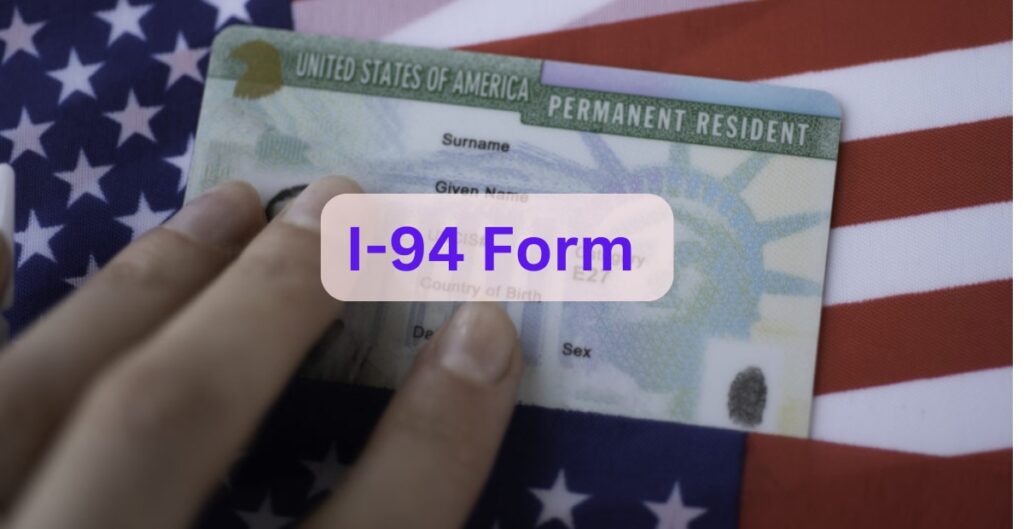
I-94 image cover photo

Estimated reading time: 3 minutes

Losing an I-94 Form Can Change Everything

Not long ago, a friend of mine was preparing her green card application when she realized something terrible—she had lost her I-94 Form, the U.S. entry and exit record. Even worse, it was from before 2015, back when the I-94 was a white paper card stapled to your passport.

Today, I-94 records are available online, but only for the past five years. Older records? You’re on your own.

In her case, there was even a gap in her travel history. She had to prove exactly when she had entered the U.S. Luckily, I had entered with her years ago. I wrote a detailed statement about that day, had it notarized, and mailed it to her as supporting evidence. I can only hope it helps her case.

This experience reminded me how important the I-94 truly is—not just a piece of paper or a digital file, but a document that can decide your future in the U.S.

What Exactly Is the I-94 Form?

The I-94 is an official U.S. Customs and Border Protection (CBP) record that shows:

  • The date you entered the U.S.
  • The country you traveled from (Japan, China, etc.)
  • Your authorized period of stay

Before 2015, the I-94 was a physical white slip of paper, often carelessly stapled into passports. After 2015, CBP moved the system online. Now you can retrieve your travel history electronically—but remember, the system only stores the last five years.

Why the I-94 Is So Important

You may be surprised how often this little record is needed:

  • Green card (permanent residency) applications – USCIS often asks for it.
  • Visa renewals – I personally had to provide copies of my old paper I-94s.
  • University procedures – students must show entry and exit records every time they travel abroad.
  • Proof of legal entry – if there are questions about your status, this record can protect you.

In short: without your I-94, you may not be able to prove you are in the U.S. legally.

How to Get Your I-94 Record

If you entered after 2015, the process is simple: go to the official CBP website, enter your passport details, and download your record for free.

But if your entries were before 2015, things get complicated. You may need to show alternative documents or provide sworn statements, like my friend did. That’s why keeping every document safe is so important.

Final Thoughts

Living in another country means respecting its rules—and keeping track of your records. The U.S. I-94 travel record may seem small, but it can have a huge impact on your future.

Whether you are applying for a student visa, an artist visa, or a green card, remember: your I-94 is proof that you entered the U.S. legally. Keep it safe, and know how to access it when needed.

Back to Home

Artist Visa Extension: A Story of Perseverance

Artist Visa Extension: A Story of Perseverance

artist visa image

An Italian artist successfully extended her O-1 visa for 3 years with my support. But the pandemic, NYC lockdowns, and rising living costs changed everything. Here’s her story and what it reveals about life and visas in New York.

How It All Started

In early January and February 2020, I was helping an Italian friend prepare her O-1 Artist Visa extension. She had already submitted her documents through an immigration lawyer, but unfortunately, she received a request for additional evidence from USCIS.

We spent hours meeting in cafés, carefully organizing her paperwork. Finally, after weeks of effort, her 3-year O-1 extension was approved.

Then the Pandemic Hit

Just a month later, in March 2020, New York City went into lockdown due to COVID-19. My friend stayed in Manhattan for a while, but living alone during such a strict lockdown became unbearable. Eventually, she made the difficult decision to return to Italy.

Visa Interviews Canceled in Europe

Back in Italy, she faced another challenge: visa interviews. Although she scheduled an appointment at the U.S. consulate, it was repeatedly delayed and eventually canceled due to the pandemic.

By the time her visa was expiring, she still hadn’t been able to attend an interview—leaving her unable to return to New York.

Safety Concerns in New York

Another factor was the decline in safety in NYC.

She had lived alone in the East Village, but during the lockdown, the city’s atmosphere changed. Mental health patients were released from prisons during the pandemic, and the streets of Lower East Side saw more homelessness and instability.

This made her hesitant to move back, even though she missed the city deeply.

What Happened to Her Extended Visa?

Her extended O-1 visa was valid until winter 2022. But when I asked her if she planned to return, she said it wasn’t realistic.

Why? Because she would need to find a new apartment in a city where inflation had driven rents sky-high. The cost of living in New York made it impossible for her at that time.

Still Dreaming of Returning to New York

Despite these struggles, she still hopes to return to New York someday. She told me that no city feels as free as New York. Compared to Italy—and even Japan—New York represents freedom and individuality.

But to live here again, she’ll need to secure either another visa or permanent residency. Every step on that journey feels like a crossroads, where one decision can change the entire course of life.

Final Thought

This story shows the bittersweet reality of the O-1 Artist Visa. My friend succeeded in extending her visa for 3 years, but the pandemic and rising costs prevented her from returning.

Still, her love for New York remains strong. I hope one day she’ll come back—and when she does, I’ll be ready to help her again.

Return to Home

Preparing for Your U.S. Visa Interview: Tips and Mindset

Preparing for Your U.S. Visa Interview: Tips and Mindset

USA Visa interview image

Estimated reading time: 3 minutes

Congratulations if your artist visa application has been approved, either locally or from Japan! That’s exciting news—but the next step is the visa interview. Don’t worry, with proper preparation, you can handle it smoothly.

I’ve attended multiple U.S. visa interviews over the years, always feeling nervous at the U.S. Embassy in Tokyo. Hearing stories of failed interviews can be intimidating, but through experience, I’ve learned ways to avoid common pitfalls.

Tip: Don’t choose a faraway embassy just because you heard it’s “less strict.” It can seem unnatural and raise questions.

What Is an Artist Visa?

An artist visa allows you to enter the U.S. for professional artistic activities. You must clearly understand your purpose and projects to explain them confidently during the interview.

Preparing for the Interview

1. Documents: Prepare and Organize

Bring all necessary documents, including:

  • Copies and originals of your visa application
  • Passport and photos
  • Supporting documents (project contracts, letters of recommendation, etc.)

Ensure your documents are well-organized and easy for the officer to review. Avoid bringing bulky folders—select the most essential materials that make the strongest impact.

2. Know Your Purpose and Anticipate Questions

The officer will ask about your visa purpose, projects, and plans in the U.S. You should also be ready to answer questions about:

  • Your profession and work experience
  • How you will support yourself financially
  • Collaborations or past projects

For example, I was asked about a movie soundtrack I worked on and whether I would collaborate with the same team again. Be honest and ready to explain your situation.

3. English Communication Skills Are Crucial

Your interview will be conducted in English. Practice basic responses and key vocabulary related to your visa application. Speak clearly, confidently, and politely.

Tip: Confidence is important, but overconfidence can create a negative impression. Stay calm and respectful.

4. Mindset and Approach

  • Be honest and transparent: Officers check consistency with your documents. Avoid exaggeration or falsification.
  • Stay calm: Take deep breaths before the interview. Being prepared reduces stress.
  • Remember: Most officers are supportive—they want you to succeed and may even wish you “Good luck.”

The Interview Proces

  1. Arrival and Security Check:
    Enter the embassy, go through security, and receive a number for your turn.
  2. Document Submission:
    Submit your visa application and supporting documents. Officers review them carefully.
  3. Interview:
    Officers ask about your visa purpose, plans in the U.S., and personal background. Be ready to answer questions about finances, living arrangements, and professional projects.

Final Tips

  • Learn from past interviews and others’ experiences to avoid mistakes.
  • Prepare thoroughly, organize your documents, and review your project details.
  • Keep a calm, confident, and polite demeanor.

With these points in mind, your artist visa interview should go smoothly. Good luck—you’ve got this!

Back to Home

The Importance of Recommendation Letters for U.S. Artist Visas and How to Collect Them

The Importance of Recommendation Letters for U.S. Artist Visas and How to Collect Them

アーティストビザ の推薦状を読むイメージ画像

Estimated reading time: 3 minutes

When applying for a U.S. artist visa, recommendation letters are one of the most important supporting documents. The quality and content of these letters can directly influence the success of your application, so it’s essential to gather them carefully.

What Is an Artist Vis

An artist visa allows you to enter the U.S. to work professionally in the arts. Your recommendation letters are key evidence of your artistic ability and international impact.

Focus on Quality, Not Quantity

A strong recommendation letter should demonstrate your achievements and influence with concrete examples. Avoid generic terms like “extraordinary” without explanation. Instead, request that the recommender highlight:

  • Past collaborative projects
  • Notable accomplishments
  • How your work contributes to your industry or community

Specific, personalized details make a much stronger impression than a generic, formulaic letter.

How to Request Recommendation Letters

  • Start early: Give your recommenders plenty of time to write.
  • Provide guidance: Share the visa requirements and sample formats to help them understand what’s needed.
  • Encourage authenticity: Let them write in their own words. Avoid making all letters identical; diversity in perspective strengthens your application.

Note: Some people may decline your request, especially if they aren’t very close to you or have limited time. Focus on those who truly know your work and can provide an honest, credible assessment.

Famous Recommenders Are Not Required

While there’s often a tendency to seek famous individuals, fame alone isn’t the key. Immigration officers may not be familiar with each field in detail.

What matters is the recommender’s credibility and standing within your field. Someone who truly understands your work can give an accurate evaluation of your talent and potential.

Collect Reliable and Honest Letters

Analyze your own achievements and collect letters that accurately reflect your experience and potential. Overstating or exaggerating accomplishments can backfire. The U.S. immigration system values honesty, sustainability, and long-term potential.

Summary

Recommendation letters play a crucial role in your artist visa application. Focus on:

  • Quality over quantity
  • Specific examples of your achievements
  • Trusted individuals within your field
  • Honest and authentic content

By carefully selecting your recommenders and collecting strong, personalized letters, you strengthen your chances of a successful visa application.

Back to Home

How to Obtain U.S. Permanent Residency Without an Artist Visa

How to Obtain U.S. Permanent Residency Without an Artist Visa

Hello! I’m Maegami, the author of the blog Goddess’ Bangs
In this article, I’ll share how some artists have successfully obtained a U.S. Green Card (Permanent Residency) without first applying for an artist visa. In fact, many individuals have transitioned directly from a student visa to an artist-based Green Card through the EB-1 visa category.

Before the Year 2000: Green Cards Were Easier to Obtain

Before the tragic events of 9/11, obtaining a U.S. Green Card was significantly easier. From the 1980s through the 1990s, it was not uncommon for people to arrive in America with no clear purpose, work illegally in restaurants, and still manage to obtain permanent residency within a year thanks to employer sponsorship.

Many Japanese citizens also won permanent residency through the annual Green Card lottery.

Changes After 9/11

After the September 11 terrorist attacks, the immigration system became much stricter. Because some of the attackers had entered on student visas, immigration officers began to scrutinize visa holders more closely. Staying in the U.S. indefinitely on a language school visa became suspicious, making it harder for students to later transition into an artist visa.

EB-1 Visa: A Direct Path to a Green Card

The EB-1 visa is essentially a U.S. Green Card for individuals with extraordinary ability in the arts, sciences, business, athletics, or education. Applying directly for an EB-1, without going through an artist visa first, is possible—but it is very challenging.

You will likely need the help of an immigration attorney. The process requires a large volume of high-quality evidence and costs around 1 million yen (approx. $7,000 USD) in legal fees. Still, the reward—U.S. permanent residency—is invaluable.

Key Requirements for the EB-1 Green Card

  1. International Awards
    Winning a globally recognized prize such as a Grammy, Emmy, Chopin Competition, or Van Cliburn International Piano Competition is a strong qualification.
  2. Major Media Coverage
    Being featured in top media outlets such as The New York Times or The Washington Post is crucial. Immigration officers look for press coverage that is instantly recognizable.
  3. International Recognition
    Documented achievements such as international tours, jury positions at competitions, teaching abroad, or global media appearances all strengthen your case.
  4. Stable and Significant Income
    Demonstrating financial independence and the potential for high earnings is an essential factor for EB-1 approval.

Conclusion

Skipping the artist visa and applying directly for a U.S. Green Card through the EB-1 visa requires meeting all of the conditions above. Fulfilling just one is not enough.

However, many artists successfully move from a student visa to an artist visa, and eventually to permanent residency. The key is to build your career while on a visa and prepare your case carefully.

Remember, Green Card applications can be submitted multiple times, so don’t hesitate to try again if needed. I hope this guide helps future artists and professionals seeking to build a career in the United States.

Back to Home

Visa Translate Documents: Do It Yourself Tips

Visa Translate Documents: Do It Yourself Tips

Hello! I’m Maegami from the blog “Goddess’ Bangs”.
If you’re applying for an Artist Visa (O-1 or similar) and want to include proof of your achievements in Japan, this guide is for you—especially if you’re wondering:

Estimated reading time: 3 minutes

“Can I translate my Japanese materials into English myself?”

Short Answer: Yes!

You can hire a professional translator, but translating the documents yourself is totally acceptable—and in fact, doing so shows that you’re proficient in English, which strengthens your application.

What Is an Artist Visa?

An Artist Visa, often referred to as the O-1B visa in the U.S., is designed for individuals who possess extraordinary ability in the arts. When applying, you must provide substantial proof of your artistic career, including articles, exhibitions, awards, and more.

How to Translate Japanese Documents for an Artist Visa

If you’re using Japanese newspaper or magazine articles as part of your application, you can translate them yourself. Here’s a step-by-step guide:

Step 1: Design the Layout

Use Microsoft Word, Illustrator, or another design tool to recreate the layout of the original article. This can include:

  • Text blocks
  • Images (label them as “The Beneficiary’s Photo”)
  • Captions and bylines

Even if the original layout is vertical (as many Japanese articles are), it’s fine to translate it in horizontal English text while preserving the visual format.

Step 2: Translate Only Relevant Sections

If your article is part of a larger publication, only translate the parts that feature you. There’s no need to include unrelated content.

Don’t stress over small grammar issues caused by differences in nuance between Japanese and English. As long as the meaning is accurate, your translation will be accepted.

Get Your Translation Notarized

Once you’ve finished the translation, you’ll need to certify that the translation is accurate and done by you.

How to Do This:

  1. Go to a notary public—many large U.S. banks have them on-site.
  2. Bring your translated document and ID.
  3. Ask for a notarized certificate of translation, which confirms that:
    • You are fluent in both Japanese and English.
    • You personally translated the document.

Having this notarization stamp is essential for your Artist Visa submission.

Summary

In this post, we covered how to:

  • Translate your own Japanese-language materials for an Artist Visa
  • Format them clearly and accurately
  • Get them notarized for official use

By following these steps, you’ll save money on translation fees and strengthen your Artist Visa application with confidence. Good luck!

Back to Home