

Monthly Archives: April 2023

Japan railroad pass image

Is the Japan Rail Pass Worth It in 2025? A Complete Guide for American Travelers

Is the Japan Rail Pass Worth It in 2025? A Complete Guide for American Travelers

What is the Japan Rail Pass?

The Japan Rail Pass (JR Pass) –Website-is a special ticket designed for foreign tourists. It allows unlimited travel on most JR trains — including Shinkansen (bullet trains) — within a set period (7, 14, or 21 days). However, note that it cannot be used on Nozomi or Mizuho services. Seat reservations are possible, which is especially useful during peak seasons.

For travelers who want to explore Japan by train, this pass can be a convenient option. But with the major price increase in October 2023, many are asking: is it still worth it in 2025?

Latest Japan Rail Pass Prices (2025)

As of 2025, the official JR Pass prices are:

  • 7-day Ordinary: ¥50,000 (~$330)
  • 14-day Ordinary: ¥80,000 (~$535)
  • 21-day Ordinary: ¥100,000 (~$670)

Green Car (First Class):

  • 7-day: ¥70,000
  • 14-day: ¥110,000
  • 21-day: ¥140,000

💡 Note: USD amounts depend on the exchange rate.

When Does the JR Pass Make Sense?

For American travelers, the pass is most valuable if you:

  • Plan multi-city travel: Tokyo → Kyoto → Hiroshima → Osaka.
  • Take several long-distance rides within a short time.
  • Want the freedom to hop on and off JR trains without buying separate tickets.

Example:

  • Tokyo → Kyoto round-trip (~$220)
  • Kyoto → Hiroshima (~$90)
  • Hiroshima → Tokyo (~$180)
    Total = ~$490 → A 7-day JR Pass ($330) saves you money.

When the JR Pass May Not Be Worth It

  • If you mainly stay in one city (Tokyo, Osaka).
  • If your trip is slow-paced with limited long-distance travel.
  • If regional passes (like Kansai or JR East) cover your itinerary more cheaply.

Buying the JR Pass in the U.S.

You must purchase the pass before arriving in Japan. In New York and other U.S. cities, you can buy from travel agencies such as:

  • Amnet
  • HIS
  • IACE Travel

Some agencies may offer slightly cheaper prices in USD. For example, one traveler bought a 7-day pass via Amnet for $220, picking it up directly at their Manhattan office.

Special Case: Japanese Nationals Living Abroad

Though intended for foreign tourists, some Japanese nationals abroad can qualify if they:

  • Hold a U.S. Green Card for 10+ years (valid only for U.S., Canada, Brazil).
  • Provide a Certificate of Overseas Residence proving 10 years abroad.
  • Submit a copy of the Residence Registration (在留届の写し) from the Japanese consulate.

If you don’t meet these, you may not be eligible.

Tips for Using the JR Pass

  • Activate wisely: Start your pass on the day of your first long-distance trip.
  • Reserve seats: Shinkansen can get crowded, especially during holidays.
  • Bring documents: Passport is always required when using the pass.
  • Compare costs: Sometimes, regional passes or single tickets are cheaper.

Conclusion

The Japan Rail Pass remains one of the most convenient ways to explore Japan — but after the 2023 price increase, it’s not always the automatic money-saver it once was. For Americans planning to visit multiple cities, it can still offer great value. The key is to calculate your route costs and decide if the pass is right for you.
Apple Card 2025: Features, Savings, APR, and How to Open an Account

Apple Card 2025: Features, Savings, APR, and How to Open an Account.

Apple Card isn’t just a credit card — it’s part of Apple’s growing financial ecosystem, created in partnership with Goldman Sachs. In 2023, Apple launched its Apple Card Savings account, offering competitive interest rates for iPhone users. As of January 2024, the APY reached 4.5%, higher than typical U.S. bank savings accounts.

In this guide, we’ll cover everything about Apple Card in 2025: credit card features, Daily Cash, APR, savings account setup, pros/cons, and practical tips for maximizing interest and rewards.

Key Updates for 2025

  • Variable APR: 18.24%–28.49% depending on creditworthiness (check Wallet app for your exact rate).
  • Apple Card Savings APY: 4.5% as of early 2024; slightly lower than peak 2023 rates but still competitive.
  • Issuer news: Goldman Sachs continues to issue Apple Card; JPMorgan Chase has been reported in talks to potentially take over the portfolio, though nothing is finalized.
  • Regulatory matters: Apple and Goldman Sachs have faced CFPB enforcement actions regarding transaction and dispute handling.

Apple Card Features

Daily Cash

Cash back is credited daily depending on the merchant and payment method:

  • 3% on Apple purchases
  • 2% with Apple Pay
  • 1% on physical card purchases

Apple Card Monthly Installments (ACMI)

0% APR financing for eligible Apple products. Taxes/shipping may not be included. Standard APR applies if not using ACMI.

Family & Co-ownership

Share an Apple Card with up to five family members, allowing credit building and limit management.

How to Open an Apple Card Savings Account

Apple Card holders in the U.S. can open a savings account with up to 4.5% APY, FDIC-insured via Goldman Sachs. Here’s a step-by-step guide:

1. Requirements

  • Latest iOS version (16.4.1 or newer)
  • Apple device
  • U.S. residency

2. Daily Cash Selection

  • Open Wallet → tap Apple Card → More Options → Daily Cash → next screen.

3. Setup Screen

  • Tap Set Up → Continue → Agree to Terms and Conditions
  • Answer tax-related questions correctly

4. Linking Bank Accounts

  • Add cash from linked bank account
  • Withdraw to any U.S. bank no fee

5. Deposit Limits

  • Single deposit: $10,000
  • 7-day cumulative: $20,000
  • Max balance: $250,000 (excluding Daily Cash or earned interest)

6. Interest Growth

  • Interest compounds monthly
  • Daily Cash can be automatically deposited into savings
  • Small deposits can add up to substantial interest over time

FDIC Coverage

Goldman Sachs membership ensures deposits are protected in case of bank failure.

Pros and Cons

Pros

  • Seamless Apple ecosystem integration
  • Daily Cash is convenient
  • No annual or foreign transaction fees

Cons

  • High APR for carried balances
  • Savings APY decreased slightly in 2025
  • Regulatory and issuer uncertainty

Practical Tips

  1. Use ACMI for eligible Apple products to enjoy 0% financing
  2. Pay balances in full to avoid high APR
  3. Deposit Daily Cash into Apple Savings for compounding interest
  4. Monitor deposit limits to maximize interest growth

Who Should Get Apple Card

Best for: iPhone users who pay their balance in full, value Daily Cash, and want excellent Wallet integration.
Not recommended for: People who carry balances and want the lowest APR or balance transfer options.

Summary

Apple Card 2025 combines a modern credit card with high-yield Apple Savings, Daily Cash rewards, and strong ecosystem integration. While Japanese users cannot open accounts yet, U.S.-based Apple users can enjoy convenience, FDIC protection, and competitive interest rates. Use Daily Cash strategically to build savings and maximize rewards over time.

How to Use OMNY on NYC Buses | Transfers, Fares & Patrol Checks

How to Use OMNY on NYC Buses | Transfers, Fares & Patrol Checks

Hello! This is Maegami from the blog Goddess’ Bangs.
In New York City, OMNY is the new contactless payment system for subways and buses — similar to Japan’s PASMO, except it’s linked directly to your credit or debit card.

Estimated reading time: 3 minutes

[word_balloon id=”1″ size=”M” position=”L” radius=”true” name=”” balloon=”talk” balloon_shadow=”true”]

The bus is getting faster than ever- I see some improvement

[/word_balloon]

In this article, I’ll explain how to use OMNY on buses, including transfers, patrol checks, and things to watch out for.

Using OMNY on Buses

When you tap in with OMNY (or even a MetroCard), you automatically get one free bus transfer within two hours.

Important notes:

  • Subway-to-subway transfers are not possible with OMNY (same as MetroCard).
  • The free transfer is valid bus-to-bus or subway-to-bus only.

So if you first take the subway and then transfer to a bus within two hours, your bus ride will be free.

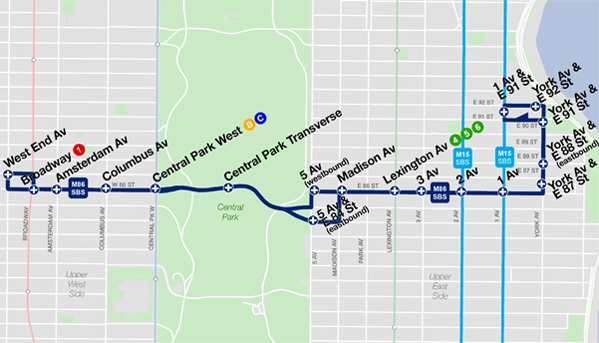
Special Case: Crosstown Buses on 86th Street

MTA buses in Manhattan, especially the crosstown routes, often use articulated buses (the long ones with two connected sections).

Unlike regular buses where passengers board only from the front, in New York you can also board from the middle or back doors. This helps save time during rush hour — but it also means some people try to ride without paying.

Because of this, MTA patrol officers occasionally board these buses to check payments.

Patrol Checks & Fines

Alt="New York City articulated crosstown bus on 86th Street"

If you’re riding without paying, you could face a $100 fine.

Here’s how it works:

  • MTA officers carry a device that scans your OMNY payment status.
  • If your payment shows as VALID, you’re safe.
  • If not, you’ll be asked to exit, give your personal details, and later pay the fine.

So even if it seems easy to sneak on, it’s not worth the risk. Always tap your OMNY card or phone before riding.

Can You Transfer Bus to Bus with OMNY?

Yes! If you tap into one bus, you can transfer to another bus for free within 2 hours.

However, a third transfer is not included. For example:

  • First bus → free transfer to second bus → third bus requires a new fare.

Conclusion

OMNY makes paying for New York City buses easy and fast, with free transfers included. Just remember:

  • Always tap in, even if the bus looks open.
  • Watch out for patrol checks — fines are expensive.
  • Use your 2-hour transfer wisely.

With OMNY, buses can be just as convenient as the subway.