ABRSM How to Easily Pass the Grade 5 Theory Exam?

How to Easily Pass the ABRSM Grade 5 Theory Exam

Estimated reading time: 5 minutes

Hello everyone! This is Maegami from the blog Megami no Maegami. I also teach piano in New York, and today I’m sharing information about the ABRSM, the Royal Schools of Music exams from the UK.

What happens when you reach the highest ABRSM level in the U.S.?

What is ABRSM Grade 5 Theory?

The ABRSM Grade 5 Theory exam is a prerequisite for advancing to Grade 6 performance exams. Since Grade 6 involves more difficult pieces, a solid understanding of music theory is essential to learn and interpret complex works from different eras.

Understanding the Content of the ABRSM Theory Exam

In Grade 5, the following topics will be covered:

  • Understanding music symbols and terms
  • Chord structure and identification (triads)
  • Understanding key signatures and tonality (major and minor)
  • Simple composition and rhythm completion

Get Music Theory Test Samples

Sample Papers and Model Answers -Purchase through Amazon – click the link.

Disclosure: This post contains Amazon affiliate links. If you purchase through these links, I may earn a small commission at no additional cost to you.

First, purchase some music theory test samples. It’s recommended to get around three sets, as practicing with these will help you get used to the types of questions that will appear on the exam. You can write on the first set to get a better understanding. Going through them multiple times will help you memorize what’s being tested. It’s not efficient to dive straight into textbooks right away, so I don’t recommend that approach.

Download the ABRSM Official App

As mentioned earlier, jumping straight into studying from a Grade 5 textbook might be difficult, as it skips over content from Grades 1–4. You can certainly study with textbooks for those earlier grades, but it’s an outdated method, especially if you’re busy with school or work. This could take more than six months.

For those who want to save time, try downloading a paid app (about $3) to study in a game-like format. The app features characters like Pam and a cat, with quizzes and jokes. However, be aware that it uses British English, so for example, “quarter note” is referred to as “crotchet” in the UK. The app also teaches you all the terms used in music theory.

It’s also great for anyone wanting to learn music theory!

Purchase the ABRSM Official Textbooks

Using ABRSM’s official workbooks will help you familiarize yourself with the format of the exam. The two books I recommend are:

Theory book

Music Theory in Practice (Grade 5) – Purchase through Amazon -please click the link.

Answer book

Incorporate Efficient Study Methods

  • Short but focused study sessions: Aim for 20–30 minutes per day to study a little each day.
  • Practice with past papers: Solve past exam papers several times to get a feel for the exam’s style.
  • Use online videos: Watch free explanatory videos on YouTube to get extra help.

What Might Be the Most Challenging?

For me, the most difficult part of the exam is rhythm. Make sure you study rhythm thoroughly. Also, don’t neglect music terms. You can easily lose points here, so make sure to memorize these terms to ensure you score well.

Don’t Forget Last-Minute Preparations!

One week before the exam, focus on reviewing the following:

  • Basic knowledge of key signatures and chord progressions
  • Memorize music terms and symbols (like “rit.” or “poco”)
  • Revisit any troublesome question types

Summary

The key to passing the ABRSM Grade 5 Theory exam is to work backwards. First, get an overview of the whole exam by looking at test samples. Then, start focusing on your weaker areas. Additionally, the official app makes learning music theory fun, helping you build your foundational knowledge.

As an Amazon Associate, I earn from qualifying purchases.

Return to Home
Best Piano Method Books: A Teacher’s Top Recommendations

Best Piano Method Books: A Teacher’s Top Recommendations

Hello! I’m Maegami, author of the blog “Goddess Bangs”.
As a piano teacher in the U.S. for over 15 years, I’ve tested many method books with students of all ages. Today, I’ll share my top recommended piano books, carefully selected from my teaching experience.

Choosing the right piano method book is a big step for beginners. The right book can make practice enjoyable and help students build a strong foundation.

1. John Thompson’s Easiest Piano Course

Why it’s recommended:
A timeless classic for beginners. Suitable for both children and adults, this book introduces note reading and essential techniques step by step.

Features:

  • Clear explanations
  • Wide variety of practice songs
  • Easy for self-learners

Get it on Amazon

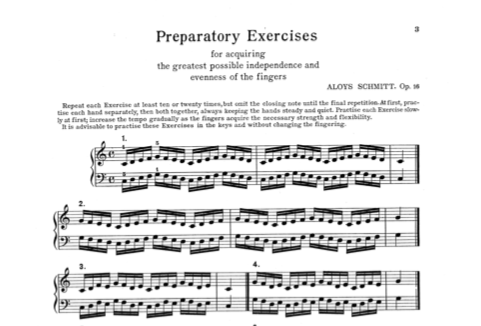
2. Schmitt: Preparatory Exercises Op.16

Why it’s recommended:
Perfect for finger training once students know the basics. If you want your child to play faster passages or prepare for music school, this is essential.

Features:

  • Focuses on finger independence
  • Uses 5-finger exercises for strength and agility
  • A favorite in my own teaching and practice

Find it here

3. Piano Adventures

Why it’s recommended:
Ideal for children who want to naturally learn music theory while playing.

Features:

  • Covers styles from pop and jazz to classical
  • Easy, fun arrangements
  • Teaches rhythm and chords—great for American-style music education

See on Amazon

4. Hanon: The Virtuoso Pianist

Why it’s recommended:
A must for intermediate and advanced players who want to build stronger technique.

Features:

  • Repetition-based exercises
  • Improves speed, precision, and endurance
  • Requires patience but leads to strong technical ability

Get it here

5. Czerny Piano Studies

Why it’s recommended:
Trusted by professional pianists worldwide. Famous works like Op.599 (Practical Method) and Op.299 (School of Velocity) build both technique and musicality.

Features:

  • Wide range of difficulty levels
  • Great for scale practice and articulation
  • Strengthens both hands evenly

Check it out

6. Alfred’s Basic Piano Library

Why it’s recommended:
A comprehensive method covering all ages and levels. From beginner basics to more advanced techniques, this series supports steady progress.

Features:

  • Comes with CDs and digital tools
  • Play along with recordings for effective home practice
  • Highly recommended for adult learners too!

Buy on Amazon

Final Thoughts

This was my recommended piano method book ranking, based on years of teaching. Whether you’re a beginner child or an advanced student, these books provide the right tools for progress.

For children: any illustrated or fun book works fine to start.
For Hanon or Czerny: wait until you can read sheet music well, and check with your teacher before beginning.

Happy practicing, and may your piano journey be joyful!

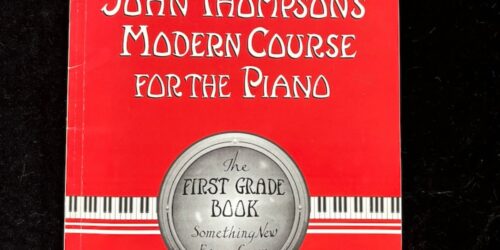
John Thompson Piano Method: The Best Choice for Fast Piano Progress

John Thompson Piano Method: The Best Choice for Fast Piano Progress

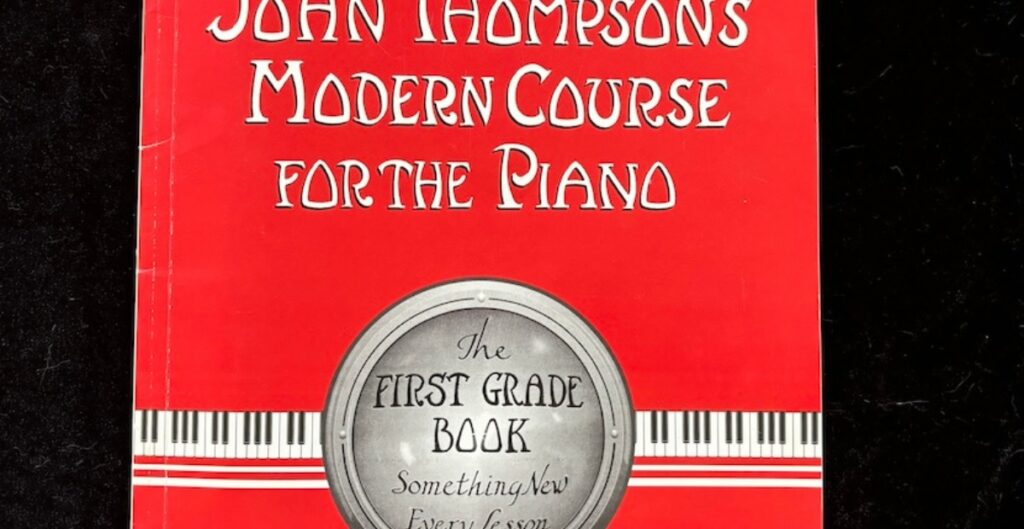
John Thompson piano textbook image cover photo

Estimated reading time: 3 minutes

Today I’m sharing from my piano series, where I introduce effective piano learning materials based on my 10+ years of experience teaching piano in the U.S. This time, let’s take a closer look at the John Thompson Piano Method.

Why Choose John Thompson’s Piano Method?

Swan lake a song from the textbook

When you want to build a solid foundation in piano and make progress as quickly as possible, the choice of method book is crucial. Among the many available, the John Thompson Piano Method series stands out. It is widely used not only by children but also by adult learners who want to improve efficiently.

Many learners wonder, Is Piano Adventures too slow? — here’s how it compares to John Thompson.

Efficient Step-by-Step Progress

John Thompson’s books cover the fundamentals while allowing learners to move smoothly to the next level. In particular, the Teaching Little Fingers to Play series keeps hand positions consistent, making it easier for beginners to learn without confusion.

Fun and Engaging Music

These books are filled with beginner-friendly tunes that make practice enjoyable. Each lesson is structured into short, progressive steps that naturally deepen understanding while maintaining motivation. Many students love the playful and sometimes quirky illustrations — I’ve even had my kids color them in for extra fun!

Visual Learning Support

The John Thompson series uses plenty of illustrations and diagrams, making it especially helpful for visual learners and younger children. This visual support helps reinforce rhythm and note reading. The distinctly American-style artwork adds charm and makes the learning experience unique.

Thanks to its systematic curriculum and motivating content, the John Thompson Piano Method has been praised by piano teachers worldwide. For students who want noticeable results in a short period and prefer an efficient learning path, this method is an excellent choice.

Conclusion

The John Thompson Piano Method is ideal for anyone who wants to progress quickly while enjoying the process. It strengthens the basics effectively and has been loved by students for generations. If you’re looking for a proven and engaging piano method, this series is well worth trying!

→ Get John Thompson’s Modern Course for Piano on Amazon

Disclosure: This post contains Amazon affiliate links. As an Amazon Associate, I earn from qualifying purchases at no additional cost to you.

Back to Home

Top Piano Competitions in New York for Kids: Perform at Carnegie Hall

Top Piano Competitions in New York for Kids: Perform at Carnegie Hall

If you’re looking for a piano competition in New York that your child can participate in—from young beginners to teenagers—there are wonderful opportunities available. I have personally entered three students in New York competitions, and they received First Prize, Third Prize, and Honorable Mention. All three were given the opportunity to perform at the world-famous Carnegie Hall.

For families who dream of building musical confidence, stage experience, or a strong artistic résumé, these competitions are a great first step.

Yes, Your Child Can Perform at Carnegie Hall

Carnegie Hall has three different performance spaces:

  • Weill Recital Hall — the small, elegant hall often used for competitions
  • Zankel Hall — a modern mid-sized hall
  • Stern Auditorium — the largest hall used by world-famous artists

For children’s piano competitions, performances are typically held in Weill Recital Hall or Zankel Hall. The two competitions I recommend are:

  1. Crescendo International Music Competition
    https://www.crescendocompetition.org/
  2. American Protégé International Piano & Strings Competition
    https://americanprotege.com/

Both offer the chance to perform at Carnegie Hall if selected.

Crescendo International Music Competition

This competition has several categories depending on age and level.
If your child recently started piano and shows potential, the Little Mozart Category is a wonderful entry point. There are also more advanced divisions for experienced players.

American Protégé Competition

Compared to Japan, the overall level in this competition is not extremely high, so strong Japanese-trained students often have a good chance of being selected. However, performing at Carnegie Hall requires a separate performance fee of about $500, in addition to the initial application fee.

This surprised me at first, but most parents were happy to pay since it’s a memorable and prestigious experience for their child. And of course—there are always some very talented young pianists who use this opportunity as a stepping stone to the next level.

Real Students Who Won

  • 6-year-old girl — placed 3rd with a Mozart Minuet (not a difficult piece, but she memorized well and played with expression)
  • 7-year-old boy — won 1st Prize with the 1st movement of a Mozart Sonata and performed at Zankel Hall
  • 12-year-old boy — received an Honorable Mention with a Bach Invention and still performed at Carnegie Hall

The first two were Crescendo Competition winners, and the third was selected by American Protégé.

Is Your Child Ready for a Competition?

Here are common traits of students who succeed:

  • Loves playing piano
  • Can memorize music
  • Can read music (and enjoys it)
  • Practices daily (even a little)
  • Has a stable mindset under pressure
  • Shows some musical expression

If this sounds like your child, they may be a great candidate. Think of it as a fun musical experience, rather than a stressful, high-pressure event.

Conclusion

In this article, I introduced two well-known piano competitions in New York that can lead to performances at Carnegie Hall. Recently, I asked one of my 9-year-old students if he wanted to try a competition. His answer was a very honest: “Nooooo!”

If your child is interested, talk with your piano teacher and explore the possibility. Being selected and performing at Carnegie Hall becomes a valuable memory—and a wonderful achievement for their future.

Steinway Hall New York: A Tour Through History

Steinway Hall New York: A Tour Through History

Estimated reading time: 5 minutes

In the heart of Manhattan’s Midtown lies Steinway Hall, home to the world’s most coveted pianos. For over a century, Steinway has symbolized both musical excellence and New York’s cultural elite. Once a Rococo-style salon near Carnegie Hall, Steinway Hall has transformed into a modern architectural gem. Let’s take a look at the old Steinway Hall and its present-day piano salon in New York.

Where Is Steinway Hall Today?

The current Steinway Hall is located at:
1133 Avenue of the Americas, New York, NY 10036

Interestingly, this building once housed the International Center of Photography (ICP Museum). When I first moved to New York, I remember seeing photo books by the Japanese photographer Nobuyoshi Araki displayed in the windows. Today, those same windows reveal gleaming black Steinway grand pianos under bright lights.

In 2016, Steinway Hall relocated here after its legendary 57th Street salon closed due to a lease expiration. That move was bittersweet, as generations of musicians had cherished the old space. The historic building has since been converted into condominiums.

Alt="A picture of the old Steinway hall"

The Old Steinway Hall (1925–2014, 57th Street)

The former Steinway Hall on West 57th Street was a stunning Rococo-inspired interior. Its chandeliers and ornate details reflected European luxury and the grandeur of the Romantic music era.

This was not just a showroom—it was a cultural salon where pianists like Arthur Rubinstein and Vladimir Horowitz frequently performed. Even my own piano professor held his doctoral recital there.

Alt="The old Steinway Hall with a beautiful white grand piano by the window"

One highlight was the Rubinstein Room, with salmon-pink walls influenced by German design. Inside, visitors could play the pianos, admire Rubinstein’s portrait, and even see a bronze cast of his hands. The atmosphere evoked both pre-war Europe and post-war New York, a mix of glamour and history.

alt="A picture of Rubinstein room in salmon red"
alt="A panting of Arthur Rubinstein's portrait"

The Modern Steinway Hall (Since 2016, Midtown)

Step into today’s Steinway Hall, and you’ll find a completely different atmosphere. The chandeliers are gone, replaced by sleek minimalism.

  • Reflective black pianos line the glass walls.
  • The ceiling curves echo the shape of grand pianos.
  • The design reflects minimalist music, reminiscent of American composers like Steve Reich and Philip Glass.

Where Rubinstein and Horowitz once dominated, today you’ll find Steinway Artists such as Lang Lang and YuJa Wang featured in displays and promotional material.

A Hidden Lighting Masterpiece

One of the most breathtaking features of the new Steinway Hall is its lighting installation, inspired by Bach’s Goldberg Variations. Each hanging light represents one of the 30 variations, resembling a cascade of origami cranes.

alt="new Steinway Hall's lighting installation, inspired by Bach’s Goldberg Variations"

This design is only visible if you walk to the back of the showroom, making it a delightful surprise for visitors. Architecture lovers will find this as inspiring as the pianos themselves.

Why Steinway Remains a Symbol of New York

From its Rococo origins to its sleek modern incarnation, Steinway Hall has always been more than a piano showroom. It is a space where history, music, and architecture meet.

Whether you admire its past grandeur or today’s minimalist elegance, Steinway Hall continues to represent the pinnacle of piano craftsmanship and cultural prestige in New York City.

alt="the pianist Lang Lang's poster above a brown upright Steinway piano and American Flag on the side"

Conclusion

The history of Steinway Hall is deeply intertwined with Manhattan itself. From 14th Street in the 19th century, to 57th Street’s legendary salon, and now Midtown’s glass-walled modern hall, Steinway has reinvented itself while staying true to its legacy of excellence.

For musicians, music lovers, and architecture enthusiasts alike, Steinway Hall remains a must-visit destination in New York City.

Return to Home

Is Piano Adventures Too Slow? A Look at This Popular American Piano Method

Is Piano Adventures Too Slow? A Look at This Popular American Piano Method

piano adventure

Estimated reading time: 4 minutes

The American piano method “Piano Adventures” is sometimes criticized for being “too slow.” Some piano teachers even feel that progress takes longer compared to other books. But is that really true? And why are we in such a hurry?

In this article, I’ll explain why Piano Adventures is an excellent method book—especially for building strong music theory foundations.

Is Piano Adventures Really Too Slow?

Personally, I don’t think Piano Adventures is slow. In fact, I ask—why rush?

I think – especially in Japan where I am from, many children can technically play the piano well but lack a solid understanding of music theory. As a result, their performances often sound less purposeful of what they are playing. Piano Adventures focuses on developing both technical skill and theoretical knowledge, which ultimately produces more well-rounded piano players.

Can Students Move Faster with Piano Adventures?

Alt="piano adventure's unit page"

Yes, the pace can be adjusted. If a child enjoys practicing, teachers can assign homework by unit instead of one page at a time. Or, it is absolutely fine to skip some pages.

For example, two of my students currently use Piano Adventures:

  • One prefers to move step by step, taking time with each piece.
  • The other progresses unit by unit and has become a much faster sight-reader.

Both approaches work—the key is that slow students build strong foundations while faster students improve fluency and reading skills.

Why Piano Adventures Is Excellent for Music Theory

One of the strongest points of Piano Adventures is its early introduction of music theory.

  • Concepts like I–V chord progressions appear as early as Book 1.
  • These theoretical elements are essential for memorizing music and understanding structure.
  • Children are introduced to concepts often taught at the conservatory level—but in a fun and accessible way with illustrations.

Skipping this foundation for the sake of speed is a mistake. Music theory helps children not only play but also understand, interpret, and memorize music effectively.

Piano Adventures: Gradual but Powerful Theory Progression

As students move through the series, the theory becomes progressively more advanced. This matters especially when it comes to memorization.

Playing a piece repeatedly until the body remembers it has limits. For complex works, students need to understand structure. Music theory acts like a map for memory—instead of relying only on repetition, they learn to rely on understanding.

Is Piano Adventures Slow or Fast? It Depends on Practice

The pace of Piano Adventures really depends on the student:

  • Some finish Book 1 in just six months.
  • Others progress more slowly but gain solid grounding in rhythm, harmony, and expression.

Many children enjoy the method because it includes a variety of styles—jazz, rock, classical, and folk tunes—which keeps learning exciting.

Should You Avoid Piano Adventures Because It’s “Slow”?

Absolutely not. Even though all beginner method books start with the basics (C–D–E–F–G), Piano Adventures stands out for its balanced approach:

  • Fun repertoire
  • Gradual progression
  • Strong music theory foundation

It’s one of the best resources for nurturing children’s musical growth at their own pace.

Final Thoughts

So, is Piano Adventures too slow? My answer is no. Progress depends on the student’s practice habits, not just the method itself. What matters most is building a solid foundation in theory and technique.

Children often experience sudden breakthroughs—so don’t rush. With patience, Piano Adventures can help them grow into expressive, confident pianists.

Return to Home
ABRSM Piano Exam: How It Enhances Applications

ABRSM Piano Exam: How It Enhances Applications

Estimated reading time: 3 minutes

Many students dream of studying at the Ivy League. Some aim for graduate programs, while others want the full four-year experience—even if it means taking on debt. For business or IT majors, the investment often pays off quickly. But for arts and humanities students, it can feel riskier. Still, there’s real value in attending those schools.

If you’re determined to apply, one powerful way to strengthen your application is through music exams, especially the internationally recognized ABRSM. – check here Website

What Is the ABRSM ?

Piano proficiency exams exist in several countries:

  • NYSSMA (New York State School Music Association) in the U.S.
  • RCM (Royal Conservatory of Music) in Canada
  • ABRSM (Associated Board of the Royal Schools of Music) in the U.K.

Among these, ABRSM is one of the most widely respected. Its certificates are accepted worldwide and look excellent on a college or Ivy League application.

Why? Because mastering piano requires daily practice, discipline, and the ability to understand complex structures. Passing ABRSM exams shows perseverance, analytical ability, and dedication—qualities universities value.

What Does the Exam Include?

The exam isn’t just about playing piano. It tests four areas:

  1. Performance – 3–4 pieces from different styles (Baroque, Classical, Romantic, Modern)
  2. Technical skills – scales, arpeggios, finger exercises
  3. Music theory – written exam
  4. Aural skills & singing – listening and pitch recognition

Exam Levels Explained

  • ABRSM: Grades 1–8 (Grade 8 is the highest)
  • NYSSMA: Levels 1–6
  • RCM: Levels 1–10

By Grade 8 ABRSM, students are performing advanced works such as Bach’s Well-Tempered Clavier Preludes or Beethoven’s sonata movements—just below conservatory entrance level.

How Long Does Preparation Take?

  • Beginner levels: about 6 months to 1 year per grade
  • Intermediate to advanced (Grade 6+): 1–1.5 years per grade
  • Success depends largely on practice time and consistency

For ABRSM, students must also pass Grade 5 Music Theory before progressing to Grade 6 and beyond.

The Challenge of Higher Levels

  • Grade 6–8 repertoire: Clementi sonatinas, Chopin mazurkas or nocturnes
  • Singing tests: Singing back short melodies by ear, sight-singing, or singing bass lines while playing melodies
  • Aural tests: Identifying styles (Baroque, Classical, Romantic, Modern) and describing musical features

These advanced skills build strong musical and intellectual foundations, making ABRSM an excellent long-term challenge.

At What Age Should You Start?

  • Ages 6–7: starting from Grade 2 is common
  • Transfer students with experience: often begin around Grade 3
  • Skipping levels is possible up to Grade 4, but not recommended for higher grades (6–8 require solid preparation).

Why ABRSM Looks Great on a Resume

Completing ABRSM exams shows:

  • Commitment and persistence
  • Intellectual growth through theory and analysis
  • International recognition of skills

This makes ABRSM valuable not only for Ivy League admission essays and resumes, but also for applications to other top universities—or even future job resumes.

Final Thoughts

The ABRSM piano exam is much more than a music test. It’s proof of discipline, resilience, and intellectual ability—qualities Ivy League admissions officers respect.

Whether your child reaches Grade 2 or pushes all the way to Grade 8, the growth along the way is remarkable. If you’re aiming for competitive universities, consider adding ABRSM achievements to your application portfolio.

Return to Home
Why It Is Hard to Read Sheet Music Fluently

Why It Is Hard to Read Sheet Music Fluently

sheet music

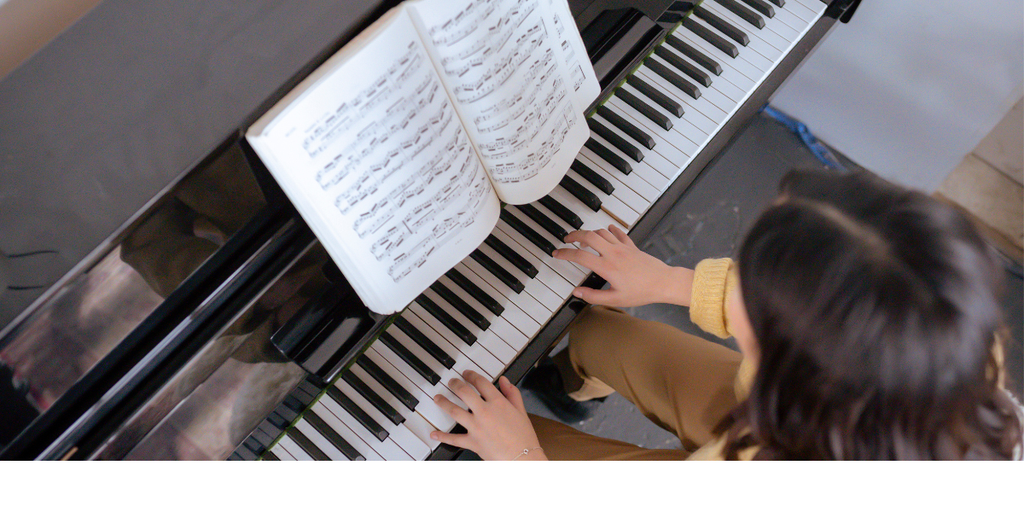
Many parents and students think that learning piano is simply about reading sheet music. But here’s the truth: only about one in twenty people can truly sight-read fluently. The same goes for expressive playing—among my students, only two or three have shown real natural expression. So then, why do we learn piano?

The Misunderstanding of “Reading Music”

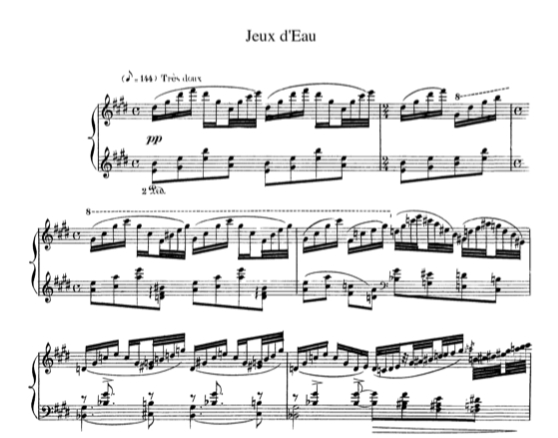
Ravel's sheet music image

Take Ravel’s Jeux d’eau (Fountains of Water). The score looks intimidating at first glance. Many assume that being able to read notes is enough, but that’s not true.

Reading sheet music means more than recognizing do-re-mi. It also means instantly grasping rhythm. Without a mental image of rhythm, no one can play a piece at sight.

How to Read Piano Music Faster

Piano etude image

The secret is surprisingly simple: practice with “boring” technical exercises like Schmitt, Hanon, and Czerny. By repeatedly exposing yourself to streams of notes, your brain becomes faster at processing music. Over time, your sight-reading naturally improves.

The Next Hurdle: Expression and Tone

It’s often said that Japanese pianists are technically strong but lack expression. One possible reason? The piano itself.

I grew up playing a German Steiner upright piano I inherited by chance. Its tone was vivid and colorful. But when I play on many students’ Yamaha uprights, the sound feels flat and uninspiring. Could this be why expressive playing is harder to achieve?

That said, Yamaha grand pianos—and their recordings used in digital pianos—are wonderful. Tone matters. And true expression often requires guidance from a teacher who can help you discover your own sound.

So Why Learn Piano?

The most important reason is joy. Music enriches life. But piano also trains the brain. Sight-reading requires constantly looking ahead—reading one line while anticipating the next, even thinking about the next page while playing the current one. This sharpens focus and insight.

And there’s more. Moving your fingers boosts dopamine release, improving mood and positivity. It’s no wonder piano practice is linked to better mental health and even dementia prevention.

Does My Child Need Talent?

Parents often ask, “Does my child have talent?” The answer: talent doesn’t matter. What matters is love. If your child can’t stop playing piano, that passion is the real sign.

Even if your child isn’t obsessed with piano, lessons are still valuable as brain training. But beware: pushing too hard or having excessive expectations often kills expression.

Conclusion

In New York, top pianists often say they play simply because they love piano—and because they need to express themselves.

Whether or not you become a professional, piano lessons are one of the best gifts you can give yourself or your child: for the brain, for creativity, and for joy. After all, as the saying goes: Those who love something will always get better at it.

Return to Home

Best Piano Books in the U.S.: Piano Adventures & John Thompson

Best Piano Books in the U.S.: Piano Adventures & John Thompson

Estimated reading time: 2 minutes

Learning piano is a wonderful journey, but choosing the right teaching method can make all the difference. In the United States, two of the most popular and highly recommended piano method books are Piano Adventures and John Thompson’s Teaching Books. Both are beginner-friendly, widely used by teachers, and loved by students worldwide.

1. Piano Adventures – Modern & Fun Approach

Piano Adventures, created by Nancy and Randall Faber, is one of the most widely used piano method series in the U.S. Its strength lies in combining traditional techniques with modern, fun songs that kids and adults enjoy learning.

  • Step-by-step lessons with clear progression
  • Creative exercises that build strong fundamentals
  • Engaging pieces, from classical to popular styles

This series is ideal for young beginners but also offers advanced levels, making it a comprehensive method for long-term learning.

2. John Thompson’s Teaching Books – Classic & Time-Tested

John Thompson’s Modern Course for the Piano has been a trusted choice for generations of piano learners. Known for its clear structure and straightforward exercises, it provides a solid foundation in technique and reading skills.

  • Easy-to-follow step-by-step lessons
  • Focus on sight-reading and finger strength
  • A classic method that many teachers still rely on today

For learners who appreciate a more traditional approach, John Thompson remains a timeless option.

Which Piano Book Should You Choose?

Both methods are excellent, but your choice depends on your learning style:

  • Piano Adventures → Fun, modern, and engaging for younger students or those who enjoy variety.
  • John Thompson → Structured, traditional, and excellent for building strong technical skills.

If possible, many teachers recommend combining both books to get the best of both worlds.

Return to Home

4 Excellent Piano Schools in New York You Should Check Out

4 Excellent Piano Schools in New York You Should Check Out

Estimated reading time: 4 minutes

If you want piano lessons in NYC, here are 4 top non-profit music schools. These schools hire professional working musicians as instructors, so you get high quality instruction.

What to Look For When Choosing a Piano School in NYC

  • Some music schools are more business-oriented; they may hire instructors who are not classically trained pianists (singers, drummers, etc.). Beginners may not mind, but advanced students might hit a ceiling.
  • Think about your goals: Is it for fun? For serious classical training? For performance opportunities?
  • Consider proximity, schedule flexibility, and whether the school offers recitals or performance chances.

How to Tell if a Student Has Musical Potential

Here are signs that a child might thrive in more serious piano study:

  • Expressive playing
  • Able to read sheet music by age 4
  • Able to play by ear
  • Motivated to practice on their own
  • Learns new pieces quickly

Below are four excellent non-profit options. Some of the original ones you mentioned (like Lucy Moses / Kaufman, BKCM, Greenwich House) are real and good; I’ve checked updated details for at least a few.

SchoolHighlightsProgram / Tuition Information & Notes
Lucy Moses School (Kaufman Music Center)One of NYC’s largest community arts schools. Offers classes & private lessons for all ages and levels. Teachers are professional working artists. Has group classes, ensemble opportunities, adult learners, etc. Kaufman Music Center+3Kaufman Music Center+3Kaufman Music Center+3Private lessons in 30 / 45 / 60 / 90 minute lengths. Offers group and adult classes. Registration is year-round. Financial aid & scholarships exist. Located at 129 West 67th St, Manhattan. Kaufman Music Center+3Kaufman Music Center+3Kaufman Music Center+3
Brooklyn Conservatory of Music (BKCM)Rich tradition (127 years), strong non-profit, very broad programs (private lessons, group classes, Suzuki, ensembles) for all ages. Great for children & adults. High quality teachers and many resources. Brooklyn Conservatory of Music+3Brooklyn Conservatory of Music+3Brooklyn Conservatory of Music+3Some sample prices: beginner adult piano class (16 weeks) costs about US$768. Summer private lessons: 30-min ≈ $98, 45-min ≈ $112, 60-min ≈ $132. Brooklyn Conservatory of Music+1
Greenwich House Music SchoolCommunity music school established over a century ago. Has a variety of instructors. Offers piano among many instruments, early childhood music, adult education, multiple faculty of high calibre. WikipediaThey offer private and group lessons, performance opportunities. Tuition is somewhat high but reflects quality and location. (Exact current rates vary; contact them directly.) Wikipedia
Third Street Music School Settlement(Originally in your list) This is also a historic non-profit with deep roots in music education in NYC. They have strong faculty, performance opportunities, outreach programs. (Note: I couldn’t find recent detailed pricing as quickly as Lucy Moses or BKCM in the sources I checked, but it’s a good choice especially for children.)If choosing this school, always check faculty’s performance credentials, student recitals, and whether they offer trial lessons.

Updated Costs / What to Expect (2025)

Tips for Beginners: What to Avoid & What to Prioritiz

Try a few lessons or trial classes before committing long term.

Avoid teachers/schools that pressure you too much before mastering fundamentals. A teacher who is too strict or pushes expensive equipment / gear early can discourage you.

Prioritize: a teacher who inspires you, with performance opportunities, someone who listens, someone whose style you enjoy.

Conclusion

Choosing the right piano school can make all the difference—both in enjoyment and in progress. With one of these non-profit options, you can get excellent instruction without being overcharged. If you can, visit the schools, talk to teachers, try a lesson, and trust your musical instincts.

Return to Home