Monthly Archives: May 2022

歯は財産であるイメージ画像

Dental Care in New York: My Experience with Dentists and the High Costs

Dental Care in New York: My Experience with Dentists and the High Costs

Living in New York is expensive in every way, and dental care is no exception. Many people are shocked when they receive their dental bills—especially because dental insurance in the U.S. rarely covers cavities or implants. In fact, I’ve come to realize that teeth are an asset. Yes, “asset” (資産) in the financial sense. Once you experience dental care in New York, you’ll understand why.

Today, I’d like to share my own near “trap” experience at a dentist in Midtown Manhattan, along with my husband’s much more painful (and expensive) encounter with cavities in NYC.

What Do Teeth Mean to Americans?

In Japan, slightly crooked teeth are not a big deal. But in the U.S., it can impact your social life and even career success. Orthodontics came from the U.S. to Japan, and here it’s considered essential.

  • News anchors on CBS or NBC always have bright white, straight teeth.
  • Many apply dental veneers or “tooth manicure” to achieve that Hollywood smile.
  • Portrait ads and posters in New York almost always feature perfect, glowing teeth.

In short, in America, a beautiful smile = social credibility.

Dental Care Products in Stores

When you walk into any New York pharmacy (like CVS or Walgreens), the dental care aisle is massive. From electric toothbrushes to whitening kits, the options are endless.

Japan is catching up now, but 15 years ago the U.S. was far ahead.

My Experience: A Fake Cavity in Midtown Manhattan

Years ago, I went to a Japanese dentist in Midtown Manhattan for a simple cleaning. Afterward, the dentist told me I had a cavity “almost reaching the nerve” and urged me to treat it immediately—at a cost of $300 for one tooth.

I felt uneasy because I had zero pain, so I ignored it.

One year later, when I visited my hometown dentist in Japan: Result: No cavity.

This made me realize that some NYC dentists are quick to “find” cavities and recommend expensive treatments or even unnecessary extractions.

The Cost of Dental Cleaning in NYC: Then vs. Now

  • 10–15 years ago: about $100 for a cleaning.
  • Today (2025): average $200–$400 depending on the clinic.

My husband’s dentist charges $400 per cleaning, though he continues to go because of trust. Personally, I would not.

My Husband’s Horror Story: Columbia University Dental

My husband had multiple severe cavities due to bad habits in his youth (eating sweets and falling asleep without brushing).

At Columbia University’s dental clinic, he was told:

  • 4–5 teeth must be extracted.
  • Implants were necessary.
  • Estimated cost: $50,000 (over ¥6.5 million).

Even with insurance, not everything is covered. The system is designed so that implants are extremely profitable for dentists.

He ended up refusing Columbia’s treatment and went to a Chinatown dentist instead (not something I’d recommend).

Japanese Dentist’s Perspective: Teeth Can Heal

Later, his Japanese dentist explained something surprising:

“Teeth can sometimes regenerate. Extraction should be the very last option.”

This is a stark contrast to NYC, where dentists tend to remove and replace teeth more aggressively.

The “Luxury Dentist” Culture in NYC

This may sound like gossip, but at dental association events in New York, many dentists show up in luxury suits, designer watches, and perfect Hollywood smiles.

It’s no surprise when you realize how profitable implants are. There was even a Japanese dentist in NYC whose flashy lifestyle and scandals once made headlines in local Japanese media.

Why Teeth Are Truly an Asset

From my husband’s $50,000 bill, I realized: healthy teeth = financial savings.
The better you care for your teeth, the less you’ll spend later.

How I Keep My Teeth Cavity-Free

Here are my simple habits that have kept me cavity-free:

  • Rinse my mouth after sweets.
  • Drink milk (calcium helps).
  • Brush after eating rice or noodles.
  • Use a toothbrush that reaches behind molars.

Conclusion

Dental care in New York is high-quality but very expensive. Some dentists may even push unnecessary treatments. Personally, I trust Japanese dentists more—especially after seeing how aggressive the NYC dental industry can be.

Your teeth are your asset, so protect them wisely.

Return to Home
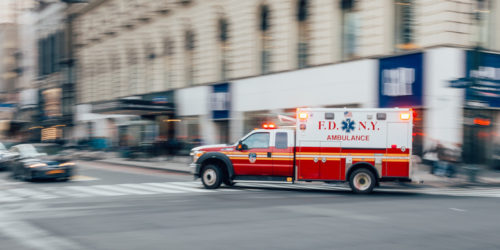
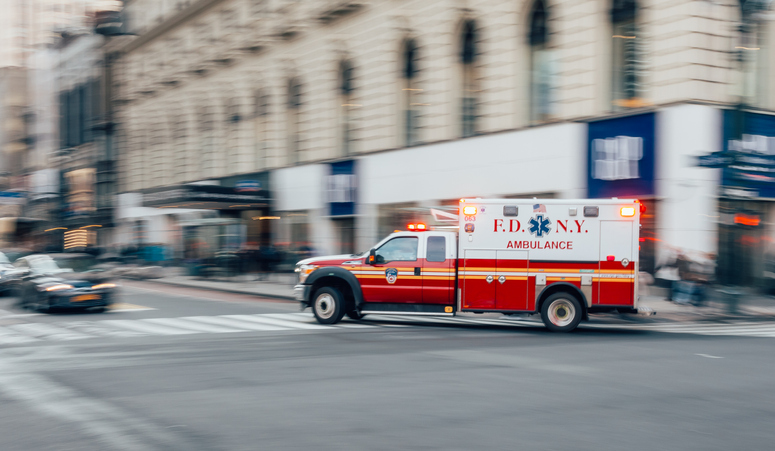
ニューヨークの救急車の写真

How Much Does It Cost to Use an Ambulance in New York City?

How Much Does It Cost to Use an Ambulance in New York City?

new york ambulance image

Estimated reading time: 4 minutes

If you call an ambulance in NYC, you could pay around US$1,385 for a standard ambulance ride with FDNY. That’s the base rate without extra charges like medical supplies, tests, or high-level emergency procedures.

My Personal Experience: What Happened

My husband was struck by a sudden, severe dizziness—so bad he couldn’t walk—and we worried it might be something serious like a stroke. We ended up calling an ambulance. Here’s what happened, and how much it cost.

  • Only dizziness; later doctors thought it was due to aging, possibly also contact lenses.
  • With insurance, we used ambulance + Emergency Room (ER). Got no medical instruments used in the ambulance (no heart monitor, respiratory device, etc.).
  • Total bill ≈ US$975 (about ¥120,000) after insurance.
  • If it had been a more serious condition (heart attack, etc.), cost would be much higher.

What Happens When You Call an Ambulance: Process

  1. You call 911. They ask for:
    • Your address & phone number
    • Symptoms
  2. They evaluate how urgent the case is (for serious issues like chest pain, breathing trouble, you’ll get faster response).
  3. Paramedics may bring equipment; they might ask questions about pulse, breathing, etc.
  4. Depending on condition, you may be asked if you want to ride in the ambulance.
  5. Then transported to hospital ER if needed.

What the ER Does & What to Expect

  • ER = Emergency Room. Meant for urgent / life-threatening situations.
  • Many people waiting, triaged by severity. If your situation isn’t serious, you might wait a long time.
  • Tests like CT scans, imaging, IVs, etc., done depending on symptoms.
  • Sometimes you’ll stay overnight if needed.

Other Experiences

  • A friend with extreme depression once collapsed at night. No insurance. Went to ER (by cab). Monitored, symptoms checked; cost later ~ US$1,000.
  • Another time, I had a bad headache + vomiting after hot yoga. No ambulance. CT scan, pain relief, rest. Stayed overnight. Don’t remember cost exactly, but with insurance it was manageable. Without insurance, much more stressful.

Alternatives: Urgent Care, Free/Low-Cost Options

  • Urgent Care: e.g. CityMD and similar facilities. Good for non-life-threatening issues: cold, minor injuries, etc. Less expensive than ER. Must check whether facility is in your insurance network.
  • NYC Care: A program for people who don’t qualify for other insurance. Provides free or low-cost care at NYC Health + Hospitals’ clinics/hospitals depending on income.
  • Medicare / Medicaid: For those eligible (older people, low-income, etc.), many emergency services are covered. But you may still have copays or deductible depending on your plan.

Updated Stats & What You Need to Know Now (2025)

ServiceApproximate Cost (insured vs uninsured)Notes
FDNY standard ambulance ride~$1,385 base rate (before extra charges) As of May 1, 2023 rate increase. Per-mile charge increased too.
Urgent Care visitIf insured: small copay; uninsured: often $100–$200 for simple treatments.
ER visit costNon-emergency ER visit can easily cost $2,400+ without insurance. Even with insurance, out-of-pocket can be high.

Also important:

  • Many ambulance rides are out of network for insurance plans, which can lead to unexpected (“surprise”) bills. You often can’t control which ambulance service responds in emergencies.
  • Ambulance service from FDNY has a sliding scale or discounted rates for those without insurance or with low income.

Conclusion

In New York City, using an ambulance and going through an ER can get expensive fast, especially without insurance or for serious symptoms. But there are options: urgent care, ambulance discounts, Medicare/Medicaid, NYC Care. It helps to know what your insurance covers, where to go for what kind of symptom, and to prepare in advance if you can.

Return to Home

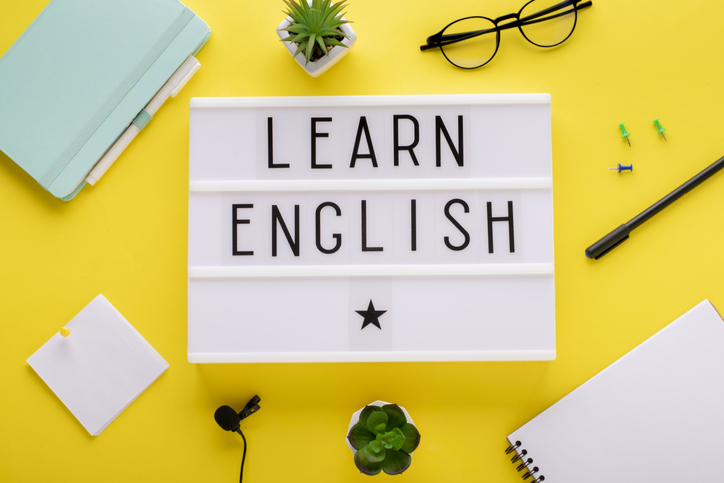
learn English

English Study: Learn Parts of Speech in English

English Study: Learn Parts of Speech in English

In this article, we’ll focus on studying English grammar, specifically Parts of Speech. Think of them as the building blocks of English sentences—similar to the nouns, verbs, and adjectives you learned in school.

To truly understand them, we recommend studying Parts of Speech in English, rather than translating from Japanese. Before diving into the quiz below, you can check out our previous page on Parts of Speech for reference.

What Are Parts of Speech?

Learn Them in English

  • Nouns
  • Pronouns
  • Verbs
  • Adjectives
  • Adverbs
  • Prepositions
  • Conjunctions
  • Other Parts of Speech

All the items above are essential components for building sentences. Learning them in English will help you naturally understand Subject + Predicate structures. For example, answering previously posted quizzes becomes much easier when you can identify the subject and predicate in a sentence. Answers are available on the ANSWER page.

Review: Subject + Predicate

Before practicing Parts of Speech, make sure to read these two articles. Understanding Subject + Predicate is key because Parts of Speech add detail and meaning to sentences. By mastering them, your sentences will become richer and more descriptive.

Quiz: Identify Parts of Speech

To complete this quiz, make sure you first understand what Parts of Speech are.

Parts of Speech are divided into eight groups. Words that don’t fit into the first seven categories belong to “The Other Parts of Speech.” Practicing this way will help you recognize the function of each word in a sentence. Over time, you’ll start noticing these patterns in any English text you read.

Example Sentences

  1. Mike likes bitter chocolates because he finds them healthier.
  2. There are six apples on a dining table.
  3. I went to visit my friend this morning, and I studied this afternoon in the library.
  4. People don’t really know how bad gluten is for the brain. (more challenging)
  5. We need to increase our incomes so that we can live and work for the people who need assistance.

You can categorize these sentences in any way that works for you—by numbering, grouping, or identifying individual words. The important part is to recognize and categorize the components of a sentence.

Recommended Grammar Book

This article is based on a highly readable English grammar book. I personally own it, and it’s extremely clear and beginner-friendly. For Japanese learners who find printed books expensive, the eBook version is a great alternative. Its simple format makes reading English sentences easier and more approachable.

Summary

In this article, we studied Parts of Speech, one of the first steps in learning English grammar. Combine this knowledge with Subject + Predicate practice for a deeper understanding. This blog presents the key points in simple Japanese, so you can cross-reference the recommended book while learning efficiently.

Return to Home

The Monkey Cup Harlem: A Cozy New York Café That Encourages Reading

The Monkey Cup Harlem: A Cozy New York Café That Encourages Reading

Hello, this is Maegami from the blog Megami no Maegami! Today, I’m continuing my New York Café Series, and I’m excited to share a truly unique spot in Harlem — The Monkey Cup.

This café is special because it has a clear policy: it encourages customers to read books instead of scrolling on Wi-Fi. The atmosphere is both cozy and inspiring, perfect for writers, readers, and anyone seeking a calm space in the city.

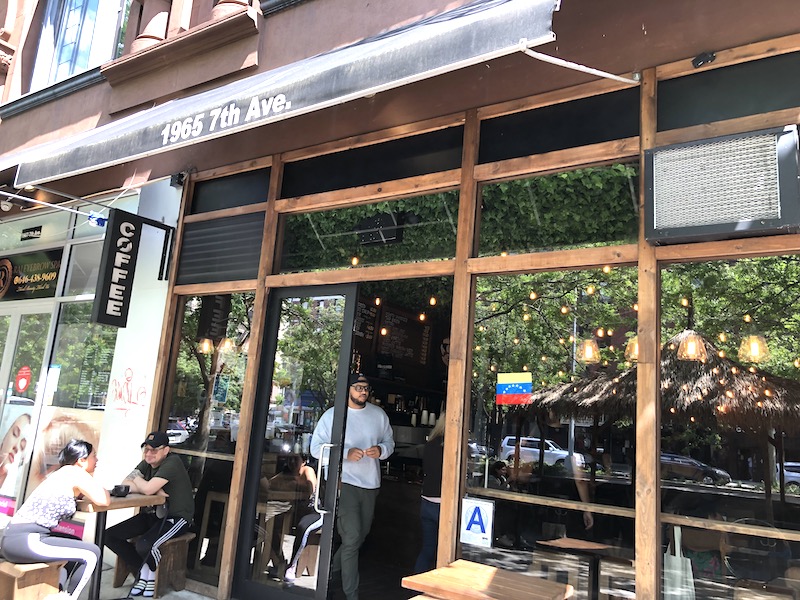
The Monkey cup the picture of the entrance
At the entrance- cute

Safe and Charming Location in Harlem

The Monkey Cupカフェの内装の本棚インテリアの画像

The Monkey Cup is located just a few blocks north of Central Park’s northern edge, in one of the safest parts of Harlem. Many professors and even Japanese residents live in this neighborhood, so while Harlem often carries an intimidating reputation, this area feels welcoming and secure.

A Very New York Café Exterior & Interior

From the outside, The Monkey Cup already feels like a classic New York café. The storefront is stylish, with large glass windows.

If you notice the blue “A” rating sticker, it means the café has passed New York City’s strict hygiene inspections — something that became especially important after past rodent incidents in other restaurants.

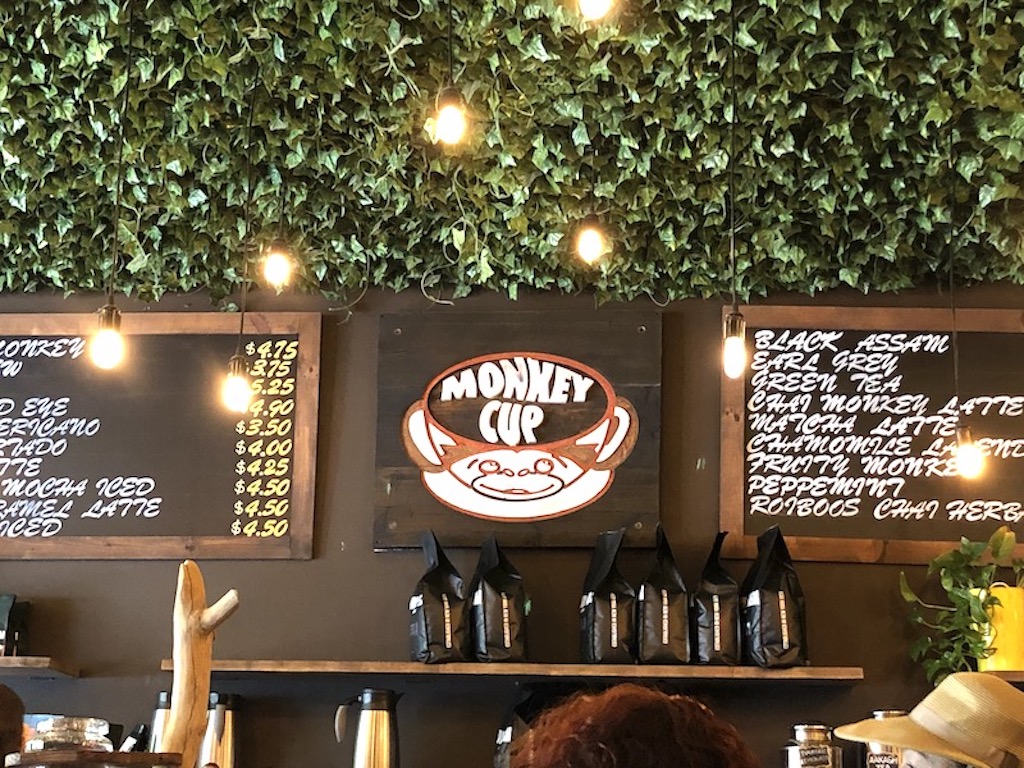
Inside, the Monkey Cup logo brings a playful charm. Order a cappuccino or latte, and you’ll often get a fun monkey-shaped latte art on your foam — made by skilled baristas who serve strong, bold coffee.

Bright, Nature-Inspired Design

The Monkey Cupカフェの内装とロゴの画像

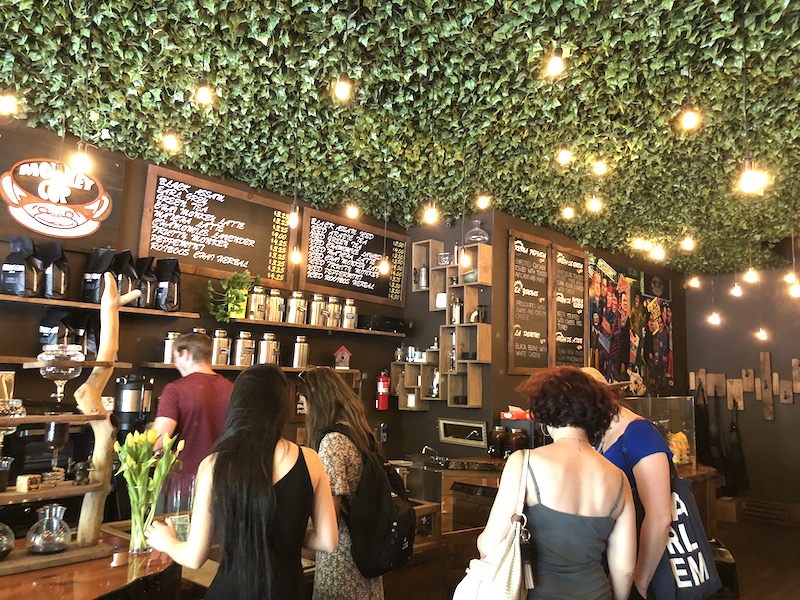
The interior design is one of the most striking features of The Monkey Cup:

  • Ceiling covered in greenery (not real plants, but beautifully arranged)
  • Warm yellow lights scattered like stars
  • Wooden tables and walls that bring a sense of nature and calm
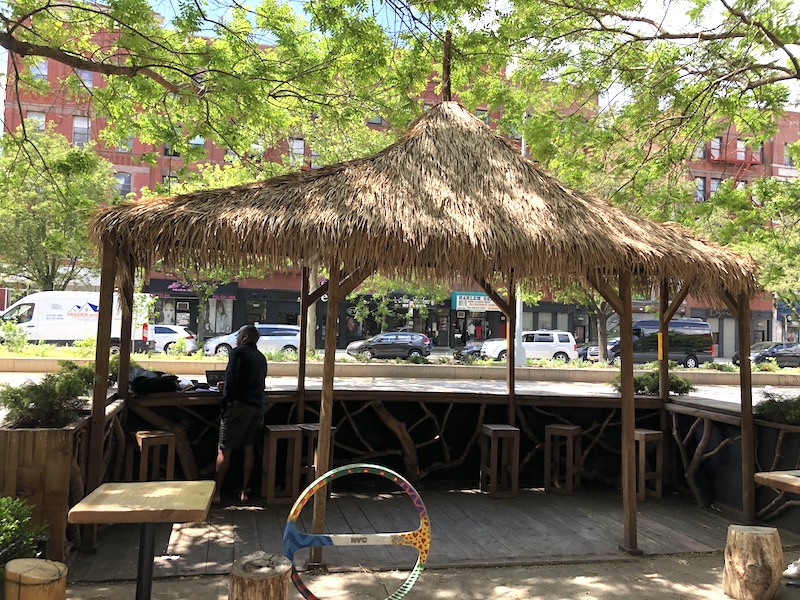
The Monkey Cupの外にあるテラスの画像

The space feels almost like a library, with tables arranged for reading and writing. It’s the kind of place where you can spend hours studying, journaling, or working on creative projects.

Even for interior design lovers, the details are worth noting. The wooden shelves, natural textures, and carefully selected décor pieces give the space a relaxing, organic feel.

The Monkey Cupの内側の写真。内装が非常に可愛い。

No Wi-Fi Policy

One of the boldest things about The Monkey Cup is that there’s no Wi-Fi.

A sign inside says:

“Sorry, no Wi-Fi. Read a book. Make a friend!”

This clear policy sets it apart from many cafés in New York. Instead of encouraging laptops and endless online time, it fosters reading, real conversations, and mindfulness.

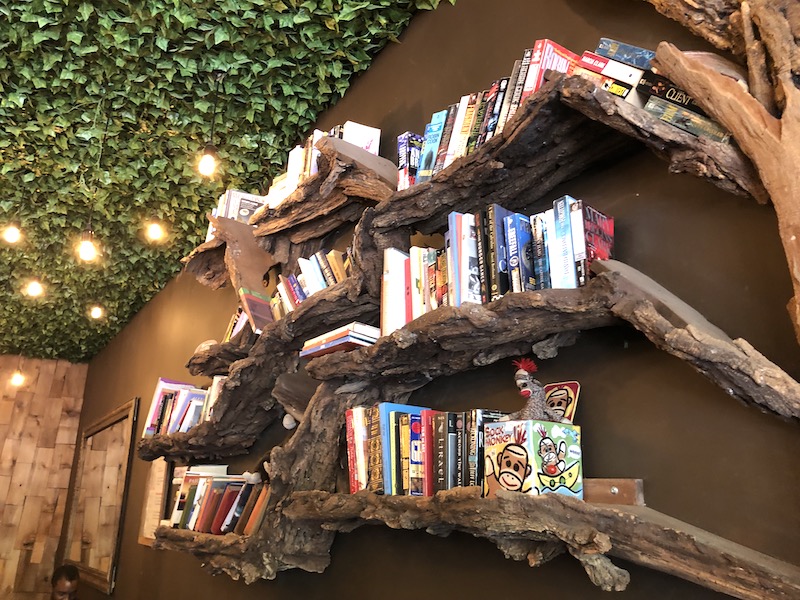
And yes, there are plenty of books available on the shelves — from philosophy texts to vintage novels. Some even have old cloth covers you’d usually only see in libraries or antique bookstores. Guests are welcome to pick them up and read.

The Monkey Cupの内装 本棚のインテリの画像

A Space That Inspires Productivity

I spent several hours here after meeting a friend, and it turned out to be an incredibly productive writing session. Without the distraction of Wi-Fi, I was able to focus deeply on my work.

For writers, readers, and students, this café offers the perfect environment to dive into your projects.

Final Thoughts

If you’re looking for a café in New York that’s not just about coffee but also about creating a thoughtful, mindful atmosphere, The Monkey Cup in Harlem is a must-visit.

Return to Home

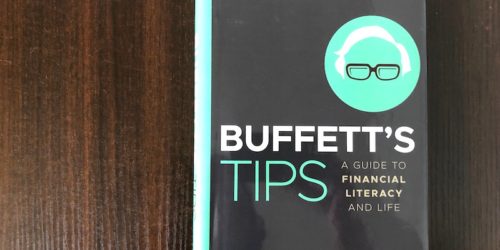
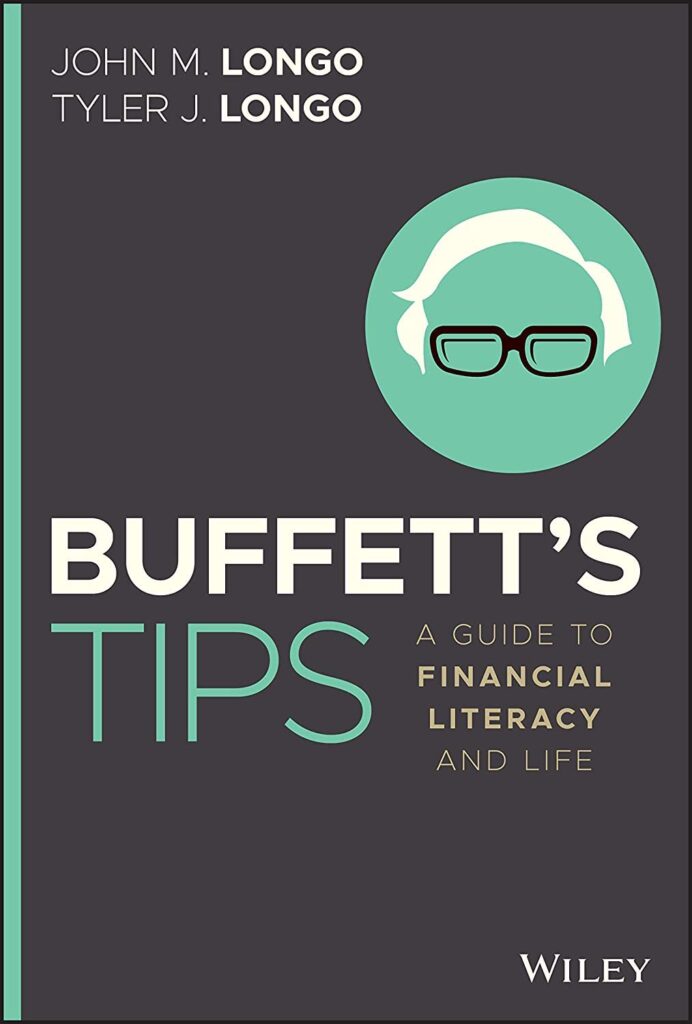
ウォーレンバフェットの本

Transform Your Financial Mindset: Warren Buffett’s Recommended Book

Transform Your Financial Mindset: Warren Buffett’s Recommended Book

warren buffet book

Estimated reading time: 4 minutes

This book is especially relevant in today’s world of rising inflation, where saving in banks barely grows your money, yet prices keep climbing. And no—it’s not about quick money. It’s about preparing for a secure financial future from Warren Buffett’s perspective. Get this book at Amazon

Why Warren Buffett?

Warren Buffett is one of the most respected investors in the world. Some might call him a “finance nerd”—and that’s a compliment!

  • From a young age, Buffett loved numbers and started investing as a teenager using his earnings from newspaper deliveries.
  • Famous childhood stories include selling lemonade to earn extra money.
  • His lifelong passions: working hard and reading extensively.

Even today, Buffett’s lifestyle remains frugal:

  • Breakfast at McDonald’s
  • Living in a modest house
  • Investing wisely rather than indulging in luxury

Despite holding stocks like Apple, he prefers simple phones. He believes in smart financial decisions over flashy lifestyles.

Buffett’s Humor & Philanthropy

Buffett is known for his wit, always giving funny and clever answers to questions.

Key fact: He donates nearly 90% of his investment income, showing that he values purpose over luxury.

His study at Dale Carnegie’s school helped him develop interpersonal and leadership skills, which contributed to his success.

Education & Income: Buffett’s View

Buffett emphasizes the importance of education:

“The higher the degree, the higher the potential income.”

In the U.S., many adults return to college later in life because higher education improves job opportunities. Only a small number succeed without a degree.

Become a Philanthropist

Buffett is also a famous philanthropist, as is Sarah Cooper Hewitt, who supports communities like New York City. Learning from these figures helps us see beyond personal wealth and understand the impact of our financial decisions.

Why This Book Is Fascinating

Many imagine investors living carefree, extravagant lives. In reality:

  • Successful investors live disciplined lives
  • They are diligent workers
  • They value learning and preparation

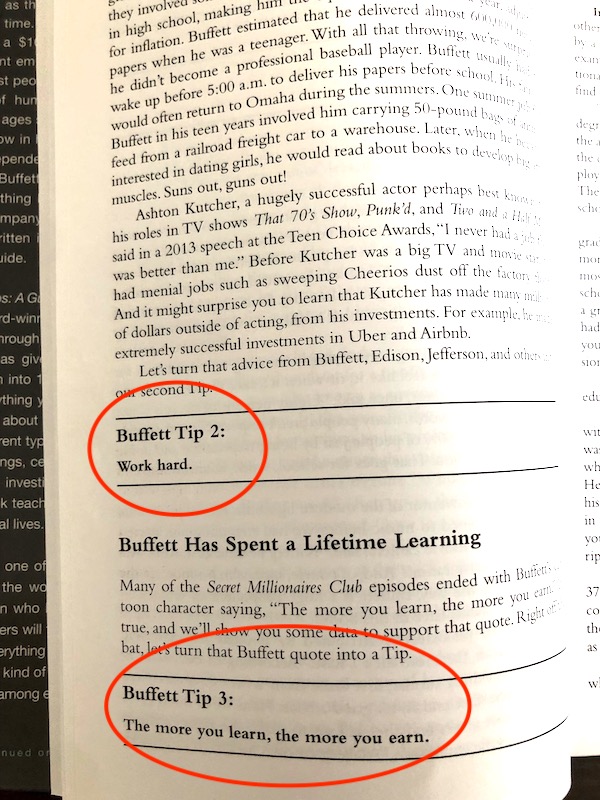
“Work hard. The more you learn, the more you earn.” — Warren Buffett

ウォーレンバフェットの本の中身の写真

Learning more today increases your future financial potential.

The book also includes Buffett’s tips in easy-to-follow sections, written by a Columbia University PhD in business. Buffett himself is a Columbia alum, so the advice is backed by experience and research.

A Word About Investment Sections

The middle of the book can be complex, as it discusses investment strategies. Individual investors need to evaluate companies based on financial performance and market trends.

  • Beginners using Vanguard or company pension plans can skip these sections.
  • For future individual investors, it’s a chance to understand Buffett’s thought process.

Dale Carnegie’s Influence

Buffett studied at Dale Carnegie Academy to improve:

  • Communication skills
  • Human interaction
  • Trust-building

Carnegie’s books remain essential reading to understand Buffett’s approach to personal and professional relationships.

Summary

Buffett’s Tips: A Guide To Financial Literacy is a must-read for anyone wanting to:

  • Rethink their financial mindset
  • Learn disciplined investing habits
  • Prepare for a secure financial future

Whether you’re saving, investing, or planning your life, this book provides practical advice inspired by one of the world’s greatest investors. Start reading today and change how you view money and work!

Return to Home

learn english photo

Subject and Predicate: Mastering Sentence Structure

Subject and Predicate: Mastering Sentence Structure

learn English

Today, let’s dive into a key method for improving your English reading skills: understanding Subject + Predicate sentence structures. This skill help you to read articles written in English a lot faster.

For short sentences, splitting them into Subject and Predicate is relatively easy. But once you encounter advanced articles or long-form English texts, reading becomes more challenging. Many learners get frustrated and even develop a dislike for English.

Learning by Understanding Structure is the key

No matter how complex a sentence seems, understanding its structure can solve almost any reading problem. Think of this as applying critical thinking to language learning.

In high school, English grammar classes often taught articles, nouns, and other rules in isolation. Students memorized them for tests, but rarely applied them in writing or reading practice. The brain struggles to retain information without understanding it. Neuroscience even shows that we can only absorb a limited amount of information each day. Information that feels unnecessary is quickly discarded.

Without understanding the structure, it won’t stay in your brain.

Instead, we’ll approach reading backwards: start by looking at the full sentence first, then break it down into its components.

Let’s Look at an Example

Here’s an excerpt from The New York Times:

“A musical about making art and a play about making money dominated the Tony Awards nominations Monday, as Broadway sought to celebrate its best work and revive its fortunes after the lengthy and damaging coronavirus shutdown.”

At first glance, this long sentence may feel intimidating. But can we split it into two parts? Absolutely!

Here’s one way:

Subject + Predicate Split:

  • Subject: A musical about making art and a play about making money
  • Predicate: dominated the Tony Awards nominations Monday, as Broadway sought to celebrate its best work and revive its fortunes after the lengthy and damaging coronavirus shutdown.

Notice that “sought” is the past tense of seek, meaning “tried to” or “aimed to.” Breaking down long sentences like this allows you to focus on meaning without immediately translating into your own language —translation can distort nuance and slow your progress.

Today’s Key Concept: Parts of Speech

From this article and previous quizzes, here’s the next concept to master: Parts of Speech. Think of a long English sentence as a building. Each word is a component, like wood, nails, or screws. Understanding what “parts” make up the sentence is essential.

The main Parts of Speech are:

  • Nouns
  • Pronouns
  • Verbs
  • Adjectives
  • Adverbs
  • Prepositions
  • Conjunctions
  • Other Parts of Speech

Important: You don’t need to memorize all these yet. Just noticing them is enough to activate your brain. First, focus on understanding sentence structure as a foundation.

I highly recommend the book Complete English Grammar Rules. It’s excellent for organizing your thoughts about English grammar. Use a physical book rather than an eBook—writing notes in the margins makes learning more effective. This book is a comprehensive resource, perfect for referring back to when needed.

We’ll start with Nouns in upcoming posts, gradually moving to Verbs and beyond. Remember: don’t focus on translating yet—first, practice identifying Verbs and understanding sentence structure.

Summary

At first glance, the New York Times example might seem intimidating—but breaking it down shows it’s manageable.

Relying solely on your country’s news is limiting. Translation can introduce subjectivity, so reading in English allows you to access more accurate information. The key takeaway today: Parts of Speech. Notice them, think about them, and you’re already making progress.

English learning is about structure first, translation later. Stay curious, and enjoy discovering the components of every sentence!

Return to Home

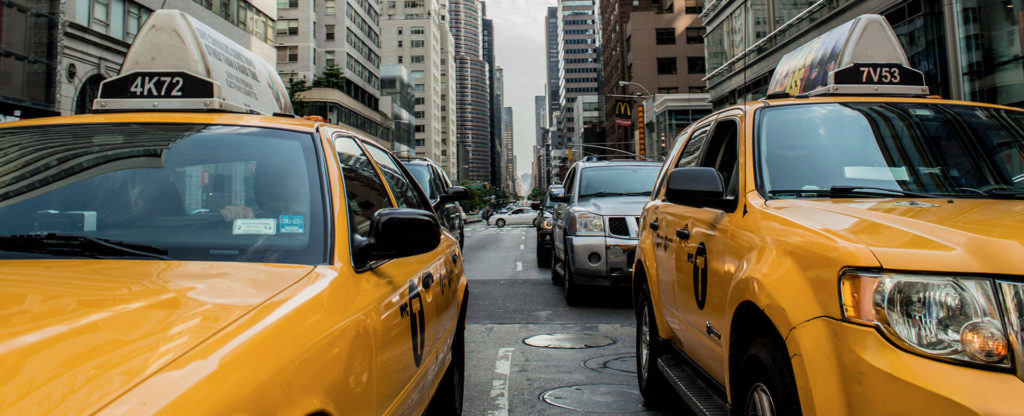
yellow taxi in new york

Times When You Can’t Catch a Yellow taxi in New York

Times When You Can’t Catch a Yellow taxi in New York

yellow taxi in new york

Estimated reading time: 4 minutes

After the pandemic, I tried taking the subway late at night! It had been a long time since I rode the subway alone at 1 a.m., and honestly, it was terrifying. Previously, I wrote about using New York Yellow Taxis, but during the pandemic, I realized I’d overlooked one important point: there are times when you simply cannot catch a Yellow Taxi.

What happened at theWest 4th Station?

One day, I tried to catch a Yellow Taxi in Greenwich Village. This area is home to the famous Jazz Bar Blue Note New York and many other venues with live jazz performances. As a result, it’s always lively at night.

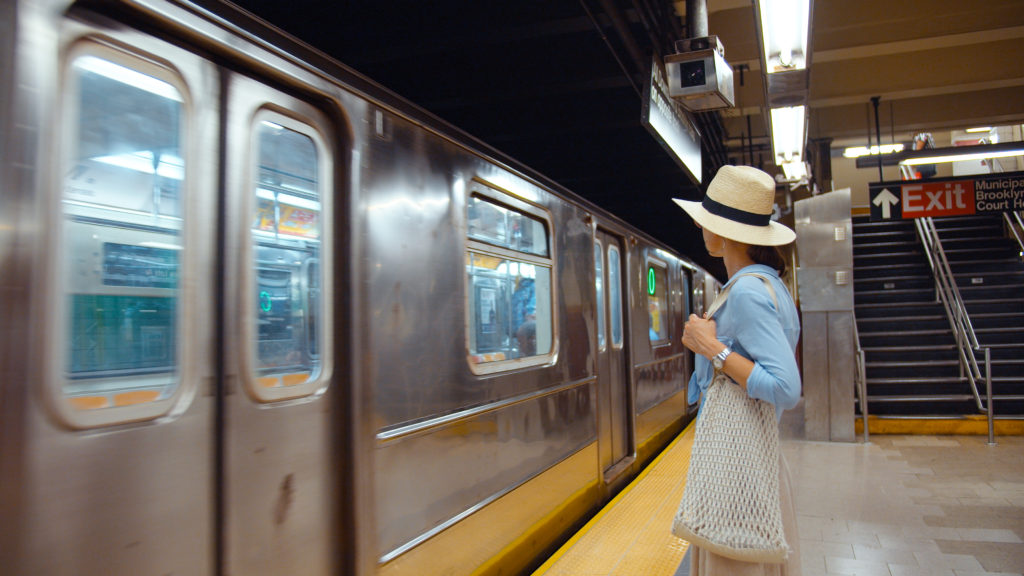
This is just an image that an Asian woman waiting for a train in the mid night in NYC

Additionally, New York University (NYU) is located in Greenwich Village. With student dormitories and numerous young people frequenting bars and restaurants, the area has a high concentration of youth.

Washington Square Park is always buzzing with artists, performers, and people talking late into the night. So, walking around this area at night is relatively safe nowadays.

Yellow Taxis Are Hard to Catch After Midnight

Before 11 p.m., catching a taxi is generally easy. But around midnight, finding a Yellow Taxi becomes difficult. One exception is if you’re heading to Queens—congratulations! Many taxi drivers live in Queens, so your chances of getting a ride are higher.

Being Rejected by Yellow Taxis

Descending into the West 4th subway station at 1 a.m. was terrifying! I was turned away by five Yellow Taxis, all saying, “I’m done.” Since I live on the West Side, getting there would have been a long detour for the drivers.

After midnight, ride share services like Lyft or Uber can cost $100 or more for a one-way trip. During the daytime, these services are fine, but taking the subway after midnight can be quite nerve-wracking.

The Subway at Night

When I passed through the turnstile and headed to the platform, the station was packed with people, and there were 3–4 police officers present. I should have just taken the subway from the start!

I rode the A Train, known as one of the “most dangerous” lines. Surprisingly, it was filled with young people, many of whom were a bit tipsy. They seemed like college students or people returning from work and nightlife. Next to me, a Korean woman was dozing off, which made me a little worried.

Even so, the subway felt safer than a few weeks ago—not dark and intimidating, but closer to the pre-pandemic sense of security.

How the Subway Used to Be

Before the pandemic, riding the subway for work or going out was just part of life. Despite being dirty and always crowded, it made people tough.

After the recent Brooklyn shooting, many people still took the subway the next day. This shows the resilience of New Yorkers.

Voices of Subway Riders

“This is New York.”
“I have to work; I can’t be scared.”
“New York has always been like this.”
“It’s scary, but what can you do?”

These are tough, determined voices. Compared to subway scenes in movies like Ghost, modern New York subways feel safer. Yet, the mental strength of New Yorkers is remarkable.

With a mindset of “Don’t be afraid, just be alert,” people go about work and play safely.

I was also surprised to see ads about cannabis in the subway!
Read more about cannabis in NYC →

Summary

In this post, I shared my experience taking the subway at 1 a.m. After the pandemic, the presence of police and lively crowds has improved safety. The key point to remember: after midnight, Yellow Taxis are hard to catch. Unless you’re heading to Queens, many drivers won’t pick you up. If you live in Midtown, you’re generally fine, since bridges to Queens start from Midtown.

Return to Home