
Monthly Archives: March 2022

USA Visa interview image

Preparing for Your U.S. Visa Interview: Tips and Mindset

Preparing for Your U.S. Visa Interview: Tips and Mindset

USA Visa interview image

Estimated reading time: 3 minutes

Congratulations if your artist visa application has been approved, either locally or from Japan! That’s exciting news—but the next step is the visa interview. Don’t worry, with proper preparation, you can handle it smoothly.

I’ve attended multiple U.S. visa interviews over the years, always feeling nervous at the U.S. Embassy in Tokyo. Hearing stories of failed interviews can be intimidating, but through experience, I’ve learned ways to avoid common pitfalls.

Tip: Don’t choose a faraway embassy just because you heard it’s “less strict.” It can seem unnatural and raise questions.

What Is an Artist Visa?

An artist visa allows you to enter the U.S. for professional artistic activities. You must clearly understand your purpose and projects to explain them confidently during the interview.

Preparing for the Interview

1. Documents: Prepare and Organize

Bring all necessary documents, including:

  • Copies and originals of your visa application
  • Passport and photos
  • Supporting documents (project contracts, letters of recommendation, etc.)

Ensure your documents are well-organized and easy for the officer to review. Avoid bringing bulky folders—select the most essential materials that make the strongest impact.

2. Know Your Purpose and Anticipate Questions

The officer will ask about your visa purpose, projects, and plans in the U.S. You should also be ready to answer questions about:

  • Your profession and work experience
  • How you will support yourself financially
  • Collaborations or past projects

For example, I was asked about a movie soundtrack I worked on and whether I would collaborate with the same team again. Be honest and ready to explain your situation.

3. English Communication Skills Are Crucial

Your interview will be conducted in English. Practice basic responses and key vocabulary related to your visa application. Speak clearly, confidently, and politely.

Tip: Confidence is important, but overconfidence can create a negative impression. Stay calm and respectful.

4. Mindset and Approach

  • Be honest and transparent: Officers check consistency with your documents. Avoid exaggeration or falsification.
  • Stay calm: Take deep breaths before the interview. Being prepared reduces stress.
  • Remember: Most officers are supportive—they want you to succeed and may even wish you “Good luck.”

The Interview Proces

  1. Arrival and Security Check:
    Enter the embassy, go through security, and receive a number for your turn.
  2. Document Submission:
    Submit your visa application and supporting documents. Officers review them carefully.
  3. Interview:
    Officers ask about your visa purpose, plans in the U.S., and personal background. Be ready to answer questions about finances, living arrangements, and professional projects.

Final Tips

  • Learn from past interviews and others’ experiences to avoid mistakes.
  • Prepare thoroughly, organize your documents, and review your project details.
  • Keep a calm, confident, and polite demeanor.

With these points in mind, your artist visa interview should go smoothly. Good luck—you’ve got this!

Back to Home

アーティストビザ 用の推薦状のイメージ画

The Importance of Recommendation Letters for U.S. Artist Visas and How to Collect Them

The Importance of Recommendation Letters for U.S. Artist Visas and How to Collect Them

アーティストビザ の推薦状を読むイメージ画像

Estimated reading time: 3 minutes

When applying for a U.S. artist visa, recommendation letters are one of the most important supporting documents. The quality and content of these letters can directly influence the success of your application, so it’s essential to gather them carefully.

What Is an Artist Vis

An artist visa allows you to enter the U.S. to work professionally in the arts. Your recommendation letters are key evidence of your artistic ability and international impact.

Focus on Quality, Not Quantity

A strong recommendation letter should demonstrate your achievements and influence with concrete examples. Avoid generic terms like “extraordinary” without explanation. Instead, request that the recommender highlight:

  • Past collaborative projects
  • Notable accomplishments
  • How your work contributes to your industry or community

Specific, personalized details make a much stronger impression than a generic, formulaic letter.

How to Request Recommendation Letters

  • Start early: Give your recommenders plenty of time to write.
  • Provide guidance: Share the visa requirements and sample formats to help them understand what’s needed.
  • Encourage authenticity: Let them write in their own words. Avoid making all letters identical; diversity in perspective strengthens your application.

Note: Some people may decline your request, especially if they aren’t very close to you or have limited time. Focus on those who truly know your work and can provide an honest, credible assessment.

Famous Recommenders Are Not Required

While there’s often a tendency to seek famous individuals, fame alone isn’t the key. Immigration officers may not be familiar with each field in detail.

What matters is the recommender’s credibility and standing within your field. Someone who truly understands your work can give an accurate evaluation of your talent and potential.

Collect Reliable and Honest Letters

Analyze your own achievements and collect letters that accurately reflect your experience and potential. Overstating or exaggerating accomplishments can backfire. The U.S. immigration system values honesty, sustainability, and long-term potential.

Summary

Recommendation letters play a crucial role in your artist visa application. Focus on:

  • Quality over quantity
  • Specific examples of your achievements
  • Trusted individuals within your field
  • Honest and authentic content

By carefully selecting your recommenders and collecting strong, personalized letters, you strengthen your chances of a successful visa application.

Back to Home

central park bike lane

Explore Central Park Bike Lanes with Citi Bike

Explore Central Park Bike Lanes with Citi Bike

central park bike lane

Estimated reading time: 3 minutes

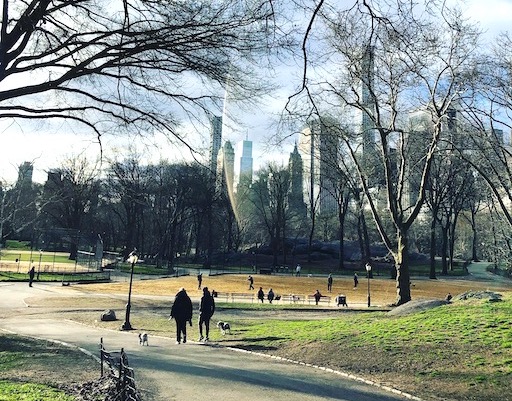
Central Park in New York City is always full of energy—even early on a Sunday morning. Joggers fill the paths, families stroll, and you’ll also see plenty of cyclists enjoying the park’s dedicated bike lanes.

If you’re visiting New York, one of the best ways to experience Central Park is to rent a Citi Bike and cycle around the park loop.

How Long Does It Take to Cycle Central Park?

Cycling the entire loop around Central Park on a Citi Bike takes about 40–50 minutes, depending on your pace. It’s the perfect workout—challenging enough to get your heart pumping, but still manageable for most riders. Be prepared: some hills will leave you a little out of breath!

Central Park in the Morning

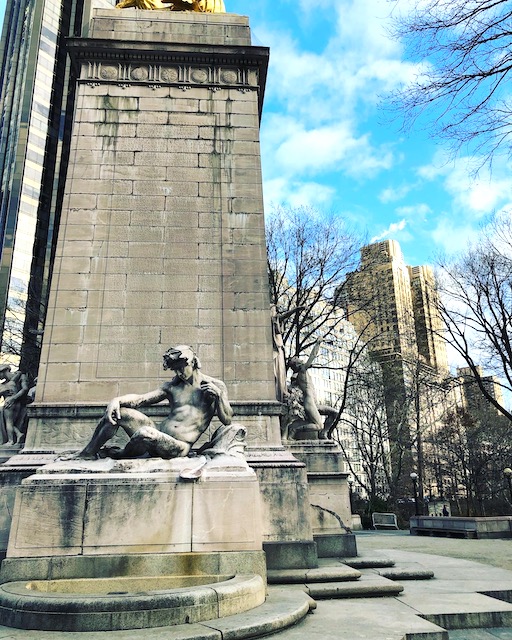
Early mornings around Central Park are refreshing and lively. The park feels calm but vibrant at the same time. Below is a gallery of what you can expect to see during your ride.

Central Park Bike Lane Map

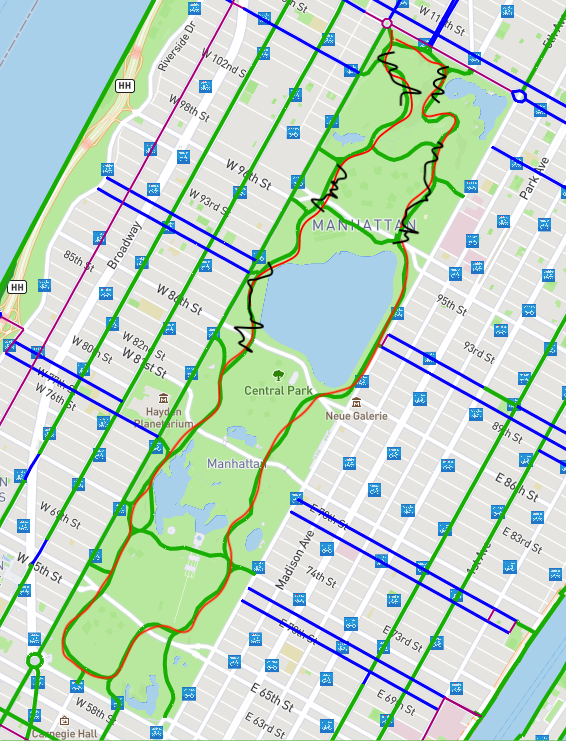
Here’s a map of the Central Park bike loop, courtesy of NYC Bike Maps.

Courtesy to https://www.nycbikemaps.com/
  • Red line = The full cycling loop (about 45 minutes for me).
  • Black wavy lines = Steep hills. These sections can be tough on a regular bike, but with an electric Citi Bike, you’ll breeze right through.
  • The west side has more uphill climbs, so expect a more intense workout. If it’s too much, you can always hop off and walk your bike.

Final Thoughts

Cycling Central Park with a Citi Bike is one of the most enjoyable ways to see New York. You’ll get exercise, fresh air, and an incredible view of the park’s trees, lakes, and landmarks—all in under an hour. Whether you’re a visitor or a local, hop on a Citi Bike and give the Central Park loop a try.

Central park west picture

Back to Home

USA_insurance1

Health Insurance in the U.S.: What Artist Visa Holders Need to Know

Health Insurance in the U.S.: What Artist Visa Holders Need to Know

USA_insurance1

Estimated reading time: 4 minutes

If you’ve just received your O-1 Artist Visa in the United States, congratulations! But before you dive into your creative journey, there’s something essential you need to understand—health insurance in America. Medical costs in the U.S. are among the highest in the world, and having proper coverage isn’t just a recommendation, it’s a necessity.

In this article, I’ll explain why insurance is so important for artist visa holders, what options are available, and how you can protect yourself while living in the U.S.

What Is an Artist Visa (O-1 Visa)?

The O-1 visa, commonly called an artist visa, is granted to individuals with extraordinary ability in the arts, music, film, design, or other creative fields. Unlike H-1B workers, most O-1 visa holders do not automatically receive health insurance from an employer, which means you need to arrange coverage on your own.

Do Visa Sponsors or Employers Cover Health Insurance?

In short—rarely.
Unlike in some countries, U.S. employers are not always required to provide health insurance, especially for freelancers or artists on O-1 visas. Even middle-class Americans often don’t have employer-covered insurance, so it’s up to you to secure your own plan.

The Reality of U.S. Medical Costs

American healthcare is world-class in quality—but also world-class in cost. Here are some average expenses without insurance:

  • Ambulance ride: $1,000+ (over ¥100,000)
  • Surgery: $3,000+ (over ¥300,000)
  • Doctor’s visit: $200–$300 (¥20,000–¥30,000)

For an uninsured artist, one accident or emergency could lead to overwhelming debt.

My Personal Experience With U.S. Healthcare

When I was misdiagnosed with glaucoma by a doctor in Japan, it was only at Mount Sinai Hospital in New York that I received the correct diagnosis—retinal detachment. Thanks to skilled specialists and advanced technology, I received proper treatment and recovered.

This experience showed me that while costly, U.S. healthcare can be more accurate and reliable in certain situations.

Health Insurance Options for Artist Visa Holders

If you’re a student, or even a freelancer with an O-1 visa, you’ll likely need to explore private health insurance. One reliable option is ISO International Student Insurance, which also offers plans for non-students.

Example Coverage I’ve Used:

  • Retinal detachment surgery: $3,000+ covered
  • Women’s health exams
  • Emergency medical care: $1,000+ covered

ISO Monthly Premiums:

  • Ages 20–24: $79/month
  • Ages 25–29: $89/month
  • Ages 30+: $119/month

Plans can be paid quarterly or annually, and may even help with tax deductions.

Is Health Insurance Really Necessary in New York?

Absolutely.
Living in New York means unexpected things can happen—accidents, sudden illnesses, or even health risks from diet and lifestyle. Without insurance, the financial burden can be devastating. Think of health insurance as your safety net and peace of mind.

How to Enroll in ISO Insurance

  1. Visit the ISO website.
  2. Select “Non-student” if you hold an O-1 artist visa.
  3. Enter your age to see monthly rates.
  4. Choose and purchase your plan online.

Final Thoughts

For O-1 artist visa holders in the U.S., securing health insurance is not optional—it’s essential. While ISO is one recommended option, compare different plans to find what best suits your budget and needs.

Your health is the foundation of your artistic journey—don’t risk it by going uninsured.

Back to Home

アーティネリーカフェの外観

Tartinery Cafe New York – A Cozy Cafe at Columbus Circle and Grand Central 

Tartinery Cafe New York – A Cozy Cafe at Columbus Circle and Grand Central

Tartinery cafe

If you’re looking for a stylish and comfortable cafe in Manhattan, Tartinery Cafe is a great choice. Located inside the Time Warner Center (now Deutsche Bank Center) at Columbus Circle, this cafe is also conveniently found at Grand Central Terminal, making it perfect whether you’re shopping, commuting, or just looking for a good coffee spot in New York City.

The Atmosphere at Columbus Circle

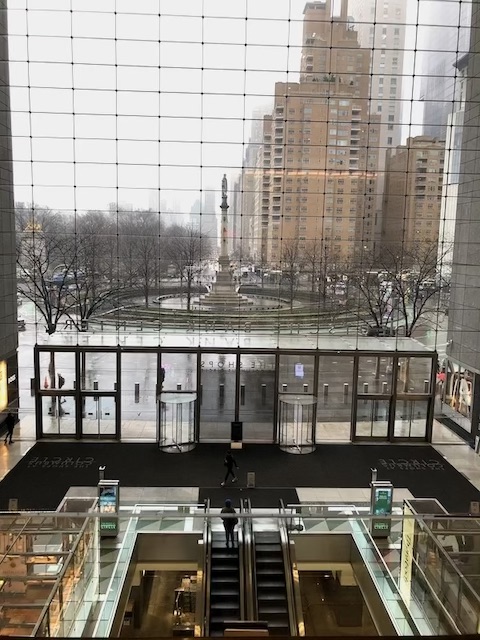
On rainy weekday mornings, Columbus Circle can feel surprisingly calm compared to its usual busy evenings when Whole Foods Market downstairs gets crowded. That’s when Tartinery Cafe becomes the ideal spot to relax with a coffee or get some work done.

The Wi-Fi is provided by services like Amazon and Jazz at Lincoln Center, and it’s reliable enough for working online.

A Cafe with a View

columbus_circle_inside

From the second floor of the Time Warner building, you get a nice view of Columbus Circle. Nearby, you’ll also find Amazon Books and plenty of shopping, making it a convenient location.

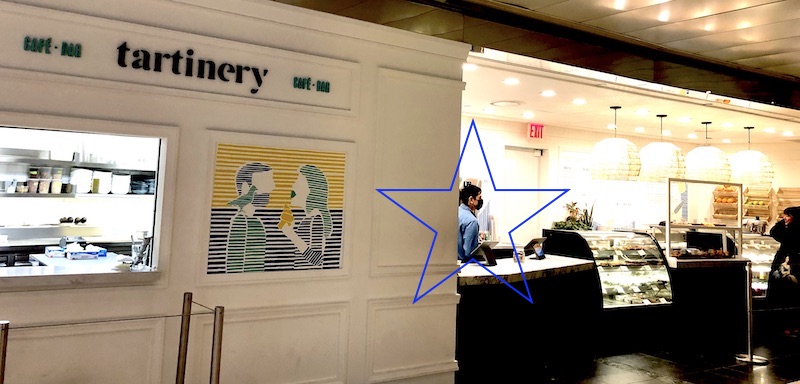
Tartinery itself is located on the third floor, where the cafe and restaurant share a cozy space. Previously, this spot used to be Magnolia Cafe, but it was transformed into Tartinery, bringing a new design, fresh menu, and better coffee.

What to Try at Tartinery Cafe

menu at the cafe

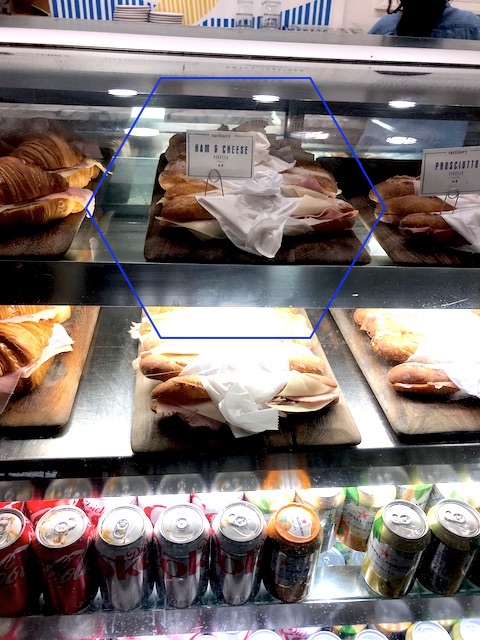
The menu is simple but delicious. When I asked the friendly staff which baguette they recommended, one of them suggested the ham and cheese baguette—and it did not disappoint!

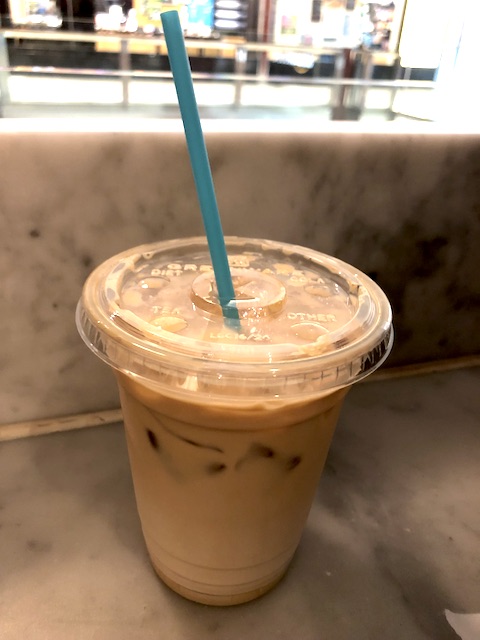
I paired it with an iced latte that was creamy with plenty of milk, the perfect balance with the sandwich. Unlike some cafes in New York that serve very acidic coffee, Tartinery’s blend is smooth and well-balanced, making it great for those who prefer a mellow taste.

Multiple Locations in Manhattan

Ice latte at Tartinary

Besides Columbus Circle, you can also find Tartinery Cafe inside Grand Central Terminal, which is perfect for commuters or anyone passing through Midtown Manhattan.

Conclusion

If you’re searching for a comfortable cafe in New York City with good coffee, fast Wi-Fi, and a cozy atmosphere, Tartinery Cafe is worth visiting. Whether you’re near Columbus Circle or Grand Central, this cafe is ideal for both work and relaxation.

Back to Home

クーパーヒューイット美術館の画像

Cooper Hewitt: History, Ghost Stories, and My Experience

What Is the Cooper Hewitt National Design Museum?

The Cooper Hewitt, Smithsonian Design Museum is the only museum in the United States dedicated exclusively to design and design history. Located in Manhattan, it was originally established in 1897 by Sarah and Eleanor Hewitt, granddaughters of philanthropist Peter Cooper, founder of Cooper Union—a prestigious school where talented art and science students could study almost for free.

Cooper Union: A Prestigious New York University

Cooper Union has long been recognized as one of New York’s most competitive schools, offering programs in art, architecture, and science. Its mission of accessibility and excellence shaped the foundation of the Cooper Hewitt Museum.

My First Visit to Cooper Hewitt

While not as famous as the Metropolitan Museum of Art or the Whitney Museum, Cooper Hewitt became the very first museum I visited after moving to New York 20 years ago. Why? Simply because it was free admission at the time (laughs).

If you’re curious about another New York museum, check out my story about the Guggenheim Museum, which I couldn’t afford to visit back then:

A Haunting Experience at Ringwood Manor

During the pandemic, I visited Ringwood Manor, a vast historic estate in New Jersey once connected to the Cooper Hewitt family. Without much research, I went on a gloomy day, escaping Manhattan’s chaos.

Strangely, as soon as I arrived, I was overcome with severe chills and a headache. After resting briefly in the car, I forced myself inside but soon had to leave. Oddly, my headache vanished the moment I drove away.

Later, I learned that Ringwood Manor is rumored to be haunted, even featured in The New York Times.

The Hewitt Family Legacy

1. Robert Erskine – The Beginning

The estate was first built by Robert Erskine, a Scottish inventor and engineer whose ironwork impressed Benjamin Franklin.

2. The Ryerson Family – Success and Debt

Later, the Dutch Ryerson family purchased the land. Although initially successful in the iron industry, they eventually fell into heavy debt.

3. Peter Cooper – Industrialist and Philanthropist

Next came Peter Cooper, the wealthy industrialist and philanthropist who founded Cooper Union. His legacy shaped New York City’s cultural and educational landscape.

Founding of the Cooper Hewitt Museum

Sarah and Eleanor Hewitt, Peter Cooper’s granddaughters, carried forward his philanthropic vision. They established the Cooper Hewitt Museum as a free and accessible design collection.

Interestingly, the museum is now housed in the former mansion of Andrew Carnegie, another legendary philanthropist who supported education and the arts.

Ghost Stories of Ringwood Manor

Photo Courtesy to Cooper Hewitt Museum

Some say the Cooper Hewitt legacy lingers at Ringwood Manor through mysterious ghost sightings:

  • Robert Erskine: Seen holding a blue lantern by the lake.
  • An Enslaved Worker: Doors reportedly slam shut on their own, linked to spirits of the mistreated.
  • Sarah Hewitt: The smell of rose perfume is said to signal her ghost’s presence nearby.

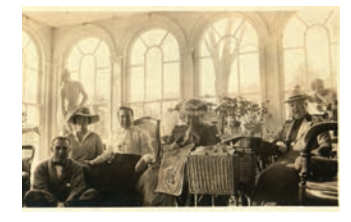
A 1918 photograph taken at Ringwood Manor even shows Sarah and Eleanor Hewitt alongside family members during the Spanish Flu era—adding to the site’s haunting atmosphere.

Conclusion

The Cooper Hewitt National Design Museum is more than just a place to admire art and design—it carries the history of New York’s influential Cooper family and a few spine-chilling legends from Ringwood Manor. Whether you go for the cutting-edge design exhibitions or the mysterious family history, it’s a must-visit for curious travelers.

Back to Home

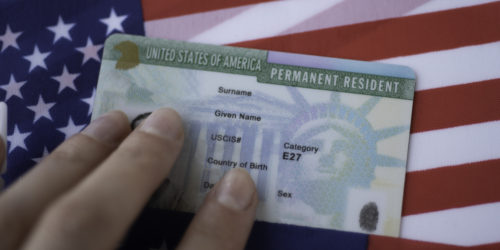
グリーンカードのイメージ画像

How to Obtain U.S. Permanent Residency Without an Artist Visa

How to Obtain U.S. Permanent Residency Without an Artist Visa

Hello! I’m Maegami, the author of the blog Goddess’ Bangs
In this article, I’ll share how some artists have successfully obtained a U.S. Green Card (Permanent Residency) without first applying for an artist visa. In fact, many individuals have transitioned directly from a student visa to an artist-based Green Card through the EB-1 visa category.

Before the Year 2000: Green Cards Were Easier to Obtain

Before the tragic events of 9/11, obtaining a U.S. Green Card was significantly easier. From the 1980s through the 1990s, it was not uncommon for people to arrive in America with no clear purpose, work illegally in restaurants, and still manage to obtain permanent residency within a year thanks to employer sponsorship.

Many Japanese citizens also won permanent residency through the annual Green Card lottery.

Changes After 9/11

After the September 11 terrorist attacks, the immigration system became much stricter. Because some of the attackers had entered on student visas, immigration officers began to scrutinize visa holders more closely. Staying in the U.S. indefinitely on a language school visa became suspicious, making it harder for students to later transition into an artist visa.

EB-1 Visa: A Direct Path to a Green Card

The EB-1 visa is essentially a U.S. Green Card for individuals with extraordinary ability in the arts, sciences, business, athletics, or education. Applying directly for an EB-1, without going through an artist visa first, is possible—but it is very challenging.

You will likely need the help of an immigration attorney. The process requires a large volume of high-quality evidence and costs around 1 million yen (approx. $7,000 USD) in legal fees. Still, the reward—U.S. permanent residency—is invaluable.

Key Requirements for the EB-1 Green Card

  1. International Awards
    Winning a globally recognized prize such as a Grammy, Emmy, Chopin Competition, or Van Cliburn International Piano Competition is a strong qualification.
  2. Major Media Coverage
    Being featured in top media outlets such as The New York Times or The Washington Post is crucial. Immigration officers look for press coverage that is instantly recognizable.
  3. International Recognition
    Documented achievements such as international tours, jury positions at competitions, teaching abroad, or global media appearances all strengthen your case.
  4. Stable and Significant Income
    Demonstrating financial independence and the potential for high earnings is an essential factor for EB-1 approval.

Conclusion

Skipping the artist visa and applying directly for a U.S. Green Card through the EB-1 visa requires meeting all of the conditions above. Fulfilling just one is not enough.

However, many artists successfully move from a student visa to an artist visa, and eventually to permanent residency. The key is to build your career while on a visa and prepare your case carefully.

Remember, Green Card applications can be submitted multiple times, so don’t hesitate to try again if needed. I hope this guide helps future artists and professionals seeking to build a career in the United States.

Back to Home