How to Get Global Entry | A Complete Guide for New York Residents
If you live in New York—or anywhere in the U.S.—and have recently become a U.S. citizen or received your green card, the Global Entry program can make your international travel much smoother. In this guide, we’ll explain what Global Entry is, who qualifies, and how you can apply step by step.
Estimated reading time: 3 minutes
What Is the Global Entry Program?
Global Entry is a trusted traveler program managed by U.S. Customs and Border Protection (CBP). It allows pre-approved, low-risk travelers to use automated kiosks at airports and skip long immigration lines when entering the United States.
My husband and I applied for Global Entry, and within a few months we were approved and received our Global Entry ID. Since then, re-entering the U.S. after international travel has been much faster and stress-free.
Eligibility Requirements for Global Entry
To apply for Global Entry, you must meet the following conditions:
Be a U.S. citizen or lawful permanent resident (green card holder)
Have no criminal record
In addition, citizens from several partner countries can also apply, including:
Provide personal details such as employment history, vehicle information, passport details, and criminal history.
Pay the $100 non-refundable fee, valid for 5 years.
The Global Entry Interview
Once your application is conditionally approved, you’ll receive an email notification. You’ll then need to schedule an interview at an enrollment center.
I completed my interview at JFK Airport, Terminal 4. Even if your green card hasn’t arrived yet, bringing proof of your permanent residency application fee receipt is usually sufficient.
Things to Remember After Approval
Once you have Global Entry, keep these points in mind:
At check-in, notify the airline that you’re a Global Entry member.
Use the TSA PreCheck security lane, which is included with your membership.
Global Entry also works for connecting flights from countries like Canada.
Benefits of Global Entr
Here are the main advantages of joining the Global Entry program:
Save time at immigration when re-entering the U.S.
Skip long security lines with TSA PreCheck access.
Less stress and fatigue after long flights.
Better chance of making tight connections between international and domestic flights.
Conclusion
For New Yorkers who travel abroad often—especially new green card holders and U.S. citizens—the Global Entry program is a game-changer. By reducing wait times and simplifying security checks, it makes international travel smoother and more enjoyable.
If you’re planning to travel frequently, applying for Global Entry is definitely worth considering!
It is a modern and contemporary art museum. Its exterior and interior are famously shaped like a snail shell. It was designed in 1943 by Frank Lloyd Wright, a master of American modern architecture.
The museum is located on the east side of Central Park, at the intersection of 88th Street and Fifth Avenue. Two blocks north, you’ll find the Cooper Hewitt Museum.
What’s on Display at the Guggenheim Museum?
The most famous art museum in New York, the Metropolitan Museum of Art, exhibits everything from ancient art to contemporary works. For example, it displays African and Egyptian art from as far back as the BC era, moving through Impressionism and Modern art, and even has a section dedicated to the development of musical instruments. Its scale is so large that one day wouldn’t be enough to explore it all.
In contrast, the Guggenheim Museum focuses on modern and contemporary art. It showcases the political and cultural concepts expressed by artists who are still active today. Through art, it reflects the complexity of current global social issues. The Guggenheim allows you to experience the ever-changing nature of art in real time, and this is one of its defining features.
Difference Between the Guggenheim and MoMA
I haven’t introduced MoMA (the Museum of Modern Art) yet, but the differences between the two are clear. MoMA is for those who love modern design. The Guggenheim, on the other hand, is more about experiencing art in the broader sense, including contemporary concepts.
For example, if you’re someone who enjoys stylish designs, graphic art, and fashion, MoMA would be a great fit. You could also stop by MoMA’s shop to buy trendy kitchen furniture or small souvenirs.
The Guggenheim, however, offers a deeper experience if you can understand the content and concepts behind the art. It makes you think deeply and might even lead to personal insights. So, instead of just looking at the artwork, it encourages contemplation.
Personal Reflection
Even though I’ve lived in New York for 20 years, I only visited the Guggenheim Museum for the first time recently. I wonder why I kept putting it off—maybe it felt intimidating, or perhaps I wasn’t sure if it was a place I belonged. Also, the entrance fee is higher than the Metropolitan Museum of Art.
Perks for New Yorkers
The Metropolitan Museum of Art and the Natural History Museum (which has removed its Native American exhibits; here’s an article from the NY Times) allow New York residents to enter with a donation instead of paying full price. So, I was able to visit for just one or two dollars.
However, the Guggenheim Museum doesn’t allow entry through donations. This is probably because the modern art displayed is by living artists, which makes it a paid exhibition. The general entry fee is $30 (about 4300 yen). While children can visit, I personally think the Guggenheim is not ideal for very young children.
Where is the Guggenheim Museum?
It’s located on Fifth Avenue and 88th Street in the Upper East Side. It might seem far from areas like Times Square, but Manhattan is quite walkable. For instance, I’ve walked all the way from the Upper East Side to the East Village (laughs).
You can take the green subway lines 4 and 5 (Express) or the 6 line (Local) from Grand Central to the 86th Street station. Alternatively, you can take an Uber, Lyft, or yellow taxi, or use CitiBike, although I would not recommend biking for tourists due to safety concerns (there have been incidents with European tourists in the past).
Must-See Highlights at the Guggenheim Museum #1: The Tannhäuser Collection
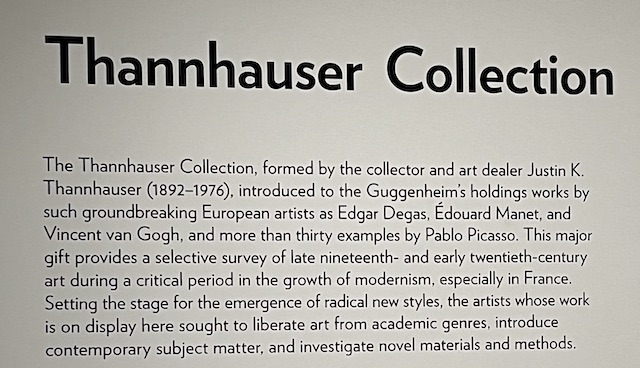
The Tannhäuser Collection is a collection of paintings gathered by a German art collector and dealer named Tannhäuser. It includes rare works by artists such as Van Gogh, Picasso, Manet, Monet, and Renoir.
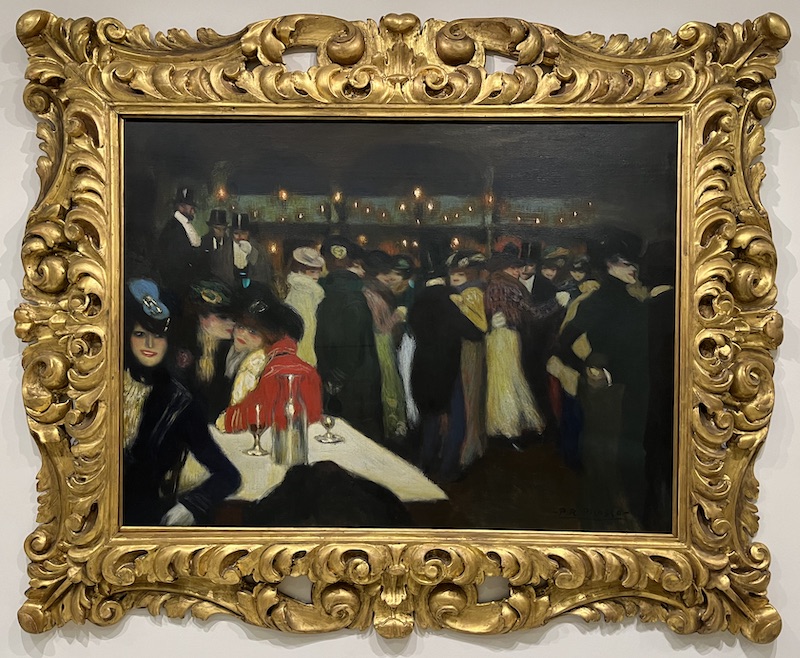
One example is Pablo Picasso’s ambitious painting “Moulin de la Galette” (1900), created when he was just 19 years old. This painting is featured in the New York Times article, and I encourage you to read it if you’re interested. I was particularly struck by the woman’s mouth in the painting, which seems to draw attention.
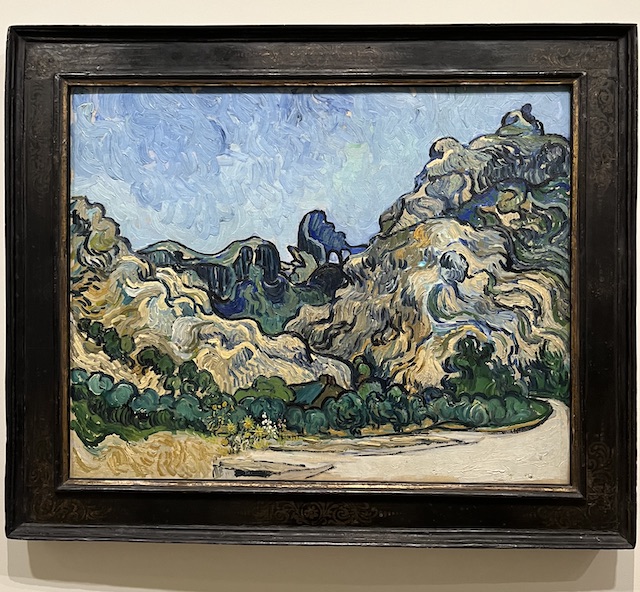
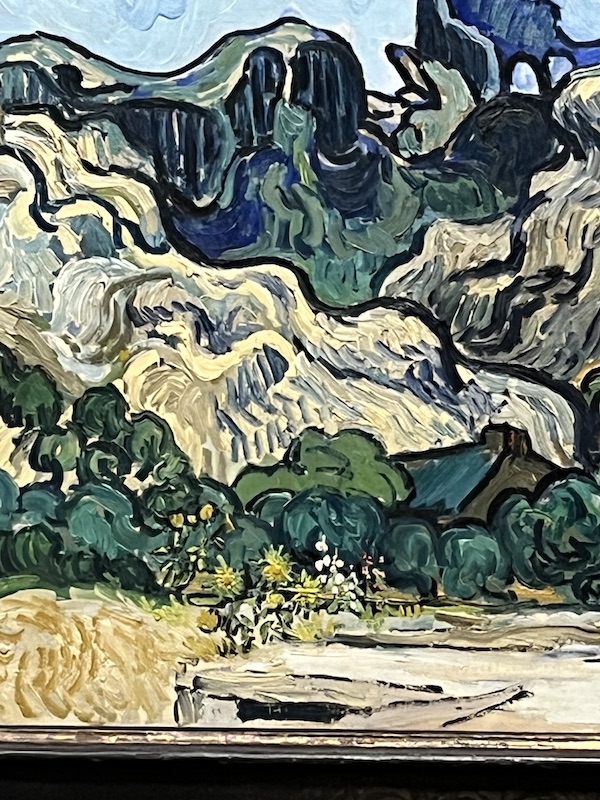
Another highlight is Van Gogh’s “Mountains at Saint-Rémy,” painted during his time in a psychiatric hospital. The details of the sunflowers in the painting make you reflect on why they are depicted in such a manner.
There are many more fascinating works in this collection, along with explanations about the artists’ circumstances at the time. I think it’s important to be able to read English to fully enjoy this aspect.
Must-See Highlights at the Guggenheim Museum #2: Inspiring Visitors
For me, one of the most inspiring things about the museum was seeing the people around me. I think one of the joys of living in New York is experiencing its unique atmosphere. Of course, visiting iconic landmarks like the Statue of Liberty and Times Square is great, but there’s also a unique vibe to New York’s cool and artistic crowd. You’ll often spot stylish, monochromatic-dressed people. You can get a taste of this vibe in the short video below, accompanied by Philip Glass’s piano music.
Must-See Highlights at the Guggenheim Museum #3: The Museum Café
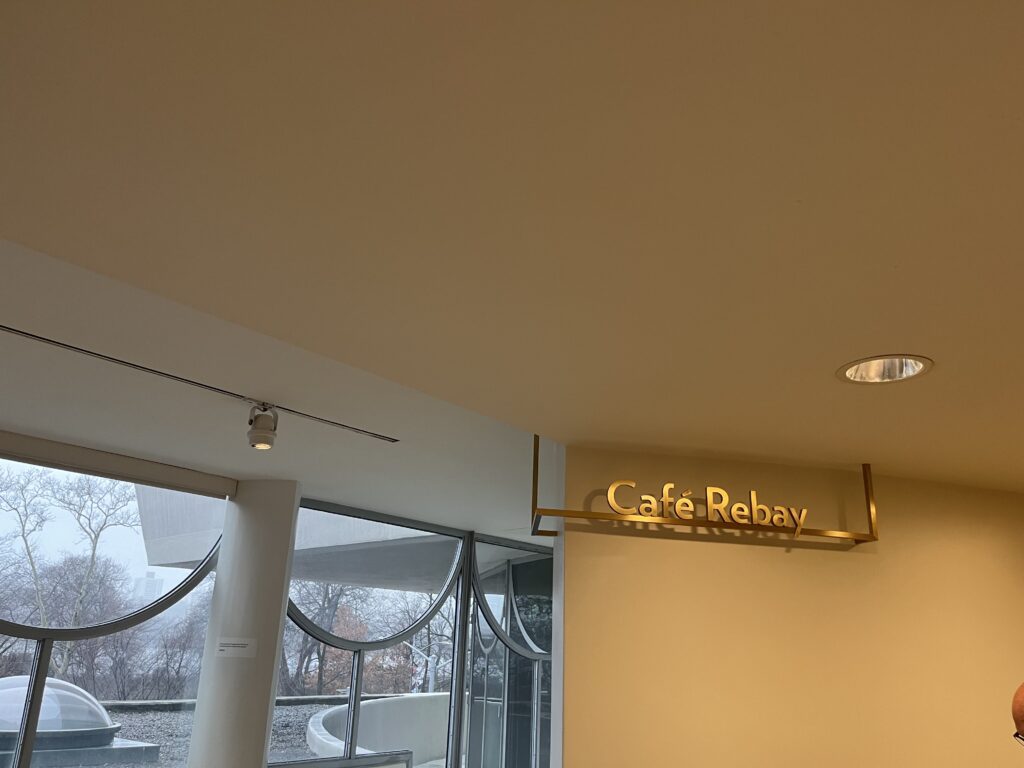
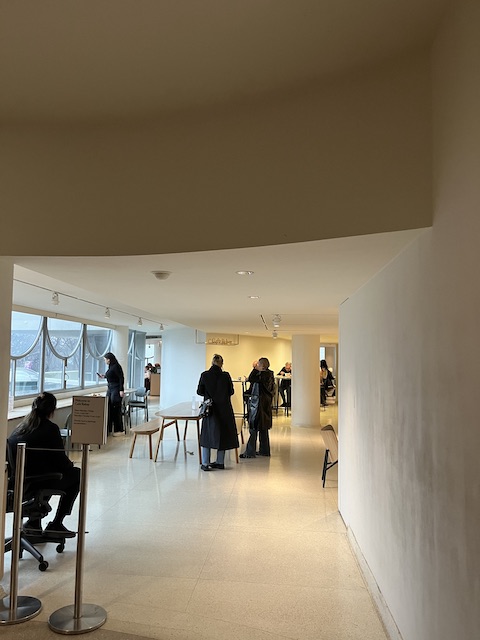
I also visited the café inside the museum, which I highly recommend to New Yorkers as well. It’s the perfect place to get your artistic mindset elevated.
Summary
In this post, I introduced the Guggenheim Museum. I didn’t mention this in the highlights, but the current exhibition theme is “Going Dark.” This exhibition features works by black, Middle Eastern, and indigenous women artists, exploring the theme of visibility. Each piece expresses their experiences in a society where their presence is often barely seen. The conceptual representations are thought-provoking, and some of the works are truly striking. If you’re interested, I highly recommend you visit the museum!