Introduction to Tara Westover’s Memoir – “Educated”
Hello, this is Maegami from the blog “Megami’s Fringes”. In today’s post, I’m introducing an essential read for anyone interested in stories about overcoming adversity and the challenges of education: Educated: A Memoir by Tara Westover. Published in 2018, this memoir has captured attention worldwide, even earning praise from figures like Bill Gates and Oprah Winfrey. If you’re looking for a compelling read, Educated will undoubtedly keep you hooked until the last page.
Estimated reading time: 5 minutes
About the Book
Tara Westover’s memoir Educated follows her journey from growing up in rural Idaho in a strict Mormon family to ultimately earning a PhD from the University of Cambridge. Her family’s isolated lifestyle – far removed from formal education- meant she had no access to school until much later in life. Despite this, Tara managed to break free from the constraints of her upbringing and pursue knowledge at all costs. This book not only covers her personal growth but also reflects on broader societal issues such as educational inequality and the polarization within America.
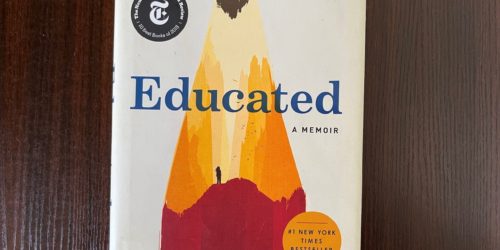
Book Cover and Design
The cover of Educated was designed by Patrick Svensson. The simple yet powerful design encapsulates the essence of the book, symbolizing Tara’s journey toward enlightenment in a world where knowledge and freedom were severely restricted.
Why I Decided to Read It
I first picked up Educated during the 2020 pandemic, just before the U.S. presidential elections. Tara’s captivating storytelling drew me in from the very first page, and I couldn’t put it down. Her writing is clear, evocative, and engaging, making her experiences come alive on the page.
Summary of the Memoir
Family and Early Life
The first chapter introduces Tara’s father, whose strong religious convictions and dedication to self-sufficiency shaped her entire childhood. Raised in the rugged mountains of Idaho, her life was dictated by Mormon teachings and her father’s extreme beliefs, which included avoiding mainstream education and medical care.
Educational Inequality and the Mormon Influence
Tara’s education was limited by her family’s strict adherence to Mormonism. Her parents didn’t allow her to attend school. Rather she had to learn how to work with her hands, focused on survival skills rather than academics. The book explores the tension between religious beliefs and the necessity of a formal education.
Tara’s Relationship with Her Brother
Tara’s relationship with her brother is important in this story. He played a key role in both her isolation and eventual escape from her family’s restrictive beliefs. As their paths diverged, so did their differing understandings of freedom and knowledge.
Tara’s Writing Style

Tara Westover’s writing is deeply poetic, yet clear in its explanations. She has the rare ability to evoke powerful imagery while still making the narrative accessible. Her descriptions of the isolated world she grew up in feel authentic and vivid, helping readers understand the stark differences between her upbringing and the world most of us know.
Educational Inequality and America’s Polarization
Reflections on America’s Political Divide
The book takes a profound look at the social divisions in America. Tara’s story allows readers to understand the deepening educational and ideological polarization that characterizes American society today. Her childhood in rural Idaho contrasts sharply with the liberal, progressive culture of cities like New York. Tara’s observations bring a new perspective on the cultural divide -particularly the tensions between rural conservatism and urban liberalism.
New York vs. Idaho: A Contrast in Perspectives
Tara’s upbringing in Idaho was worlds apart from the urban and cosmopolitan environment of New York City. While New York represents progressive, open-minded ideals, her childhood was defined by a closed-off, religiously-driven environment. Tara’s reflections on this contrast help us see how different environments shape one’s worldview—and how we may sometimes view the world through a narrow lens based on where we live.
Tara’s Perspective on Liberalism and Success
In an interview, Tara was asked whether she thought people from rural Idaho had a narrow worldview. Her response was eye-opening: “I think the narrowest-minded people live in New York.” She was referring to how those who live in liberal, successful circles may often lack an understanding of the struggles faced by people outside their bubble, which is a sharp critique of the elite’s understanding of broader societal issues.
Conclusion
Educated: A Memoir is more than just a personal story—it’s a profound commentary on educational disparity and the divide between America’s urban and rural populations. Tara Westover’s journey is one of resilience, but also a critical lens through which to examine larger societal problems. This memoir is a must-read for anyone interested in understanding the complexities of education, family dynamics, and the broader American experience.
If you’re interested in learning more about Tara’s story and the themes of educational inequality, I highly recommend picking up Educated today. You won’t regret it!
Back to Home