Monthly Archives: November 2025

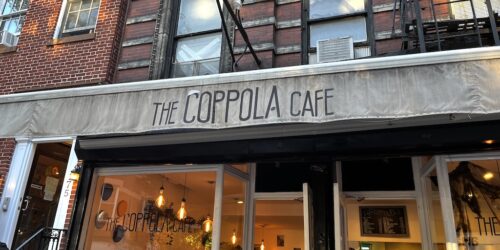
Alt="coppola cafe entrance photo"

Café Coppola: A Hidden Gem in New York’s West Village

Café Coppola: A Hidden Gem in New York’s West Village

カフェコッポラの写真

It’s been a while since my last café-hopping article in New York, and today I’m excited to introduce a charming little spot in West Village — Café Coppola.

The History and Charm of Café Coppola

Located in the heart of West Village, Café Coppola is a cozy hideaway loved by both locals and tourists. Established in the 1980s, it has grown alongside the neighborhood’s vibrant cultural and artistic scene.

The café’s name comes from the legendary Italian-American filmmaker Francis Ford Coppola, making it a favorite spot for movie lovers as well. Personally, I also adore Sofia Coppola’s films, so visiting this café feels extra special.

Cozy Atmosphere with an Italian Touch

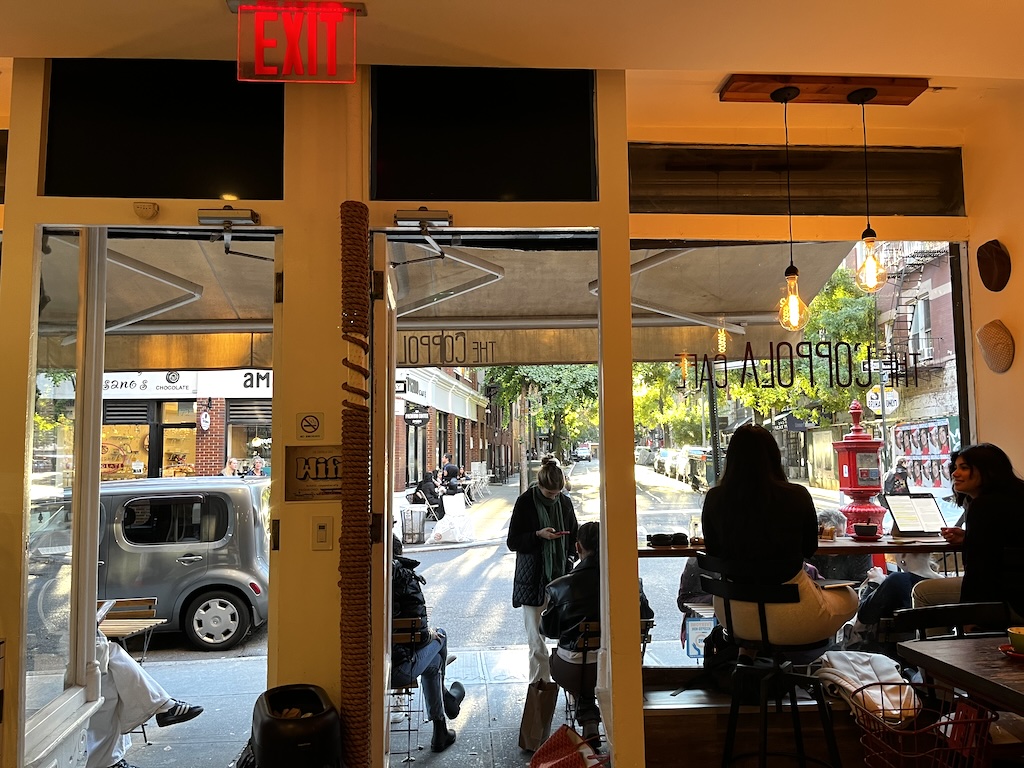
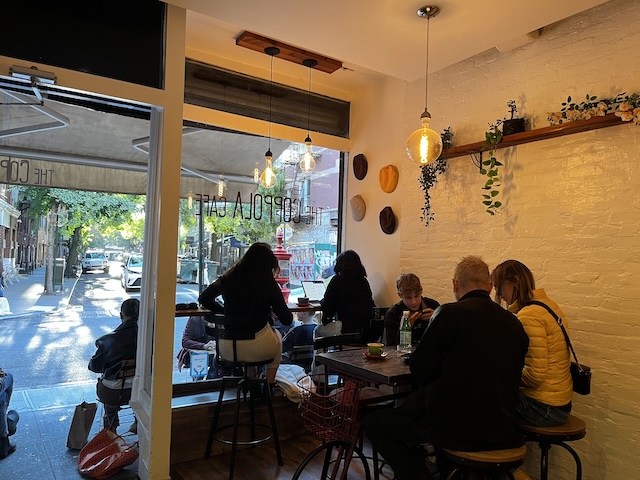
One of Café Coppola’s biggest charms is its warm, homey vibe. Antique furniture and soft, rustic décor transport you straight to a small family café in Italy. It’s the perfect place to relax, enjoy a cup of coffee, and soak in the neighborhood’s artistic spirit.

What’s on the Menu?

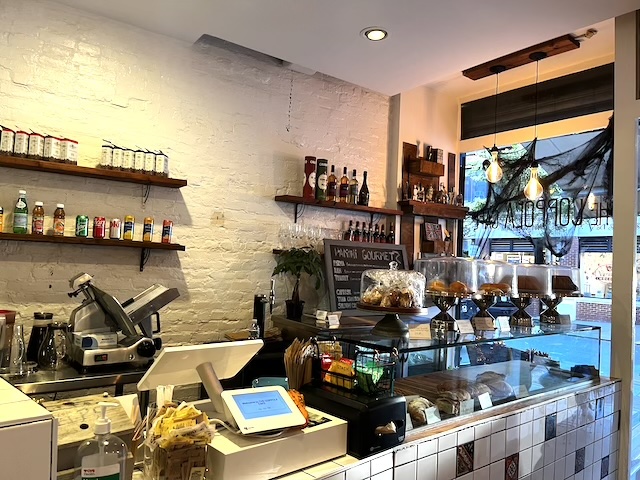
Café Coppola offers a wide variety of authentic Italian coffee — from espresso and cappuccino to creamy lattes. For breakfast and brunch, their croissants and paninis are popular.

Must-try favorites:

  • Coppola Special Latte – A perfect balance of smooth espresso and rich, frothy milk.
  • Prosciutto & Mozzarella Sandwich – Savory prosciutto paired with fresh mozzarella, served on crunchy baguette.

The café also caters to different dietary needs, with vegan and gluten-free options available.

Location and Access

You’ll find Café Coppola right in the center of West Village, surrounded by art galleries and unique boutiques.

Address: 171 West 4th Street, New York, NY 10014
Nearest subway: Christopher St – Sheridan Sq (Line 1), about a 5-minute walk.

The cobblestone streets and historic buildings nearby make it a lovely area for a leisurely stroll before or after your coffee break.

Follow them on Instagram: The Coppola Cafe

Final Thoughts

If you’re looking for a relaxing hidden gem in West Village, Café Coppola is the place to be. With its rich history, Italian-style coffee, and cozy charm, it’s the perfect spot to enjoy quality time with friends — or even just with a good book.

Next time you’re in New York, treat yourself to a cup of coffee at Café Coppola and experience the true essence of West Village.

Back to Home

why Japanese failed learning English

Why Japan’s Old English Methods Failed — And What Really Works Now

Why Japan’s Old English Methods Failed — And What Really Works Now

why Japanese failed learning English

One of the reasons I started writing my blog in English is to help Japanese people improve their English reading skills.

When I browse through Japanese blogging communities — especially on Blog Mura — I notice that most posts are written entirely in Japanese, especially in the “English learning” sections. Of course, we only have 24 hours a day. If we spend most of that time surrounded by Japanese content, our exposure to English stays very limited.

That’s why I decided to write in English — so readers can experience English naturally, not just study it through translations or textbooks.

Why Do Japanese People Struggle with English?

It’s no secret that Japanese people tend to have lower English proficiency compared to many of our Asian neighbors. Over the last twenty years, I’ve seen this gap grow. People from Taiwan, Indonesia, Malaysia, and even Mongolia often speak English more comfortably than we do.

Among my musician friends in Japan, only a few can speak English well — and even fewer can read it confidently. I include myself in this; I’ve had to work hard to catch up. But why is this happening?

1. The TOEFL Test Has Become Harder

International English standards have risen. Exams like TOEFL and IELTS now require natural communication skills, not just grammar knowledge. Unfortunately, Japan’s English education system hasn’t evolved fast enough to keep up.

I also believe the recent decrease in Japanese students studying abroad isn’t only because of the yen–dollar exchange rate. The TOEFL iBT exam itself has become a real barrier — it filters out many Japanese students who haven’t had enough training in practical English communication.

2. The Education System Focuses Too Much on Grammar and Vocabulary

Most Japanese schools teach English in Japanese. Students spend years memorizing words and grammar rules, but they rarely use English to think or communicate. This creates a “translation mindset” — always converting English into Japanese instead of understanding it directly.

3. Lack of Critical Thinking and Expression Training

This issue goes deeper than just English. In Japan, students don’t often get the chance to discuss, debate, or express personal opinions — even in Japanese. So when it comes to English, we not only lack words but also the confidence and habit to express ourselves.

Before we can speak well in English, we need to practice speaking up in Japanese, too.

So How Can We Improve?

1. Read in English

Reading is the foundation. Blogs, articles, even short social media posts — try reading in English every day. Start small, but do it consistently. Your brain needs English input to think in English.

2. Speak — But Don’t Force It

Many people say, “Find foreigners to speak English with.” That’s helpful, but not the whole answer. The real problem is that Japanese people are not used to expressing opinions clearly, even in Japanese.
We need to build a culture — both in schools and in society — where open discussion and self-expression are encouraged.

3. Write — Even Short Notes

With AI tools improving, writing practice is becoming easier. You can write blog posts, journal entries, or even social media captions in English. Use tools like ChatGPT or Grammarly to check your writing and learn from it.

4. Listen and Watch in English

This is the easiest way to stay immersed. Watch movies, YouTube videos, or listen to podcasts in English. You don’t need to understand everything — just keep your ears used to the rhythm and sound of natural English.

Final Thoughts

Improving English isn’t about talent; it’s about exposure and mindset. The old methods — memorizing grammar and vocabulary lists — don’t work anymore.

If we start reading, writing, and thinking in English little by little every day, Japanese learners can absolutely catch up. Let’s move beyond the classroom and create our own English environment — one blog post, one thought, one word at a time.

Back to Home

Zohran Mamdani image

Zohran Mamdani: NYC’s First Asian Muslim Mayor (2025)

A Historic Moment for New York City

Zohran Mamdani has made history as the first Asian Muslim mayor of New York City, elected on November 4, 2025. His victory represents a milestone for diversity and progressive leadership in one of the world’s most influential cities.

Born in Uganda, Africa, Mamdani moved to the United States when he was five years old. Both of his parents are highly accomplished — graduates of Harvard and Columbia University. His mother is a well-known filmmaker, and Zohran himself attended Bronx High School of Science, one of New York’s most prestigious public schools, comparable to Hunter College High School, which I mentioned in a previous post.

My Political Stance: Liberal, but Not Far-Left

I consider myself a liberal, but I don’t fully align with the far-left socialism that Zohran Mamdani and many of his supporters represent.

Still, I’m genuinely happy about his election — my husband even voted for him! Yet, we must remain realistic and see how much he can actually deliver on his promises.

On Capitalism and the Wealth Gap in New York City

Zohran Mamdani’s criticism of capitalism is one area where I disagree with him.

It’s true that capitalism has deepened the gap between the rich and people with low-income. Walking through the city, it’s heartbreaking to see the rising number of homeless and drug-addicted individuals. This is an urgent social issue that must be addressed.

However, I believe that capitalism can also be part of the solution — if wealthy people are willing to share their resources generously. New York City’s economy thrives because many wealthy individuals still give back through philanthropy, investment, and community support. Not everyone who succeeds financially is an enemy of social progress.

Instead of fighting the rich, I believe we should encourage more generosity among them.

How My Perspective Changed by Working in Manhattan

Over the years, my ideas have changed greatly through my experiences working in Manhattan.

I believe that where you work and where you study strongly shape your ideology. When I studied at CUNY, I was surrounded by many students from working-class backgrounds. That environment influenced me to think like a far-left liberal, with strong beliefs in equality and social justice.

However, once I began running my own business and meeting wealthy clients and professionals, my perspective started to evolve. I realized that many of them are not bad people — in fact, many contribute significantly to society. I also came to understand why they feel the need to protect their assets.

Still, I noticed two very different kinds of wealthy families: those who genuinely care about society and those who don’t.

That’s why I hope Mayor Zohran Mamdani will go deeper into this issue — to work closely with socially conscious wealthy individuals, and also to educate those who are not yet aware of their potential role in building a fairer, more compassionate city.

A Conversation That Changed My Perspective

Recently, I attended a concert at Lincoln Center. During the intermission, a man sitting next to me started a conversation. His family was quite loud, and though he seemed pleasant, I was surprised to learn that he was a Trump supporter.

He claimed that Columbia University had become a dangerous place because of the pro-Palestine protests earlier this year. Since I am part of the university community, I knew that wasn’t true. The demonstrations were peaceful — no one was hurt — and even Orthodox Jewish students participated. This reminded me how misinformation can spread so easily.

The man, an immigrant from Greece and a real-estate businessman in Queens, had become wealthy but lacked understanding of broader social realities. He spoke negatively about undocumented immigrants, even though it was the previous administration that welcomed them before policy changes took place. How can someone feel happy seeing others suddenly detained or relocated to harsh camps?

This experience showed me how education and empathy are just as important as wealth or success.

What I Hope Mayor Zohran Mamdani Will Do

I hope Mayor Mamdani focuses on educating and engaging wealthy New Yorkers who may lack awareness of social inequality. We need leadership that bridges divides — not only between rich and poor, but also between communities, ideologies, and generations.

New York City deserves a future where economic opportunity and compassion coexist. Zohran Mamdani’s election is a symbol of progress — but the real work begins now, in how he brings people together to make change happen.

Final Thoughts

Zohran Mamdani’s rise to leadership is a historic milestone for Muslim and immigrant representation in American politics. As a liberal, I support his vision of equality — even as I remain cautious about his economic ideology.

In the end, leadership isn’t about ideology alone; it’s about uniting people to build a fairer city for all.

The cover image is from Zohram Mamdani’s website. Photographer Kara McCurdy

Back to Home

Asia beautiful hair

Japanese Hair Products for Healthy Locks

Japanese Hair Products for Healthy Locks

Asia beautiful hair

Estimated reading time: 4 minutes

Living in New York City means battling harsh, dry weather almost year-round, and the water can really take a toll on your hair. My hair used to feel brittle, frizzy, and dehydrated no matter how much I conditioned it with other products.

Eventually, I returned to Japanese hair products after learning about them from my hairstylist at a popular salon in the Lower East Side, and they have completely restored my hair to its normal, healthy condition. These products not only nourish and hydrate but also help maintain smoothness and shine—even in the driest weather.

Why I Use Japanese Hair Products

The main purpose of my hair care routine is hydration and overall hair health. Japanese shampoos and conditioners are renowned for their high-quality ingredients, light formulas, and long-lasting effects. By choosing products I trust and have personally tested, I ensure that my hair stays manageable, healthy, and soft without feeling weighed down.

1. Milbon Shampoo & Conditioner

Milbon is a staple in my hair routine. Its lightweight yet nourishing formula keeps my hair hydrated without any buildup. After using Milbon, my hair feels smooth and soft, even after blow-drying. I’ve been using this product for a very long time.

Its main purpose is to cleanse your scalp. Most Japanese beauty hair salons use this product, and I learned about it from my hairstylist. It’s expensive, but it lasts a long time because you only need a small amount. My stylist also said it’s okay to use a different conditioner. She recommended Tsubaki, but it didn’t work for me. You’ll see it listed below.

Benefits:

  • Long-lasting hydration
  • Smooth and frizz-free hair
  • Strengthens hair from roots to tips

Check Milbon on Amazon

Disclosure: This post contains Amazon affiliate links. As an Amazon Associate, I earn from qualifying purchases at no additional cost to you.

2. NatureLab. TOKYO Hair Care

NatureLab.TOKYO products are perfect for keeping hair healthy, especially in dry climates. Their gentle formulas help repair damage while leaving hair naturally shiny. The shampoo and conditioner are mostly chemical-free, so they’re great for sensitive skin. That said, my stylist pointed out that a tiny bit of chemicals can actually be helpful—fully organic shampoos can sometimes leave hair dry or fragile. Overall, I’ve found Tokyo Lab to be effective and gentle, making it a solid choice for maintaining healthy, shiny hair.

Benefits:

  • Prevents hair breakage
  • Adds shine and softness
  • Ideal for daily use
  • Non chemical

NatureLab.TOKYO on Amazon

3. Tsubaki Shampoo & Conditioner

Tsubaki is a classic Japanese brand, loved for its nourishing oils and silky finish. It’s great for restoring moisture to dry hair while keeping it light and manageable. However, it’s not ideal for people with oily hair—like me—or for those who sweat a lot. If you have extremely dry hair, it’s definitely worth trying. Just keep in mind that it’s not the best for your scalp, as it can sometimes clog pores for certain people.

Benefits:

  • Deeply hydrates dry hair
  • Smooth texture and natural shine
  • Silky hair

Check Tsubaki on Amazon

Disclosure: This post contains Amazon affiliate links. As an Amazon Associate, I earn from qualifying purchases at no additional cost to you.

Conclusion

Maintaining hydrated and healthy hair in NYC’s dry climate is a challenge, but Japanese hair products make it easier. Whether you try Milbon, NatureLab.TOKYO, and Tsubaki. These shampoos and conditioners have transformed my hair care routine. It is totally fine to combing using. The stylist said that it is important to consider your purpose of using specifically.

By investing in high-quality Japanese hair products, you can enjoy soft, shiny, and manageable hair every day.

Back to Home

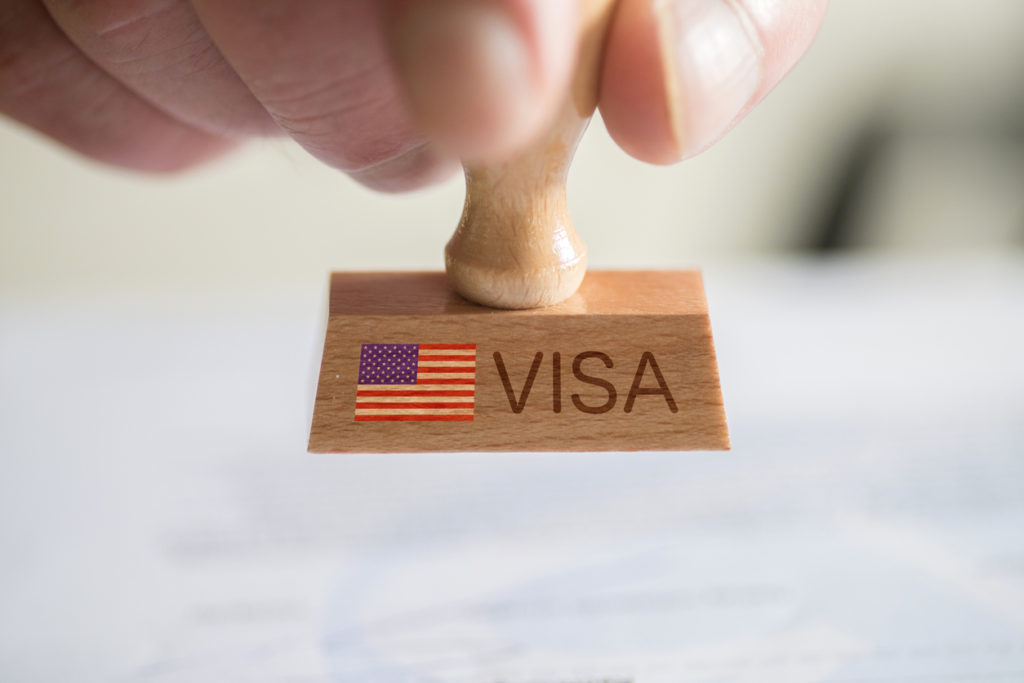
artist visa image

Still Getting Artist Visa in the USA: Essential Guide

Still Getting Artist Visa in the USA: Essential Guide

artist visa image

Estimated reading time: 3 minutes

Many artists have been worried that the O-1 Artist Visa has become harder to obtain under the current U.S. administration. However, there’s encouraging news—musicians are still getting approved. Recently, two of my friends received their approval letters from USCIS in September and October 2025.

After watching their journey closely, I’ve noticed several key factors that helped them succeed, even when others gave up or were rejected. Here are three important points that may increase your chances of approval.

1.They Released Their Music and Got Radio Exposure

Having your own music isn’t enough—you need to be recognized by the media. In the U.S., traditional media like radio, TV, and film still hold great influence. If your music is played on a local or national radio station, it can significantly strengthen your O-1 visa case. It shows that your work is appreciated by the public and has reached American audiences.

Even podcast appearances or interviews can be a plus, but radio airplay is particularly powerful because it connects your artistry with the long-standing American music culture.

2. They Collaborate with American Musicians

One common factor among approved applicants is collaboration with U.S. artists. It demonstrates that you are actively involved in the American music industry—not just performing within your own community.

Both of my friends who got approved perform with American musicians. One plays jazz and the other rock, but both are deeply engaged in their respective U.S. music scenes. This helps show that they are contributing to American culture, which is exactly what USCIS looks for.

3. They Have Strong Backgrounds and Consistent Activity

Both successful applicants have held their Artist Visas for more than five years, proving long-term activity in the U.S. However, even with experience, USCIS can still deny renewal if the artist isn’t active enough.

One of my Japanese friends, unfortunately, lost their status because she didn’t perform regularly. Consistency is key—keep building your portfolio with shows, collaborations, and media exposure.

Final Thoughts

While it may still be challenging for new applicants, it’s not impossible to get the O-1 Artist Visa approved in 2025. The key is to show that you are actively contributing to the U.S. art scene through media recognition, American collaborations, and a strong professional record.

If you’re planning to apply, keep creating, performing, and sharing your work publicly. The effort you put in today might be the reason your next visa gets approved. I wish every artist the best of luck on your journey!

Back to Home