Motsunabe Kimura: The Ultimate Winter Comfort Food in New York
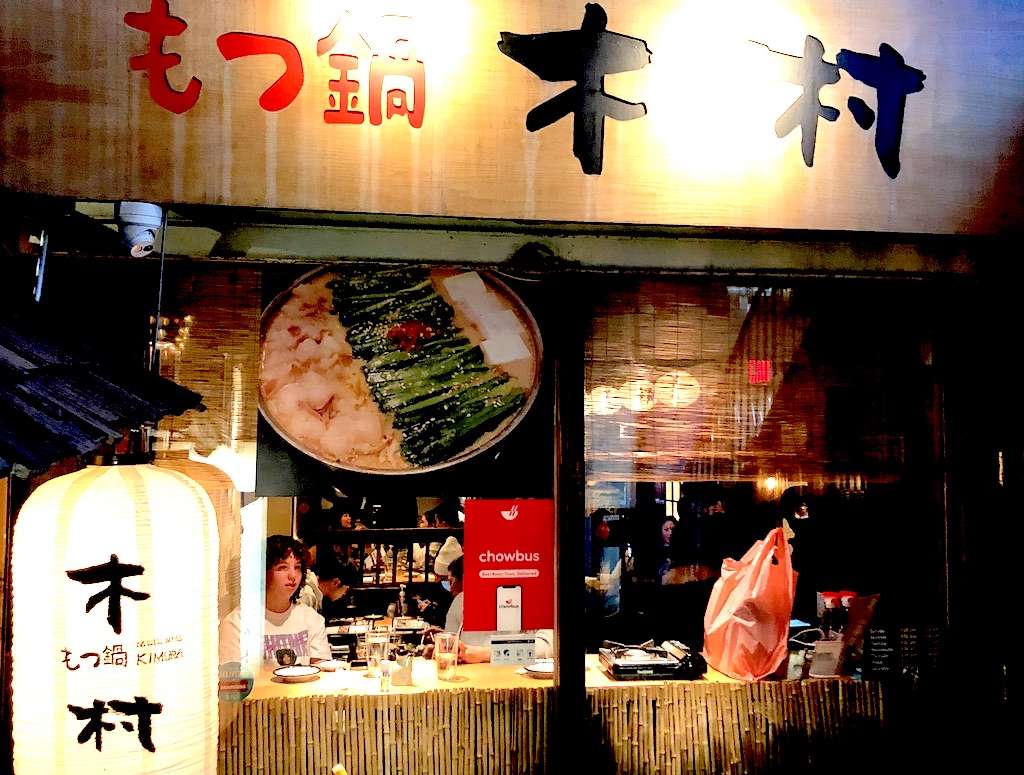
outside of the restaurant
Visiting Motsunabe Kimura in New York is a must, especially on those chilly winter nights. With temperatures dropping to as low as -11°C (12°F), we decided to warm up with one of Japan’s most beloved winter dishes – motsunabe.
If you’re in New York City and craving an authentic hot pot experience, Motsunabe Kimura in the East Village is the perfect spot to enjoy this delicious and comforting dish. Though Hakata Tonton also offers great motsunabe, Kimura brings something extra to the table!
Walking into Motsunabe Kimura, you’re greeted with a nostalgic atmosphere that takes you straight to Japan. The bright lights, retro Japanese signage, and cozy, intimate setting are perfect for enjoying a traditional Japanese meal.
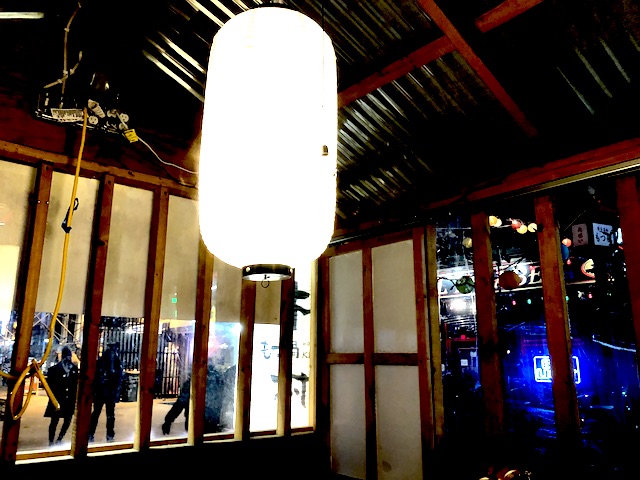
Despite the freezing temperatures outside, we opted for outdoor seating. While it did get a bit chilly without a heater at our feet, the comfort of hot, steamy motsunabe made it all worth it.
Image of the outdoor tables at Motsunabe Kimura
A Taste of Japan’s Best Hot Pots
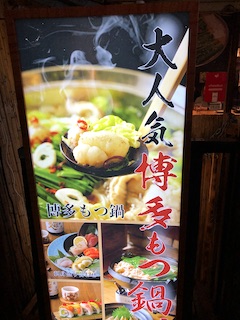
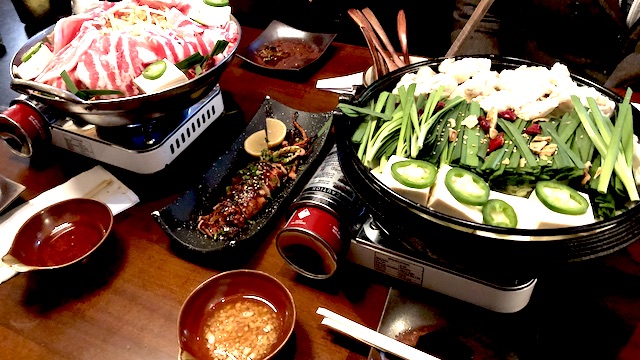
At Motsunabe Kimura, the menu offers a variety of dishes, but their Hakata motsunabe and black pork hot pot are truly standouts. We also tried the grilled squid and marinated mackerel, which were cooked to perfection and paired wonderfully with the hot pots.
Here are the highlights of the dishes we enjoyed:
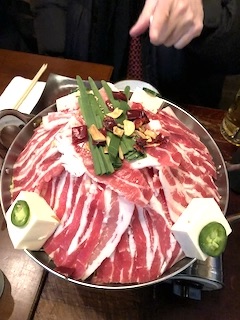
Black Pork Hot Pot: A rich and flavorful hot pot featuring tender pork that melts in your mouth.
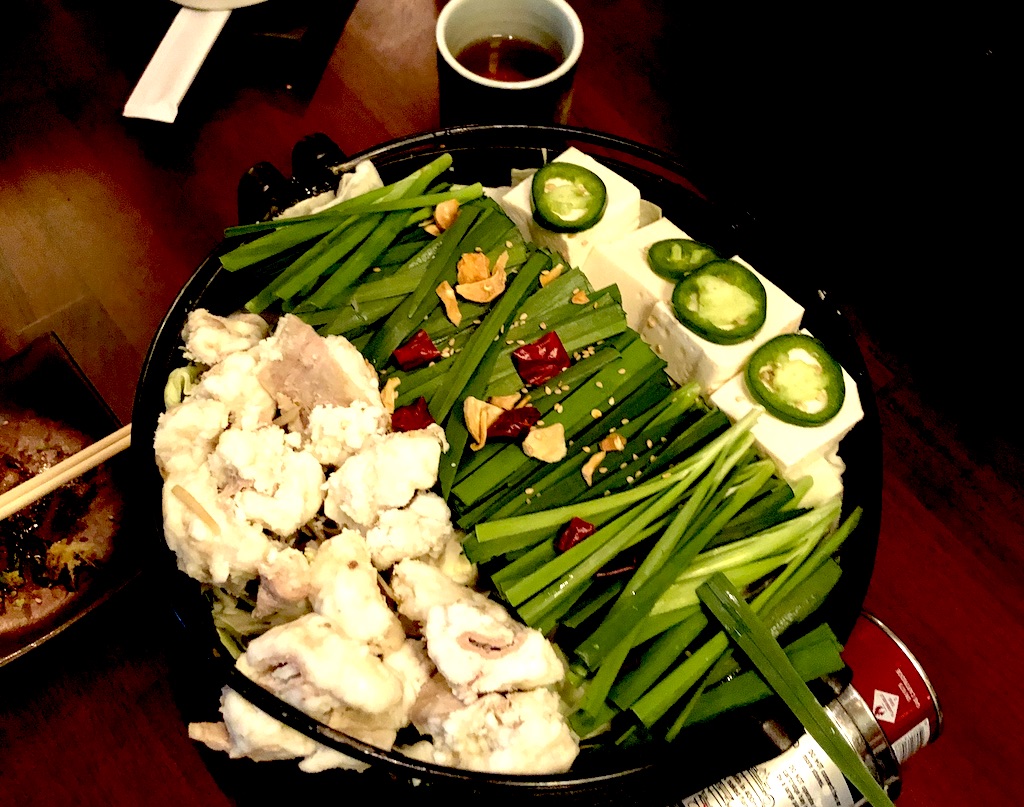
Hakata Motsunabe: A classic, hearty dish with tender beef tripe, rich broth, and an assortment of vegetables.
Grilled Squid: A simple but flavorful dish, perfect for sharing.
Marinated Mackerel: A deliciously fresh fish option that balances out the rich flavors of the hot pot.
Black Pork Hot PotHakata Motsunabe
Why Motsunabe Kimura is Worth the Visit
Motsunabe is not just a meal; it’s an experience, especially when enjoyed in such an authentic setting. The restaurant’s commitment to using high-quality ingredients and traditional Japanese techniques sets it apart from other restaurants in New York’s East Village. Whether you’re a fan of motsunabe or trying it for the first time, Kimura’s version will surely impress.
Conveniently located on St. Marks Place in the East Village, this cozy restaurant is easy to find. With its unique flavors and traditional atmosphere, it’s no wonder Kimura is a favorite among locals and tourists alike.
Tip: Make a Reservation in Advance
Due to its popularity, Motsunabe Kimura tends to get crowded, especially during the colder months when everyone craves a warm bowl of motsunabe. To avoid waiting, it’s best to make a reservation ahead of time.
Final Thoughts: A Perfect Winter Spot in New York
If you’re visiting New York in the winter and want to experience authentic Japanese comfort food, Motsunabe Kimura is a must-try. The Hakata motsunabe and black pork hot pot are perfect for those cold nights, and the atmosphere will make you feel like you’re dining in Japan. Don’t forget to compare Kimura’s motsunabe with other top spots like Hakata Tonton for a full taste of New York’s Japanese hot pot scene.
The City University of New York (CUNY) operates several community colleges that play a vital role in the American education system. These institutions offer affordable, accessible education while serving as a stepping stone to four-year universities.
Liberal Arts Education at Community Colleges
At community colleges, students study liberal arts, which include general education courses like English, mathematics, natural sciences, and social sciences. These foundational courses are essential for university-level study and help students develop a broad academic perspective.
Transferring to a Four-Year University
Many students complete two years of liberal arts education at a community college and then transfer to a four-year college or university. This pathway is especially effective for saving on tuition, as community colleges tend to be significantly more affordable than universities. After transferring, students can focus on their major or specialized field.
Cost Comparison
There is a significant difference in tuition fees between two-year and four-year institutions. For example, in the CUNY system, New York City residents or permanent residents pay lower tuition compared to out-of-state or international students. Attending a community college first is a practical way to reduce the total cost of a U.S. college education.
Important Notes for International Students
International students may be required to take ESL (English as a Second Language) classes to meet language proficiency requirements. These courses help prepare students for college-level academic work but may incur additional costs.
Educational Quality
The quality of liberal arts education at two-year community colleges is on par with that of four-year universities. Both offer strong academic environments where students can gain essential knowledge and skills needed for future degrees and careers.
Conclusion
CUNY’s community colleges are an excellent option for students looking to save on tuition without compromising the quality of their education. They provide a solid liberal arts foundation and a smooth transition into more advanced fields of study.
Hello! I’m Maegami from the blog “Goddess’ Bangs”. If you’re applying for an Artist Visa (O-1 or similar) and want to include proof of your achievements in Japan, this guide is for you—especially if you’re wondering:
Estimated reading time: 3 minutes
“Can I translate my Japanese materials into English myself?”
Short Answer: Yes!
You can hire a professional translator, but translating the documents yourself is totally acceptable—and in fact, doing so shows that you’re proficient in English, which strengthens your application.
What Is an Artist Visa?
An Artist Visa, often referred to as the O-1B visa in the U.S., is designed for individuals who possess extraordinary ability in the arts. When applying, you must provide substantial proof of your artistic career, including articles, exhibitions, awards, and more.
How to Translate Japanese Documents for an Artist Visa
If you’re using Japanese newspaper or magazine articles as part of your application, you can translate them yourself. Here’s a step-by-step guide:
Step 1: Design the Layout
Use Microsoft Word, Illustrator, or another design tool to recreate the layout of the original article. This can include:
Text blocks
Images (label them as “The Beneficiary’s Photo”)
Captions and bylines
Even if the original layout is vertical (as many Japanese articles are), it’s fine to translate it in horizontal English text while preserving the visual format.
Step 2: Translate Only Relevant Sections
If your article is part of a larger publication, only translate the parts that feature you. There’s no need to include unrelated content.
Don’t stress over small grammar issues caused by differences in nuance between Japanese and English. As long as the meaning is accurate, your translation will be accepted.
Get Your Translation Notarized
Once you’ve finished the translation, you’ll need to certify that the translation is accurate and done by you.
How to Do This:
Go to a notary public—many large U.S. banks have them on-site.
Bring your translated document and ID.
Ask for a notarized certificate of translation, which confirms that:
You are fluent in both Japanese and English.
You personally translated the document.
Having this notarization stamp is essential for your Artist Visa submission.
Summary
In this post, we covered how to:
Translate your own Japanese-language materials for an Artist Visa
Format them clearly and accurately
Get them notarized for official use
By following these steps, you’ll save money on translation fees and strengthen your Artist Visa application with confidence. Good luck!
After much anticipation, Japan’s famous conveyor belt sushi chain, Kura Sushi, has made its way to New York! Located just outside Manhattan in Fort Lee, New Jersey, Kura Sushi offers a convenient and accessible dining experience for sushi lovers. Let’s dive into the charm of this unique sushi destination.
Estimated reading time: 5 minutes
How to Get There
Getting to Kura Sushi in Fort Lee is a breeze from New York City. You can take the A line subway to 175th Street Station, and from there, take a bus across the George Washington Bridge. After a short 1-minute walk, you’ll find Kura Sushi waiting for you! It’s a convenient and easy access point for those in Manhattan and surrounding areas.
The Atmosphere Inside
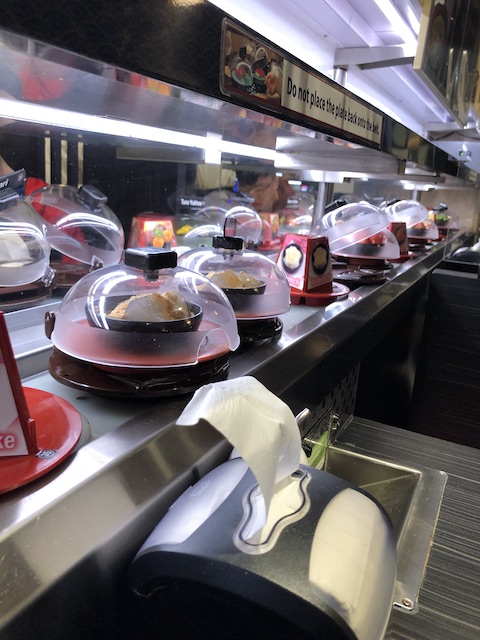
Don’t worry if you’ve never visited a Kura Sushi in Japan. The Fort Lee location captures the same welcoming vibe. The aroma of vinegar rice greets you as you step inside, instantly evoking the feeling of dining in a traditional Japanese sushi restaurant. During the pandemic, many of us missed out on enjoying sushi in restaurants, but Kura Sushi provides a cozy, comfortable space where you can savor sushi at your own pace. With plenty of group and counter seating, it’s perfect for solo dining or enjoying a meal with friends and family. Don’t worry if you’re unsure how to grab sushi from the conveyor belt—the friendly staff will guide you through the process.
What Makes Kura Sushi So Special?
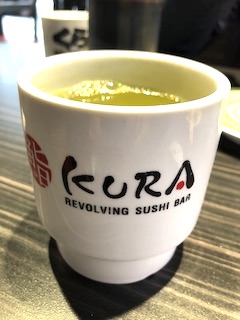
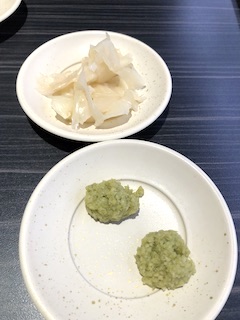
The standout feature of Kura Sushi is undoubtedly its conveyor belt sushi system. Plates of various sushi selections are placed on the conveyor, letting you grab whatever looks appetizing as it comes around. The quality is superb, especially considering the affordable prices. For just $3, you get a set that includes green tea, ginger, and wasabi—a fantastic value for the taste and experience. Sushi plates are priced at $3.15 for two pieces, making it a reasonable choice for a delicious meal in New Jersey.
Recommended Sushi Selections:
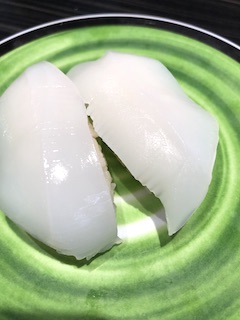
Squid
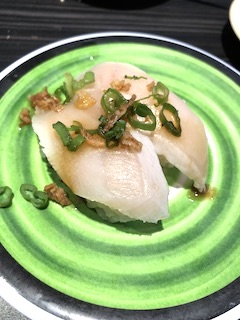
Tai with Yuzu Garlic
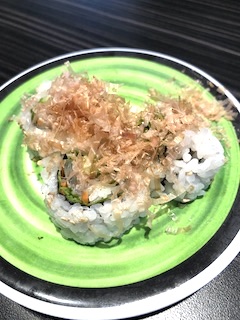
Salmon Skin Roll
Spicy Popcorn Shrimp Roll
Tuna Yukke Roll
Shimaji
Conchi (Known for its chewy texture)
SquidRed snapper with Yuzu garlic Salmon Skin RollWasabi and Gari Spicy Popcorn Shrimp Roll
While the variety of fish may be more limited compared to Japan, the selections offered at Kura Sushi in Fort Lee still provide a satisfying experience for sushi enthusiasts.
A Special Experience: Gacha-Gacha Surprise
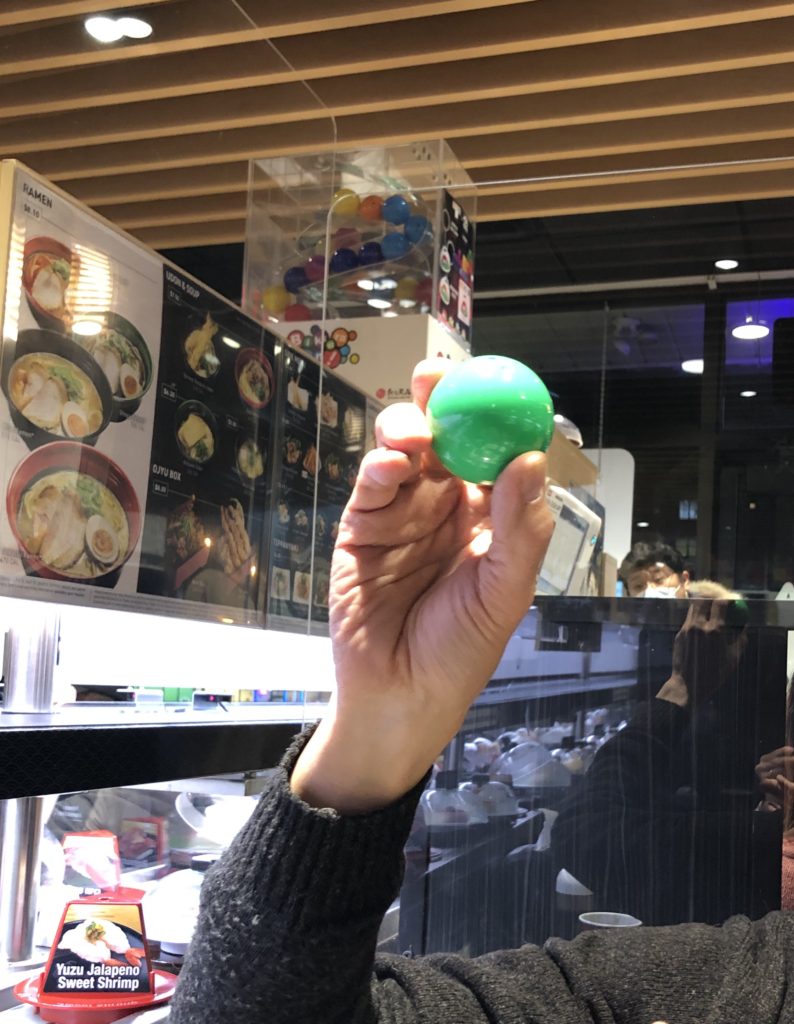
In addition to the conveyor belt sushi, Kura Sushi adds an element of fun to your dining experience. When you order sushi from the touch screen menu, you’ll encounter a Gacha-Gacha (Japanese capsule toy) surprise. From the hole next to the order screen, you might receive a fun trinket like a cleaning cloth or other small surprises. It’s a quirky touch that adds to the overall enjoyment of your meal.
Summary: A Must-Visit Sushi Spot in New Jersey
Kura Sushi in Fort Lee is the perfect place for anyone craving authentic conveyor belt sushi while in the New York area. While the fish selection might not be as extensive as in Japan, the sushi’s quality, the unique experience, and the atmosphere make it a must-try for anyone looking to indulge in Japanese sushi culture.
Whether you’re a sushi connoisseur or just looking for a fun dining experience, Kura Sushi delivers it all. Be sure to check it out on your next trip to New Jersey!
What Is the CUNY Proficiency Requirement? A Guide for International Students
Estimated reading time: 6 minutes
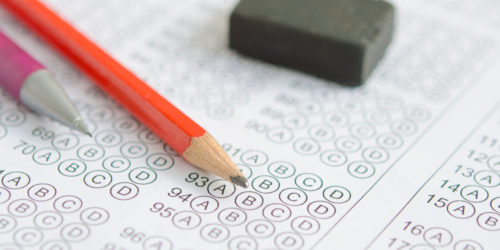
If you are planning to study at the City University of New York (CUNY), you may have heard about the CUNY proficiency requirement. Understanding this requirement is important because your placement in English and mathematics can affect which courses you are able to take and how efficiently you can progress toward graduation.
This is particularly important for international students, who may be academically strong but unfamiliar with the English-language academic system in the United States.
In this article, I’ll explain what the CUNY proficiency requirement is, what the English and mathematics assessments involve, what may happen if you do not meet the required level, and how you can prepare.
What Is the CUNY Proficiency Requirement?
CUNY uses assessment and placement measures to determine whether students have the necessary skills in areas such as English and mathematics.
The exact assessment and requirements can vary depending on the student’s program, college, and current CUNY policies. Students should always check the requirements of their individual CUNY college for the most up-to-date information.
In general, students may need to demonstrate college-level proficiency in:
English reading and writing
Mathematics
Meeting the required level can help students begin college-level courses without taking additional developmental or corequisite support courses.
Mathematics Requirement
For students who have not studied mathematics recently, the mathematics assessment may require some preparation.
The assessment can include fundamental concepts such as:
Basic arithmetic
Fractions and decimals
Percentages
Basic algebra
Equations
Geometry
Problem-solving
Don’t assume that the test will be easy simply because the concepts are familiar. Mathematical questions can sometimes be challenging because of the way they are worded.
How Should You Prepare for the Math Test?
One of the simplest ways to prepare is to review a basic mathematics textbook and practice problems regularly.
Pay particular attention to:
Fractions
Negative numbers
Algebraic expressions
Equations
Ratios and percentages
Geometry
Word problems
I also recommend practicing mathematics questions in English. Understanding the mathematics itself is only part of the challenge; you also need to understand what the question is asking.
English Requirement
For many international students, the English portion can be more challenging than mathematics.
The assessment focuses on your ability to understand and communicate in academic English. Depending on the assessment being used, students may be evaluated on skills such as reading comprehension and writing.
Academic English is different from conversational English.
You may be able to communicate comfortably with friends, order food at a restaurant, or have everyday conversations in English and still find an academic reading or writing assessment difficult.
Reading Comprehension
College-level reading requires you to understand:
The main idea of a passage
Supporting details
The author’s argument
The meaning of words from context
Relationships between ideas
Information that is implied rather than directly stated
For this reason, reading English regularly is one of the best ways to prepare.
You don’t need to understand every single word. Instead, practice identifying the main point and important supporting information.
Writing Skills
Writing is another important skill for international students.
In college, you will often need to write essays, responses, research papers, and discussion posts. Your writing needs to be clear, organized, and logical.
A useful way to practice is to read an English article and then write a short summary in your own words.
For example:
Read a short article.
Identify the main argument.
Write down three important points.
Summarize the article in your own words.
Explain your own opinion about the topic.
This simple exercise can help you develop both reading comprehension and academic writing skills.
What Happens If You Don’t Meet the Required Level?
If you do not demonstrate the required level of proficiency, you may be required to take additional English or mathematics support courses before or alongside college-level coursework.
These courses are designed to help students develop the skills they need for college-level study.
One important point for students to understand is that developmental or remedial coursework may not count toward the credits required for graduation. This can potentially add time and expense to your degree.
For this reason, preparing for your placement or proficiency assessment before starting college can be very worthwhile.
How to Prepare for the CUNY Proficiency Requirement
If you are planning to attend CUNY, I recommend preparing before you take the assessment rather than waiting until the last minute.
1. Don’t underestimate academic English
Even if you can have everyday conversations in English, academic English can be very different. Start reading English-language articles several months before your assessment.
2. Practice writing regularly
You don’t need to write a long essay every day. Even writing one short paragraph a day can make a significant difference. Focus on organizing your ideas clearly rather than trying to use complicated vocabulary.
3. Review basic mathematics
If you haven’t studied mathematics for several years, review the fundamentals. Practice basic calculations, algebra, geometry, fractions, percentages, and word problems.
4. Practice solving problems in English
This is particularly important for mathematics. Try finding English-language math problems so that you become comfortable with words such as equation, fraction, percentage, angle, area, and average.
5. Check your college’s current requirements
CUNY consists of many different colleges and programs. Their assessment requirements can change.Before relying on information from a blog or another website, check the official CUNY website and your individual college for the most current requirements.
CUNY Colleges in New York City
CUNY is one of the largest public university systems in the United States and includes numerous senior colleges, community colleges, and graduate and professional programs throughout New York City.
Some well-known CUNY institutions include:
CUNY School of Professional Studies
The City College of New York
Baruch College
Brooklyn College
Hunter College
Queens College
John Jay College of Criminal Justice
Queensborough Community College
LaGuardia Community College
Each college offers different programs and academic resources, so prospective students should research the specific college and program they are interested in.
Final Thoughts
The CUNY proficiency and placement requirements are important for students who want to begin their college education successfully. For international students, the biggest challenge may not necessarily be the academic material itself. Sometimes, the real challenge is understanding academic English and expressing your ideas clearly in English.
The good news is that these skills can be improved with preparation. Start reading English regularly, practice writing your own summaries and opinions, and review basic mathematics before taking your assessment.
A little preparation before entering CUNY can make your transition to college much smoother—and may help you avoid taking additional courses that could delay your progress toward graduation.