The Big Leap: How to Break Limits and Step Into Success & Happiness

The Big Leap: How to Break Limits and Step Into Success & Happiness

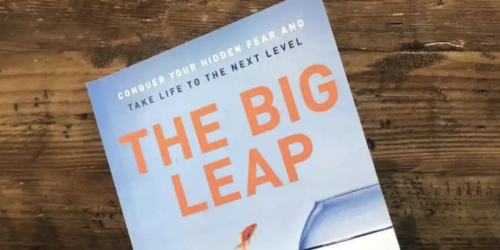
Hello! This is Maegami from the blog Megami no Maegami. Today, I’d like to introduce a book that can truly change your life. Recently, I read “The Big Leap” by Gay Hendricks, recommended by a friend, and I found it not only easy to read but also filled with powerful insights worth sharing.

Estimated reading time: 3 minutes

[word_balloon id=”1″ size=”M” position=”L” radius=”true” name=”” balloon=”talk” balloon_shadow=”true”]

Interestingly, Vipassana meditation also appears in this book!

[/word_balloon]

Ready to take your own big leap? Check it out here:
The Big Leap on Amazon

What Is The Big Leap?

The Big Leap is a bestselling self-development book written by psychologist and author Gay Hendricks. It explores how we can push beyond our personal limits and unlock both success and lasting happiness.

At the heart of the book lies the concept of the “Upper Limit Problem”—an invisible barrier we create that prevents us from fully embracing joy, success, and growth.

The “Upper Limit Problem”: Breaking Through Self-Imposed Barriers

Hendricks explains that many of us unconsciously sabotage ourselves after experiencing success. For example, after getting a promotion or achieving a major goal, unexpected problems or setbacks may suddenly arise. This is the Upper Limit Problem at work.

To overcome it, Hendricks outlines three key steps:

  1. Recognize your own limits
  2. Identify negative thought and behavior patterns
  3. Develop a mindset that allows greater success and happiness

The “Zone of Genius”: Unlocking Your Full Potential

Another powerful concept introduced in the book is the Zone of Genius. This is the state where your greatest talents and passions come together, allowing you to perform at your highest level while feeling fully alive and fulfilled.

The Big Leap provides practical methods for identifying your Zone of Genius and living in it daily.

Benefits of Reading The Big Lea

  • Overcome self-limitation: Discover how to break free from unconscious patterns that hold you back.
  • Reduce stress and anxiety: Build greater emotional resilience for a healthier, calmer life.
  • Achieve lasting happiness: Move beyond temporary achievements to find deeper fulfillment.
  • Boost your potential: Step into your Zone of Genius and live at your highest level.

Who Should Read The Big Leap?

This book is especially valuable for:

  • Professionals aiming for career growth
  • Anyone interested in self-development
  • People seeking to reduce stress and find everyday happiness
  • Those who want to maximize their true potential

Conclusion

The Big Leap is a powerful guide for anyone who wants to balance success and happiness. By understanding and overcoming the Upper Limit Problem, and by stepping into your Zone of Genius, you can transform your life in profound ways.

It’s also a great book to read in English if you want to improve your language skills. I personally read it in English and found it surprisingly accessible!


NYC Curbside Composting Comes to Manhattan: Everything Residents Need to Know (2024)

NYC Curbside Composting Comes to Manhattan: Everything Residents Need to Know (2024)

Hello! This is Maegami from the blog Megami no Maegami. Today I’d like to share some important news for all New Yorkers:

Estimated reading time: 3 minutes

Starting October 6, 2024, New York City is rolling out its curbside composting program citywide—including Manhattan for the very first time.

This new initiative is a major step toward a cleaner, greener, and more sustainable future. In this article, I’ll explain how the program works, what items are accepted, and why this matters for residents.

[word_balloon id=”1″ size=”M” position=”L” radius=”true” name=”” balloon=”talk” balloon_shadow=”true”]

Until now, I had to carry my food scraps to a compost bin in a nearby park!

[/word_balloon]

🛒 Recommended composting bags → Amazon link
🛒 Recommended compost bin → Amazon link

What Is NYC’s Curbside Composting Program?

According to Mayor Eric Adams and Sanitation Commissioner Jessica Tisch, NYC will begin free weekly collection of food scraps and yard waste across all five boroughs this October.

The program first proved successful in Brooklyn and Queens and will now finally expand into Manhattan. Food waste and soiled paper will be collected in brown compost bins and later turned into compost or renewable biogas.

(Source: NYC Department of Sanitation)

What Can Be Composted?

Here’s what you can put in your compost bin:

  • Food waste: vegetable and fruit peels, eggshells, leftovers
  • Food-soiled paper: pizza boxes, napkins, paper towels
  • Yard waste: grass clippings, leaves, small branches

Not accepted: plastics, glass, or regular recyclables—these should still go out on your normal recycling day.

How to Prepare Your Food Waste

  • Use the official brown compost bin provided by the city
  • Store food waste inside to avoid odors and pests
  • Place the bin at your curb the night before collection day

This system helps keep NYC streets cleaner and prevents rats and insects from spreading.

Collection Schedule

Each neighborhood’s collection schedule will be announced by the NYC Department of Sanitation. Be sure to check their website or mailers for your pickup day.

Following the schedule ensures efficient service and keeps our city sanitary.

Why This Program Matters

By joining this program, residents will contribute to:

  • Environmental protection: less landfill waste, more compost and renewable energy
  • Cleaner streets: reduced litter and rodent problems
  • Energy efficiency: food waste converted into biogas helps power the city sustainably

Conclusion

With the launch of Manhattan’s curbside composting program, New York City is taking a significant step toward sustainability.

By separating and properly disposing of food scraps, every resident can play a role in keeping NYC cleaner, greener, and healthier.

So, prepare your compost bin, and let’s make this program a success together!

John Thompson Piano Method: The Best Choice for Fast Piano Progress

John Thompson Piano Method: The Best Choice for Fast Piano Progress

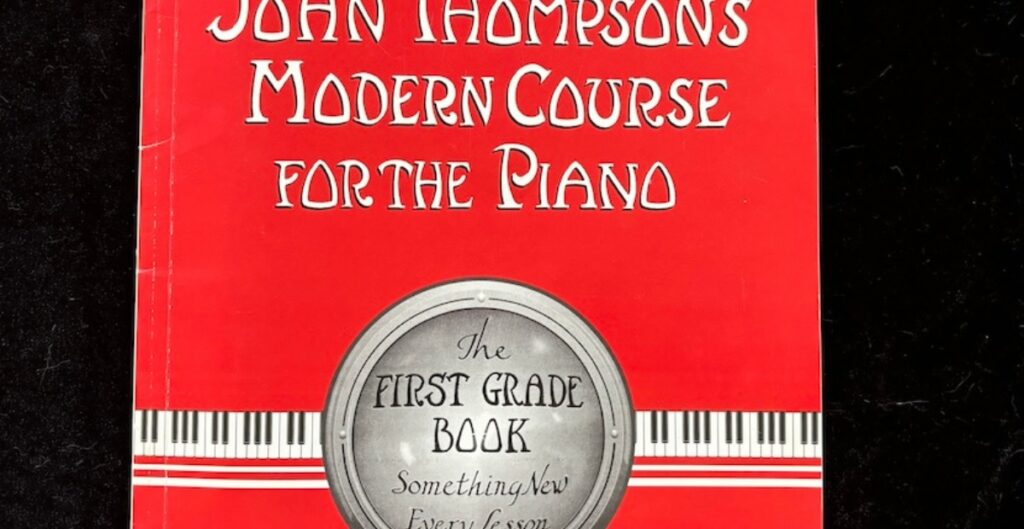
John Thompson piano textbook image cover photo

Estimated reading time: 3 minutes

Today I’m sharing from my piano series, where I introduce effective piano learning materials based on my 10+ years of experience teaching piano in the U.S. This time, let’s take a closer look at the John Thompson Piano Method.

Why Choose John Thompson’s Piano Method?

Swan lake a song from the textbook

When you want to build a solid foundation in piano and make progress as quickly as possible, the choice of method book is crucial. Among the many available, the John Thompson Piano Method series stands out. It is widely used not only by children but also by adult learners who want to improve efficiently.

Many learners wonder, Is Piano Adventures too slow? — here’s how it compares to John Thompson.

Efficient Step-by-Step Progress

John Thompson’s books cover the fundamentals while allowing learners to move smoothly to the next level. In particular, the Teaching Little Fingers to Play series keeps hand positions consistent, making it easier for beginners to learn without confusion.

Fun and Engaging Music

These books are filled with beginner-friendly tunes that make practice enjoyable. Each lesson is structured into short, progressive steps that naturally deepen understanding while maintaining motivation. Many students love the playful and sometimes quirky illustrations — I’ve even had my kids color them in for extra fun!

Visual Learning Support

The John Thompson series uses plenty of illustrations and diagrams, making it especially helpful for visual learners and younger children. This visual support helps reinforce rhythm and note reading. The distinctly American-style artwork adds charm and makes the learning experience unique.

Thanks to its systematic curriculum and motivating content, the John Thompson Piano Method has been praised by piano teachers worldwide. For students who want noticeable results in a short period and prefer an efficient learning path, this method is an excellent choice.

Conclusion

The John Thompson Piano Method is ideal for anyone who wants to progress quickly while enjoying the process. It strengthens the basics effectively and has been loved by students for generations. If you’re looking for a proven and engaging piano method, this series is well worth trying!

→ Get John Thompson’s Modern Course for Piano on Amazon

Disclosure: This post contains Amazon affiliate links. As an Amazon Associate, I earn from qualifying purchases at no additional cost to you.

Back to Home

How to Develop an “English Brain”: Effective Steps and Approaches

How to Develop an “English Brain”: Effective Steps and Approaches

Hello! I’m Maegami from the blog Goddess’ Bangs.
In this article, I’ll share how to train your brain to think directly in English — a process that took me over ten years. It’s all about daily habits and incorporating English into your lifestyle.

Estimated reading time: 2 minutes

Want to Speak English Fluently?

To speak English fluently, memorizing grammar and vocabulary isn’t enough. You need to build an English-thinking brain — the ability to understand and use English directly without translating from Japanese.
Here’s how you can do it effectively.

Incorporate English into Your Daily Life

To train your English brain, surround yourself with English in natural ways:

  • Write a diary in English: Start small with simple sentences about your day. Gradually write longer entries.
  • Listen to English news: During commutes or chores, tune in to BBC or CNN.
  • Think in English: Make shopping lists, schedules, or even internal thoughts in English.
  • Read English articles daily: Try The New York Times, The New Yorker, The Washington Post, or BBC News.

Increase Opportunities to Speak English

Speaking is essential for developing your English brain:

  • Join English conversation classes: Choose group or one-on-one lessons that fit your style.
  • Join English-speaking communities: Try Meetup or Facebook groups to connect with native speakers and practice naturally.

Balance Input and Output

Developing an English brain requires a healthy mix of input (listening, reading) and output (speaking, writing):

  • Read English books and articles: Expand your vocabulary and comprehension. Don’t stop at every unknown word — learn from context.
  • Watch movies or shows in English: Watch without subtitles to train your ear and understanding.

When You Start Dreaming in English

One clear sign of developing an English brain is when you begin dreaming in English.
That means your mind is processing English unconsciously — the ultimate goal of immersion.

Summary

To build an English brain, make English part of your daily life.
Speak often, balance input and output, and stay consistent.
Over time, you’ll understand and use English naturally — without translation.
Start today, and you’ll feel the difference!

What Is Serving in Vipassana Meditation?

What Is Serving in Vipassana Meditation?

Introduction

Estimated reading time: 3 minutes

Hello, I’m Maegami, the author of Goddess Bangs Blog.
Since 2022, I’ve been practicing Vipassana meditation—and I still continue meditating for one hour every day. The benefits of Vipassana are profound. Even if just one person in a family starts this meditation, it can bring a sense of peace and harmony to the whole household.

What Is Vipassana Meditation?

Vipassana meditation is a deep and ancient practice aimed at purifying the mind and cultivating inner peace. This meditation method was spread worldwide by S.N. Goenka, and thousands of people now join Vipassana retreats each year to experience its powerful effects.

One essential aspect of these retreats is serving, also known as “Dāna service” or “Seva.” Serving plays a vital role in supporting meditators and maintaining the spirit of selfless giving.

What Does “Serving” Mean in Vipassana?

Serving refers to offering voluntary support at a Vipassana meditation center during a retreat.
Servers (volunteers) help with practical tasks so that meditators can focus entirely on their inner journey.

Main Responsibilities of Servers

  • Meal Preparation & Service:
    Servers prepare and serve healthy, balanced meals to nourish meditators throughout the retreat.
  • Maintaining the Facility:
    Cleaning, organizing, and keeping the meditation center peaceful and tidy help create a calm environment for meditation.
  • Providing Guidance & Support:
    Servers help answer basic questions about the retreat rules and meditation process, assisting participants when needed.
  • Background Work:
    Tasks such as setting up the meditation hall, washing dishes, or managing logistics—all done silently and mindfully.

This spirit of service resembles the practices in Japanese temples. It’s not about buying spiritual products or belonging to a sect—it’s about training the mind through meditation and giving back by helping others meditate peacefully.

The Benefits of Serving

While meditation alone can transform your life, serving adds another dimension of learning and growth.
Here are some of its key rewards:

The Joy of Service

Serving others fosters humility, love, and generosity. It’s a chance to cultivate a heart of selfless compassion.

Deepening Meditation

Through service, the ego naturally softens, allowing deeper meditation experiences and greater mental clarity.

Building Community

Serving connects you to the Vipassana community—you build meaningful friendships and share a quiet sense of purpose with others on the same path.

How to Apply for Serving

If you feel called to serve, you can apply directly through your local Vipassana center’s official website.
Details about retreat schedules and eligibility are also available online.

In Japan, there are currently two Vipassana centers—one in Chiba and another in Kyoto.

My Experience with Serving

Personally, I’ve completed:

  • Two 10-day meditation courses
  • Two 3-day serving sessions
  • One 10-day serving experience

Think of it as a form of temple training—simple, silent, and deeply transformative.

Conclusion

Serving in Vipassana meditation is a beautiful opportunity to support others, cultivate mindfulness in action, and experience spiritual growth through service.
If you’ve already completed a course, try serving next time—it might change your perspective on life in the most peaceful way.

Related Articles

Return to Home

How to Get an International Driving Permit (IDP) with a U.S. Driver’s License

How to Get an International Driving Permit (IDP) with a U.S. Driver’s License

Hello, this is Maegami from Goddess’ Bangs.

Estimated reading time: 4 minutes

Earlier this year, I finally got my driver’s license in New York. During the summer, I also obtained an International Driving Permit (IDP) and drove in Japan for the very first time in my life.

In my previous article, I explained how to get a driver’s license in the United States. This time, I would like to share how to obtain an International Driving Permit using a U.S. driver’s license.

For people who hold a U.S. driver’s license, an International Driving Permit can be extremely useful when driving overseas. In this article, I’ll explain how to obtain one and what you should know before driving abroad.

What Is an International Driving Permit (IDP)?

An International Driving Permit (IDP) is essentially a translated version of your U.S. driver’s license. It allows local police officers and rental car companies in foreign countries to understand your driving credentials.

The IDP is recognized by the U.S. Department of Transportation (DOT) and can make overseas travel much smoother for drivers.

Requirements for Obtaining an IDP

To apply for an International Driving Permit in the United States, you must:

  • Have a valid U.S. driver’s license
  • Be at least 18 years old

Where Can You Get an International Driving Permit?

In the United States, IDPs are issued through:

  • AAA (American Automobile Association)
  • AATA (American Automobile Touring Alliance)

How to Apply for an International Driving Permit

1. Prepare the Application Form

Download the application form from the AAA or AATA website.

You can:

  • Print and fill it out in advance
  • Or complete the application form at the office

2. Prepare the Required Documents

You will need:

  • A copy of your valid U.S. driver’s license
  • Two passport-sized photos taken within the last six months
    (Some offices can take photos for you on-site.)
  • Application fee
    (Usually around $20, but check the official website for the latest pricing.)

3. Submit Your Application

Bring the documents and fee to your nearest AAA or AATA office. New York Location

You can also apply by mail by sending the required documents and payment to the designated address.

4. Receive Your International Driving Permit

Once your application is processed, your IDP is usually issued on the same day or within a few days.

Important Things to Know When Using an IDP Abroad

Always Carry Both Licenses

You must carry:

  • Your International Driving Permit
  • Your original U.S. driver’s license

The IDP alone is not valid without your actual license.

Validity Period

An International Driving Permit is generally valid for one year from the date of issue.

If it expires, you will need to apply for a new one.

Renting a Car Overseas

In many countries, rental car companies will ask to see your IDP before allowing you to rent a vehicle.

However, rules vary by country, so it is important to check local regulations before traveling.

Tips for Driving Overseas

Learn Local Traffic Rules

Traffic laws can differ greatly from those in the United States.

Before driving abroad, take time to review:

  • Road signs
  • Speed limits
  • Parking regulations
  • Local driving customs

Insurance Matters

Make sure you have appropriate insurance coverage.

If you are renting a car, it is usually a good idea to purchase insurance offered by the rental car company.

Parking Information

Parking systems and rules vary widely depending on the country.

Research:

  • Parking locations
  • Fees
  • Restrictions
    before your trip to avoid unnecessary stress.

Final Thoughts

Getting an International Driving Permit with a U.S. driver’s license is actually a simple process and can make traveling abroad much easier.

I hope this guide helps you prepare for safe and enjoyable driving overseas.

For the latest information and application details, please check the official AAA or AATA websites before applying.

How to Read The New Yorker: A Beginner’s Guide for Japanese Readers

How to Read The New Yorker: A Beginner’s Guide for Japanese Readers

Estimated reading time: 3 minutes

Introduction

Hello everyone, this is Maegami from Goddess’ Bangs 🌸

The New Yorker is a world-famous American magazine featuring essays, fiction, poetry, reviews, and commentary on art, politics, and culture. Its English level is quite high, but don’t worry — in this post, I’ll share how beginners can still enjoy it and make it part of their English-learning journey.

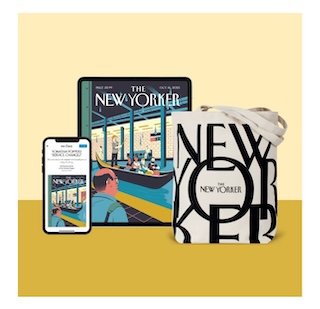
💡 Digital subscription tip:
The annual plan is $109.99, with a discount for the first year — and yes, you get a free tote bag that’s not available anywhere else!

Understanding the Structure of The New Yorker

The New Yorker is divided into several main sections. Knowing what each one contains helps you choose where to start:

  • Talk of the Town — Short essays about New York City’s latest news, culture, and social happenings.
  • Fiction — Short stories from both famous and emerging authors.
  • Poetry — Modern poems by contemporary poets.
  • Profiles — In-depth interviews or portraits of fascinating people.
  • Reviews — Cultural criticism covering books, movies, art, and music.
  • Cartoons — Witty, often satirical cartoons that capture the essence of everyday life.

Decide Your Reading Order

Start with what interests you most. For beginners, I recommend short essays or cartoons first. Once you’re comfortable, move on to longer sections like Fiction or Profiles. That way, you’ll build confidence without feeling overwhelmed.

Tips for Reading The New Yorker

1. Build Some Background Knowledge

Many articles discuss specific events, people, or topics. A quick search online before reading can make the content much easier to understand.

2. Take Notes

If you come across unfamiliar words or interesting phrases, jot them down. Reviewing them later helps strengthen your vocabulary and comprehension.

3. Read with a Relaxed Mind

Don’t worry if you don’t understand every sentence. The New Yorker uses sophisticated language, but the key is to enjoy the process. Read at your own pace, and don’t stress about perfection.

Make the Most of the Digital Edition

Alt="New Yorker digital version image"

You can read The New Yorker online, and the digital version includes full archives of past issues. It’s perfect for exploring specific topics in more depth.

Personally, I subscribe only to the digital version — it’s more affordable, and I can read it on both my phone and tablet with the same account. Super convenient!

Find Reading Companions

Reading with others makes the experience even more rewarding. Join online communities, forums, or book clubs where people discuss The New Yorker. Sharing thoughts in English helps reinforce what you learn and gives you new perspectives.

Conclusion

Today, we explored how to read The New Yorker. Each article can be quite long, and yes, it requires a solid level of English comprehension — but with daily reading, you’ll get used to its rhythm and tone.

The secret is consistency. Read a little every day, even if it’s just one paragraph. Over time, you’ll start understanding naturally — and maybe even begin to think in English.

Keep reading, keep learning, and most importantly, enjoy the journey! ✨

And remember — start learning English as early as possible. It’s never too soon to begin!

Tsumo Omakase in New York: A Reasonably Priced Sushi Omakase Experience

Tsumo Omakase in New York: A Reasonably Priced Sushi Omakase Experience

If you’re looking for a popular sushi spot for young couples in New York, Tsumo Omakase is a must-try.
This restaurant offers a fun, approachable omakase-style sushi experience — where every visit brings something new and special. Let’s explore what makes Tsumo Omakase stand out.

About Tsumo Omakase

Tsumo Omakase is a highly rated sushi restaurant in New York City.
“Omakase” in Japanese means “I’ll leave it up to you,” referring to a dining style where the chef selects the day’s best ingredients to create a personalized menu.

While it may not be exactly like traditional sushi in Japan, the restaurant is run by young, passionate Asian chefs who put great care into every piece they serve.

The Charm of the Omakase Menu

The biggest draw of Tsumo Omakase is its ever-changing chef’s menu.
Each visit brings a new lineup of creative dishes made from the freshest seasonal ingredients.

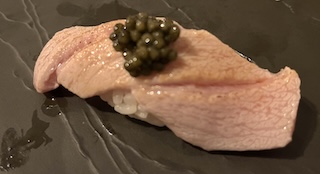
  • Seasonal seafood: Enjoy fish and shellfish at their peak flavor.
  • Creative dishes: The menu combines classic sushi techniques with modern twists.
  • Perfect balance: Each bite feels thoughtfully balanced in flavor and texture — perhaps thanks to the small sushi portions.
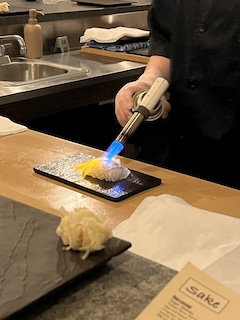
Alt="a chef is cooking a sushi"

Atmosphere and Service

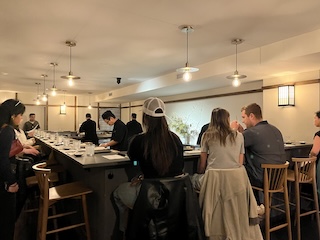
Alt="the inside of Tsumo Sushi restaurant cosy stylish design"

The interior of Tsumo Omakase is modern and stylish, with soft lighting and refined decor creating a relaxed and intimate mood.
At the counter, you can watch the chefs’ precise techniques up close — part of what makes omakase dining so immersive.

The staff are professional, attentive, and provide exceptional service throughout the experience.

Where Is It?

Tsumo Omakase is located in New York City (exact address varies by location).
It’s a cozy, counter-only restaurant — no tables, which adds to its intimate vibe.

Summary

If you want to enjoy an omakase-style sushi experience in New York without breaking the bank, Tsumo Omakase is a fantastic choice.
It’s especially popular among young couples, but perfect for friends too.
With its affordable pricing, relaxed atmosphere, and ever-changing menu, it’s one of New York’s hidden sushi gems.

Getting a NYC Driver’s License in New York City

Getting a NYC Driver’s License

Hey everyone, it’s Maegami from The Goddess’ Bangs!

If you’re living in New York and thinking about getting a driver’s license, you might be a little intimidated. Trust me—I was too. I failed my first road test, felt like giving up, but after practicing more, I finally passed. Now I want to share my personal journey, along with practical tips for anyone Japanese (or just new to NYC) who wants to drive in this city.

DMV Website

Step 1: Make Sure You’re Eligible

Here’s the deal:

  • You need to be 16 or older.
  • You must have proof of New York residency (like a utility bill or lease).
  • Non-US citizens, don’t forget your passport or other official ID.

Starting with the basics will save you headaches later.

Step 2: Get Your Learner Permit

The learner permit is your first step. Here’s what I did:

  1. Fill out form MV‑44 online or at the DMV.
  2. Bring your ID documents—the DMV has a handy checklist.
  3. Schedule the written test. You can usually do this online.
  4. Study, study, study the New York Driver’s Manual. Chapters 4–11 are your best friends.

Once you pass, you’ll get your Learner Permit, which allows you to practice driving with someone over 21 in the passenger seat.

Step 3: Practice Driving

NYC streets are intense, so practice is key.

  • I went out 12 times before my road test.
  • Make sure you practice parallel parking—this is where most people fail (including me the first time!).
  • Pay attention to intersections, lane changes, and signaling—NYC drivers are unpredictable, so stay alert.

Step 4: Take the Road Test

When you feel ready:

  1. Schedule your road test online or through a driving school. Schools often provide the car, which is a huge help.
  2. Bring your learner permit and pre-licensing certificate (MV‑278).
  3. Drive like you mean it—but stay calm. The examiner will check your parking, turns, lane changes, and general traffic awareness.

I failed my first test because I wasn’t confident with parallel parking. My advice? Practice until it feels natural, even in tight spots.

Step 5: Get Your Full License

Passed your road test? Congrats! Your NY driver’s license will arrive in the mail in about a week and a half. You’re officially ready to drive around the city!

My Top NYC Road Test Tips for Japanese Residents

  • Study the Driver’s Manual thoroughly—especially road signs.
  • Signal everything and check your mirrors—examiners notice small details.
  • Parallel parking is a must—practice on quiet streets first.
  • Stay calm—even if you make a minor mistake, keep going.
  • Failing isn’t the end—learn from it and try again with confidence.

Why Getting a NY License is Worth It

For Japanese residents, having a New York license is more than just convenience:

  • It helps you navigate NYC’s busy streets safely.
  • You can rent cars or drive in neighboring states without hassle.
  • If you plan to return to Japan, your experience can sometimes help with international driving permits.

Final Thoughts

Getting a NYC driver’s license isn’t easy, but it’s doable. My journey was full of mistakes, practice, and finally, success. If you’re a Japanese resident thinking about driving in New York, take it step by step, practice as much as you can, and don’t give up!

Drive safely, and enjoy the ride.

Artist Visa Denial: Experiences and Lessons Learned

Artist Visa Denial: Experiences and Lessons Learned

This article is about the recent denial of an artist visa for a pianist I introduced previously. Based on this experience, I’d like to share what happened and what we learned. I believe this will be very useful for anyone considering applying for an artist visa.

[word_balloon id=”1″ size=”M” position=”L” radius=”true” name=”” balloon=”talk” balloon_shadow=”true”]

There are some more tips to learn.

[/word_balloon]

Helping with an Artist Visa Application

Last year, a young pianist from Asia reached out to me for help. She had hired an immigration lawyer who turned out to be questionable, and she received an RFE (Request for Evidence). I helped her prepare all of the documents needed for the RFE. I supported her from the end of last year through early this year, but unfortunately, in early May, her artist visa application was denied. From my perspective, there were still many things she could have prepared. It was disappointing.

Reasons and Causes for the Artist Visa Denial

The denial letter clearly listed the reasons for the decision. Below, I’m sharing the most critical points. When the issues are severe, reapplication becomes extremely difficult and many people end up giving up and returning home without reapplying.

Criteria Required for an Artist Visa

To be approved for an artist visa, you must meet one of the following:

  1. Win a major award such as a Grammy or an Academy Award
  2. Fulfill at least three out of six categories in the O-1B criteria

Most applicants gather evidence for the second option. In her case, she met only the 5th and 6th categories.
To meet a third category, she would have needed substantial effort in collecting more evidence from the remaining four categories.

Key English Words Highlighted in the RFE

Three qualities are essential to obtain approval for an artist visa:

  • a lead or starring (leadership and star quality)
  • Reputation
  • Critical (critical significance)

What She Lacked

1. Leadership and Star Quality (a lead or starring)

To put it bluntly: she was not considered a “star.”
Although she was a talented pianist, she did not stand out within the industry. Artist visa applicants must show leadership qualities and star power that attract others. In the U.S., leadership and initiative—such as organizing projects, collaborating with multiple artists, or curating events—are highly valued.

2. Reputation

During the initial application, she hadn’t done enough self-promotion. There was no online presence, no announcements for performances, and no reviews or press coverage of her concerts.
Starting in late December, I instructed her to participate in any concerts she could—even small ones—and gather written reviews. Unfortunately, she was unable to follow through. Major publications or notable media coverage are essential for an artist visa.

3. Critical Importance

Her job was a piano accompanist at a well-known university. However, this was judged as merely “one of many staff members.”
Accompanists are considered supporting roles, which makes it difficult to build a strong case as a primary artist. To apply as an accompanist, she would have needed notable collaborations, high-profile performance flyers, or connections with famous singers—such as those from the Metropolitan Opera.

This is a common misunderstanding among artists:
Being affiliated with a famous institution does not mean “you” are recognized as an individual artist.

What to Do if Your Artist Visa Is Denied

If your visa is denied and you have no valid status, you must leave the U.S. immediately.
If you want to reapply, you may do so within 33 days using a different form. This process requires a trustworthy and competent attorney.

Summary

Despite my support, she was unable to obtain her artist visa. Collecting large amounts of evidence in a short time is extremely difficult. But once denied, all you can do is regroup and move forward.
She has an American partner and plans to apply for permanent residency through marriage. I sincerely hope she is able to obtain her green card successfully.

Return to..