Kindle is Recommended Over Other E-Books and Physical Books

Why Kindle is Recommended Over Other E-Books and Physical Books

Hello! I’m Maegami, the author of the blog “Megami no Maegami.” Fall is the perfect season for reading. What books are you currently enjoying? I’m still reading The Power of Language on my Kindle.

Have you used Kindle, Amazon’s popular e-reader? I use it a lot, and it has made accessing countless books incredibly easy. Today, I’ll share why I recommend Kindle over other e-books and physical books.

A Book I Want to Read on Kindle – Walter Isaacson’s Autobiography

Unmatched Portability and Storage Convenience

One of Kindle’s greatest advantages is its ability to store hundreds of books on a single device. This means you can carry numerous books with you wherever you go. Carrying multiple physical books can be heavy and cumbersome, but Kindle remains lightweight and compact. It’s the perfect companion for commuting or traveling.

Speaking of which, I once accidentally left my Kindle on a Shinkansen train and had to retrieve it from Iidabashi. I’ve grown quite attached to it!

Economic Benefits

Kindle books are often cheaper than physical books since they don’t require paper. Amazon also frequently offers discounts and sales. Some classic books are available for as little as a few hundred yen, and there are plenty of free or discounted books available.

If you subscribe to Kindle Unlimited, you gain even greater access to thousands of titles. However, I personally don’t use it because it rarely includes the latest releases or books I truly want to read. Popular titles like Harry Potter are available, though.

Instant Access to Books

Another major advantage of Kindle is the ability to purchase and read books immediately. No need to visit a bookstore; just connect to the internet, download from the Kindle Store, and start reading within seconds.

Customizable Reading Experience

Kindle allows you to adjust font size, typeface, and background color to suit your preference. This is particularly beneficial for those with presbyopia or vision issues. Plus, it’s equipped with a blue light reduction feature, making reading easier on the eyes compared to tablets or other devices.

Personally, I prefer older Kindle models that resemble paper more closely, providing a comfortable reading experience.

Eco-Friendly Choice

Using Kindle reduces paper consumption, making it an environmentally friendly choice. Producing physical books requires wood, but with Kindle, you can download unlimited books without cutting down trees. Given the current climate crisis, switching to Kindle is a step toward sustainability.

Built-in Dictionary and Highlighting Features

If you’re aiming to improve your English skills, Kindle’s built-in dictionary is invaluable. You can instantly look up unfamiliar words, and the ability to highlight passages makes studying easier. Tasks that would be cumbersome with physical books are completed in seconds on Kindle.

Read in the Dark

Kindle Paperwhite and Kindle Oasis come with built-in lights, enabling comfortable reading even in low-light conditions. This is perfect for bedtime reading without disturbing others.

Privacy in Public

Reading on Kindle means your book titles remain private. If you’re reading self-help books or other titles you might be shy about, Kindle is a discreet choice.

Conclusion

Kindle offers numerous benefits: it’s lightweight, economical, customizable, and eco-friendly. It’s ideal for avid readers who want to enjoy books on the go or save money. While physical books have their charm, considering the environmental impact, Kindle is undoubtedly a smart choice for modern readers.

Why not try a blue Kindle? Check it out here!キンドルが他の電子書籍や本よりお勧めな理由

Happy Potter is free to read!

Amazon link

Amazonで即購入する方はこちら

Amazon shop

Yuval Noah Harari and Vipassana Meditation

Yuval Noah Harari and Vipassana Meditation

Hello! This is Maegami from the blog Goddess’ Bangs. Recently, I joined a 10-day Vipassana meditation retreat. During my stay, I met a woman from Israel who had also come to practice.

When speaking about Israel, the first thing that comes to mind is last year’s Hamas attack and the ongoing military actions by the Netanyahu government in Gaza and the West Bank. Naturally, she opposes the current administration. While fighting back tears, she told me something unforgettable:

“If everyone practiced Vipassana meditation, there would be peace.”

She also introduced me to the Vipassana Center in Israel, where, to my surprise, one of the teachers is none other than Yuval Noah Harari.

[word_balloon id=”1″ size=”M” position=”L” radius=”true” name=”” balloon=”talk” balloon_shadow=”true”]

You might know him

[/word_balloon]

Who Is Yuval Noah Harari?

Yuval Noah Harari is a world-renowned historian and thinker from Israel. His bestselling books include:

  • Sapiens: A Brief History of Humankind
  • Homo Deus: A Brief History of Tomorrow
  • 21 Lessons for the 21st Century

Sapiens on Amazon → https://amzn.to/3VPi42f

Homo Deus on Amazon → https://amzn.to/4gPdnz2

21 Lessons for the 21st Century on Amazon → https://amzn.to/4pXzS9m

Through these works, Harari explores humanity’s past, present, and future from a unique perspective. His insights into technology, ethics, and the risks posed by artificial intelligence have influenced global leaders, scholars, and intellectuals.

In New York, among my musician friends and intellectual circles, his books are almost required reading.

Harari and Vipassana Meditation

Harari has openly shared that Vipassana meditation is central to his intellectual and creative process. This ancient Indian practice involves observing the mind and body with clarity and calm, cultivating self-awareness and inner peace.

He dedicates two months every year to complete silence and intensive Vipassana practice. According to him, this period of retreat provides the mental clarity to step back from the noise of modern life and gain deep insights about himself and the world.

Why Vipassana Matters in Harari’s Work

Harari argues that rapid technological progress—especially in AI—demands more ethical awareness and mindfulness. Meditation, for him, is a tool to steady the mind and face these challenges with clarity.

Many of his profound reflections on AI, human identity, and future ethics stem directly from his meditation practice.

What Is Vipassana Meditation?

Vipassana, meaning “clear insight”, was taught by the Buddha more than 2,500 years ago. It involves observing sensations, thoughts, and emotions objectively to understand the root of suffering and move toward liberation.

Unlike religious rituals, Vipassana is a universal practice—anyone can join, regardless of faith. Harari himself is Jewish, but he emphasizes that meditation transcends religion.

Harari’s Message for Modern Society

In today’s information-saturated world, Harari reminds us that silence, focus, and self-reflection are more essential than ever. His books, combined with his Vipassana practice, offer practical wisdom for navigating the challenges of the 21st century.

Vipassana is not just a meditation technique—it’s a way to cultivate resilience, ethical clarity, and balance in an age of constant distraction.

Conclusion

Yuval Noah Harari is not only a brilliant historian but also a dedicated Vipassana meditator. His writings and practice together provide powerful insights into the present and future of humanity.

If you haven’t read his works yet, I recommend starting with Sapiens or 21 Lessons for the 21st Century. For me, reading them in English was even easier than in Japanese! Next on my list is Nexus.

Return to Home

How to Get an International Driving Permit (IDP) with a U.S. Driver’s License

How to Get an International Driving Permit (IDP) with a U.S. Driver’s License

Hello, this is Maegami from Goddess’ Bangs.

Estimated reading time: 4 minutes

Earlier this year, I finally got my driver’s license in New York. During the summer, I also obtained an International Driving Permit (IDP) and drove in Japan for the very first time in my life.

In my previous article, I explained how to get a driver’s license in the United States. This time, I would like to share how to obtain an International Driving Permit using a U.S. driver’s license.

For people who hold a U.S. driver’s license, an International Driving Permit can be extremely useful when driving overseas. In this article, I’ll explain how to obtain one and what you should know before driving abroad.

What Is an International Driving Permit (IDP)?

An International Driving Permit (IDP) is essentially a translated version of your U.S. driver’s license. It allows local police officers and rental car companies in foreign countries to understand your driving credentials.

The IDP is recognized by the U.S. Department of Transportation (DOT) and can make overseas travel much smoother for drivers.

Requirements for Obtaining an IDP

To apply for an International Driving Permit in the United States, you must:

  • Have a valid U.S. driver’s license
  • Be at least 18 years old

Where Can You Get an International Driving Permit?

In the United States, IDPs are issued through:

  • AAA (American Automobile Association)
  • AATA (American Automobile Touring Alliance)

How to Apply for an International Driving Permit

1. Prepare the Application Form

Download the application form from the AAA or AATA website.

You can:

  • Print and fill it out in advance
  • Or complete the application form at the office

2. Prepare the Required Documents

You will need:

  • A copy of your valid U.S. driver’s license
  • Two passport-sized photos taken within the last six months
    (Some offices can take photos for you on-site.)
  • Application fee
    (Usually around $20, but check the official website for the latest pricing.)

3. Submit Your Application

Bring the documents and fee to your nearest AAA or AATA office. New York Location

You can also apply by mail by sending the required documents and payment to the designated address.

4. Receive Your International Driving Permit

Once your application is processed, your IDP is usually issued on the same day or within a few days.

Important Things to Know When Using an IDP Abroad

Always Carry Both Licenses

You must carry:

  • Your International Driving Permit
  • Your original U.S. driver’s license

The IDP alone is not valid without your actual license.

Validity Period

An International Driving Permit is generally valid for one year from the date of issue.

If it expires, you will need to apply for a new one.

Renting a Car Overseas

In many countries, rental car companies will ask to see your IDP before allowing you to rent a vehicle.

However, rules vary by country, so it is important to check local regulations before traveling.

Tips for Driving Overseas

Learn Local Traffic Rules

Traffic laws can differ greatly from those in the United States.

Before driving abroad, take time to review:

  • Road signs
  • Speed limits
  • Parking regulations
  • Local driving customs

Insurance Matters

Make sure you have appropriate insurance coverage.

If you are renting a car, it is usually a good idea to purchase insurance offered by the rental car company.

Parking Information

Parking systems and rules vary widely depending on the country.

Research:

  • Parking locations
  • Fees
  • Restrictions
    before your trip to avoid unnecessary stress.

Final Thoughts

Getting an International Driving Permit with a U.S. driver’s license is actually a simple process and can make traveling abroad much easier.

I hope this guide helps you prepare for safe and enjoyable driving overseas.

For the latest information and application details, please check the official AAA or AATA websites before applying.

Tsumo Omakase in New York: A Reasonably Priced Sushi Omakase Experience

Tsumo Omakase in New York: A Reasonably Priced Sushi Omakase Experience

If you’re looking for a popular sushi spot for young couples in New York, Tsumo Omakase is a must-try.
This restaurant offers a fun, approachable omakase-style sushi experience — where every visit brings something new and special. Let’s explore what makes Tsumo Omakase stand out.

About Tsumo Omakase

Tsumo Omakase is a highly rated sushi restaurant in New York City.
“Omakase” in Japanese means “I’ll leave it up to you,” referring to a dining style where the chef selects the day’s best ingredients to create a personalized menu.

While it may not be exactly like traditional sushi in Japan, the restaurant is run by young, passionate Asian chefs who put great care into every piece they serve.

The Charm of the Omakase Menu

The biggest draw of Tsumo Omakase is its ever-changing chef’s menu.
Each visit brings a new lineup of creative dishes made from the freshest seasonal ingredients.

  • Seasonal seafood: Enjoy fish and shellfish at their peak flavor.
  • Creative dishes: The menu combines classic sushi techniques with modern twists.
  • Perfect balance: Each bite feels thoughtfully balanced in flavor and texture — perhaps thanks to the small sushi portions.
Alt="a chef is cooking a sushi"

Atmosphere and Service

Alt="the inside of Tsumo Sushi restaurant cosy stylish design"

The interior of Tsumo Omakase is modern and stylish, with soft lighting and refined decor creating a relaxed and intimate mood.
At the counter, you can watch the chefs’ precise techniques up close — part of what makes omakase dining so immersive.

The staff are professional, attentive, and provide exceptional service throughout the experience.

Where Is It?

Tsumo Omakase is located in New York City (exact address varies by location).
It’s a cozy, counter-only restaurant — no tables, which adds to its intimate vibe.

Summary

If you want to enjoy an omakase-style sushi experience in New York without breaking the bank, Tsumo Omakase is a fantastic choice.
It’s especially popular among young couples, but perfect for friends too.
With its affordable pricing, relaxed atmosphere, and ever-changing menu, it’s one of New York’s hidden sushi gems.

Getting a NYC Driver’s License in New York City

Getting a NYC Driver’s License

Hey everyone, it’s Maegami from The Goddess’ Bangs!

If you’re living in New York and thinking about getting a driver’s license, you might be a little intimidated. Trust me—I was too. I failed my first road test, felt like giving up, but after practicing more, I finally passed. Now I want to share my personal journey, along with practical tips for anyone Japanese (or just new to NYC) who wants to drive in this city.

DMV Website

Step 1: Make Sure You’re Eligible

Here’s the deal:

  • You need to be 16 or older.
  • You must have proof of New York residency (like a utility bill or lease).
  • Non-US citizens, don’t forget your passport or other official ID.

Starting with the basics will save you headaches later.

Step 2: Get Your Learner Permit

The learner permit is your first step. Here’s what I did:

  1. Fill out form MV‑44 online or at the DMV.
  2. Bring your ID documents—the DMV has a handy checklist.
  3. Schedule the written test. You can usually do this online.
  4. Study, study, study the New York Driver’s Manual. Chapters 4–11 are your best friends.

Once you pass, you’ll get your Learner Permit, which allows you to practice driving with someone over 21 in the passenger seat.

Step 3: Practice Driving

NYC streets are intense, so practice is key.

  • I went out 12 times before my road test.
  • Make sure you practice parallel parking—this is where most people fail (including me the first time!).
  • Pay attention to intersections, lane changes, and signaling—NYC drivers are unpredictable, so stay alert.

Step 4: Take the Road Test

When you feel ready:

  1. Schedule your road test online or through a driving school. Schools often provide the car, which is a huge help.
  2. Bring your learner permit and pre-licensing certificate (MV‑278).
  3. Drive like you mean it—but stay calm. The examiner will check your parking, turns, lane changes, and general traffic awareness.

I failed my first test because I wasn’t confident with parallel parking. My advice? Practice until it feels natural, even in tight spots.

Step 5: Get Your Full License

Passed your road test? Congrats! Your NY driver’s license will arrive in the mail in about a week and a half. You’re officially ready to drive around the city!

My Top NYC Road Test Tips for Japanese Residents

  • Study the Driver’s Manual thoroughly—especially road signs.
  • Signal everything and check your mirrors—examiners notice small details.
  • Parallel parking is a must—practice on quiet streets first.
  • Stay calm—even if you make a minor mistake, keep going.
  • Failing isn’t the end—learn from it and try again with confidence.

Why Getting a NY License is Worth It

For Japanese residents, having a New York license is more than just convenience:

  • It helps you navigate NYC’s busy streets safely.
  • You can rent cars or drive in neighboring states without hassle.
  • If you plan to return to Japan, your experience can sometimes help with international driving permits.

Final Thoughts

Getting a NYC driver’s license isn’t easy, but it’s doable. My journey was full of mistakes, practice, and finally, success. If you’re a Japanese resident thinking about driving in New York, take it step by step, practice as much as you can, and don’t give up!

Drive safely, and enjoy the ride.

Lucky Cat Izakaya New York: A Cozy Dining Experience

Lucky Cat Izakaya New York: A Cozy Dining Experience

lucky cat restaurant

Estimated reading time: 1 minute

If you’re craving authentic Japanese izakaya food in the heart of New York, Lucky Cat Izakaya is a must-visit. It’s been a while since I last visited a Japanese izakaya in New York, as I’ve been cooking at home more due to the pandemic and rising costs. However, I decided to take my American friend out for dinner, and she recommended this place where she sometimes dines alone. Here’s my review of Lucky Cat Izakaya in Midtown.

Lucky Cat website

What is Lucky Cat Izakaya?

ラッキーキャットの看板

Lucky Cat Izakaya is run by a Japanese owner and offers a cozy yet lively atmosphere. Upon entering, you’re greeted by a sign that says “おかえり” (Welcome home) in Japanese, which immediately gives a warm, familiar vibe – something that only a fellow Japanese can truly appreciate.

I arrived as the restaurant opened, and it quickly filled up. The interior is filled with retro Showa-era artwork and text, giving it an old-school Japanese feel, but with a slightly Asian twist. The lanterns and decor seem to capture a broader Asian influence, which gives the izakaya a unique character.

Lucky Cat also has a bar counter, making it a perfect spot for solo diners to enjoy a drink and meal at their own pace. Once inside, I was welcomed by the giant maneki-neko (lucky cat) statue in the back. It’s clear this izakaya loves cats, and as a cat lover, I felt right at home!

Lucky Cat’s Menu – Must-Try Dishes

Due to the rising costs in New York, the prices here have gone up slightly, but it still feels like they are keeping things reasonably priced. Here are some of the standout dishes from their menu:

  • Lucky Cat Ramen (Pork Bone Flavor): Rich, flavorful broth with tender chashu (braised pork).
  • Spicy Fried Chicken: Bold flavors and crispy perfection—ideal for pairing with drinks.
  • Liver Sashimi: Yes, they serve liver sashimi, which is rare to find in the U.S. and absolutely delicious.
  • Jajangmyeon (Fried Noodles): A savory, comforting dish with a robust sauce.
  • Pig’s Trotters: A unique dish for those who enjoy adventurous eating.

One of the highlights was the liver sashimi, which my friend absolutely loves. It was a bit intimidating at first, but it turned out to be quite tasty. It’s a surprise to find liver sashimi in the U.S., but Lucky Cat brings that special Japanese izakaya experience to NYC.

Cabbage Salad with Sesame oil
Spicy Fried Chick
Lucky Cat Ramen
Jajangmyeon (Fried Noodles)
Pig’s Trotters
Liver Sashimi

Location: Where to Find Lucky Cat Izakaya

ニューヨーク居酒屋ラッキーキャットの店内の様子

Lucky Cat Izakaya is located on 53rd Street in Midtown, just a short walk from other popular spots like Gyukaku Midtown. You can easily reach it by subway with the Green 6 line, Orange M line, or Blue E line.

Fun Payment Experience & Apple Card Cashback

What made the payment experience memorable was that I used my Apple Card, which offers a 5% cashback on dining. Our bill came to around $91, and after a 20% tip, I received a nice little cashback from my Apple savings account. If you’re a frequent diner, using an Apple Card can be a great way to earn rewards while enjoying your meal! ( It was promotinal period – no longer. Currently 2 %)

Final Thoughts: Why Lucky Cat Izakaya is Perfect for Cat Lovers and Japanese Food Enthusiasts

This izakaya stands out for its unique Japanese dishes you can’t find anywhere else, along with its cat-themed decor that makes it especially enjoyable for cat lovers like me. While the ramen wasn’t my personal favorite, the jajangmyeon was a pleasant surprise! If you’re looking for a spot to enjoy a casual, cozy meal with a friend or just want to explore the quirky charm of Midtown’s Lucky Cat Izakaya, I highly recommend giving it a try!

My Rental Experience with Steinway & Sons

My Rental Experience with Steinway & Sons

rent a piano image

Estimated reading time: 3 minutes

Once upon a time, I rented a small piano in my small apartment in Lower East Side. I chose a studio-type upright from the Boston brand, which is owned by Steinway & Sons. I selected it because the sound quality is close to that of a grand piano.

At the time, I had no U.S. credit history, so I paid a cash deposit of about $900 and rented it for $97 per month.

Piano Showrooms on 58th Street

Most major piano showrooms are located around West 58th Street in Manhattan. Steinway’s showroom is now near Midtown, not far from Times Square. I looked and tried all upright piano on every stores on this street.

Types of Upright Pianos

Alt="types of upright pianos"

There are four main types of upright pianos:

  1. Spinet Piano
  2. Console Piano
  3. Studio Piano (the type I rented)
  4. Professional Upright

The studio upright has a richer, more resonant sound. It’s a great choice if you want something closer to a grand piano but don’t have the space. So I chose one of studio pianos from Steinway & Sons.

Piano Moving Costs

Steinway works with professional piano movers who carefully handle transportation. My move cost about $300 plus tip. If your building doesn’t have an elevator, expect extra fees—often charged per staircase step!

Affordable Option: Piano Piano

If you’re looking for a more budget-friendly rental, I recommend Piano Piano. You can rent a Yamaha piano for around $155 per month, which is a great value.

Conclusion

That was my experience renting a piano in New York City. If your child wants to start learning piano, I highly recommend renting a real acoustic piano rather than a digital keyboard. A beautiful sound helps develop finger strength, train the ear, and boost motivation.

Playing on a real instrument brings joy—and makes practice more inspiring.

Return to Home

Hazardous Waste Disposal NYC: Event Details

Hazardous Waste Disposal NYC: Event Details

Estimated reading time: 4 minutes

Every year, New York City holds special events to safely collect hazardous household waste.

We are not allow to leave hazardous trash outside of your building. This article explains how to properly dispose of these materials through the NYC Sanitation SAFE Disposal Event, held twice a year.

What Is the SAFE Disposal Event?

The SAFE Disposal Event (Solvents, Automotive, Flammables & Electronics) is organized by the NYC Department of Sanitation (DSNY) twice a year. More Details


Every year, New York Residents receive a postcard notification about one month before the event.

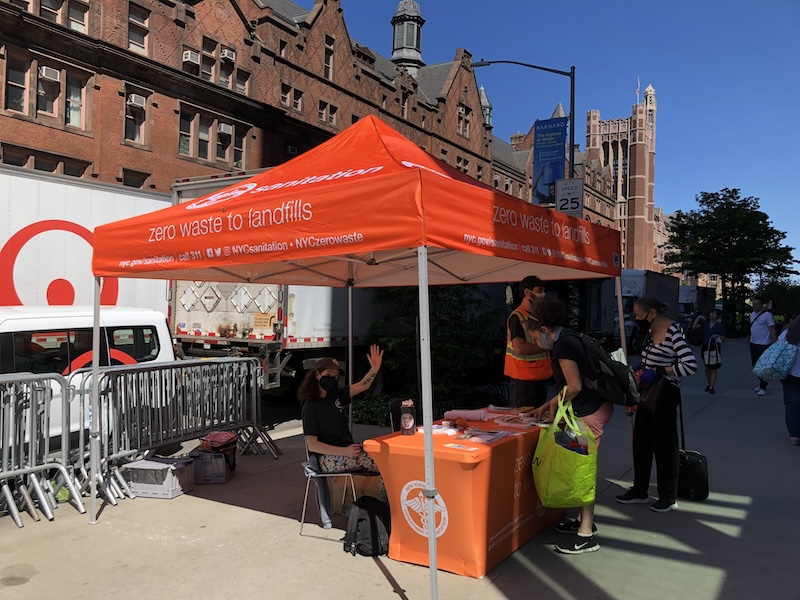
For example, if you live in Upper Manhattan, your event location might be near Columbia University’s Teachers College – but the location is changeable every year.

What Can You Bring?

You can bring various household hazardous materials, including:

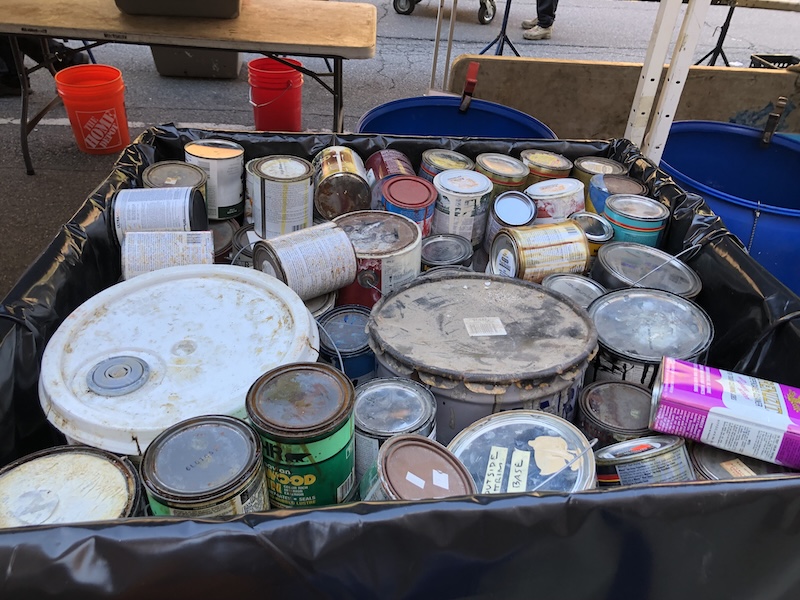
  • Automotive products: motor oil, transmission fluid, car batteries
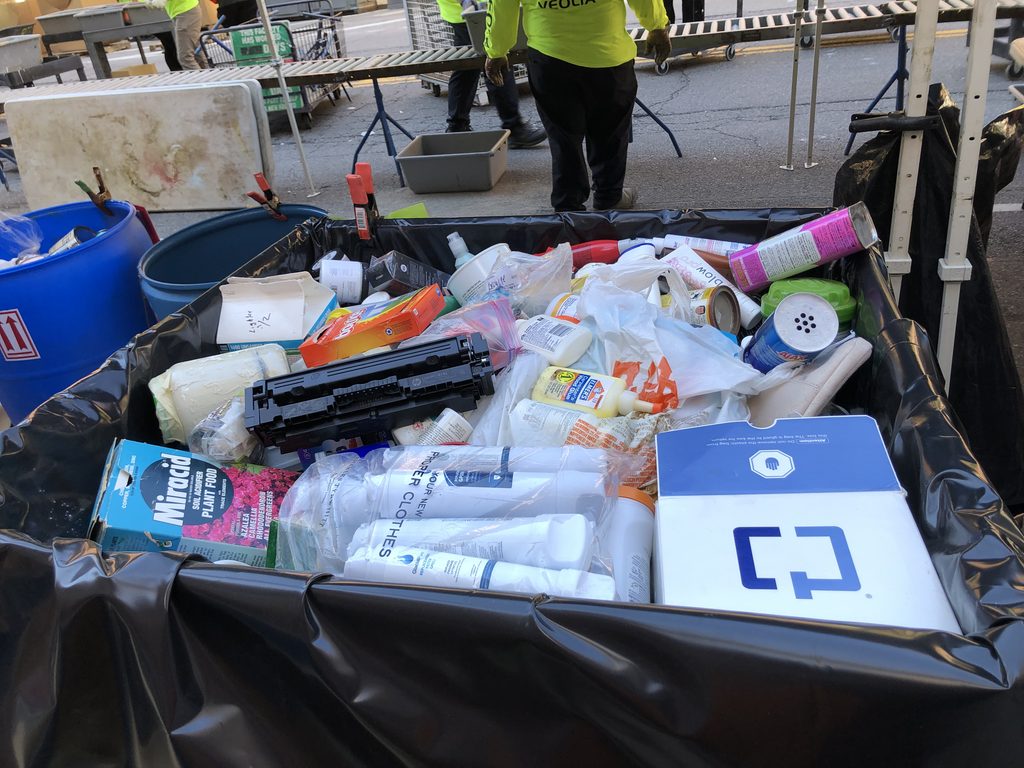
  • Expired medicines or chemicals: including cosmetics and nail polish
  • Sharps (needles/syringes): place them in a labeled sharps container or a tightly closed metal can
  • Thermometers and batteries
  • Household cleaners and chemicals: bleach, pesticides, paint, Ajax, toilet cleaners, etc.
  • Compact fluorescent bulbs (CFLs)
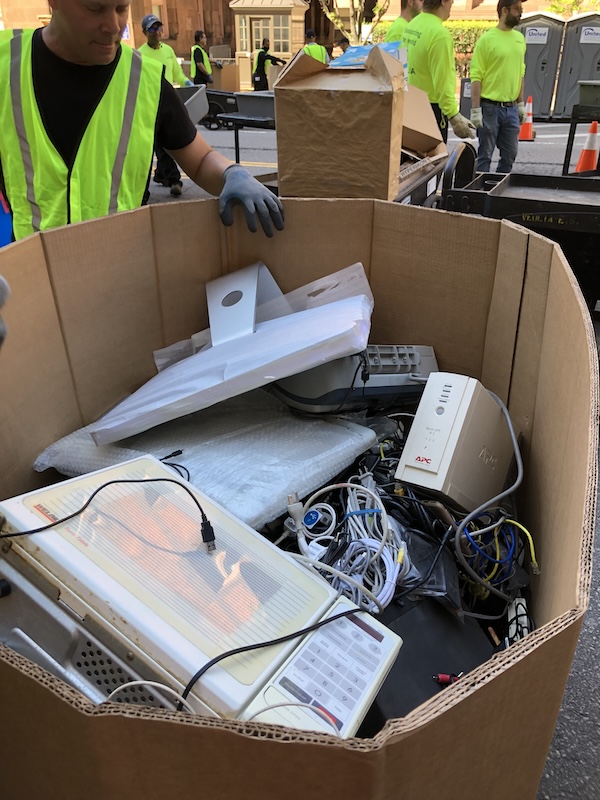
  • Electronics: computers, televisions, and broken devices

Important: Do not mix items together. Make sure that you make double-bagged with absorbent material like paper towels or newspaper.

What Happens at the Event

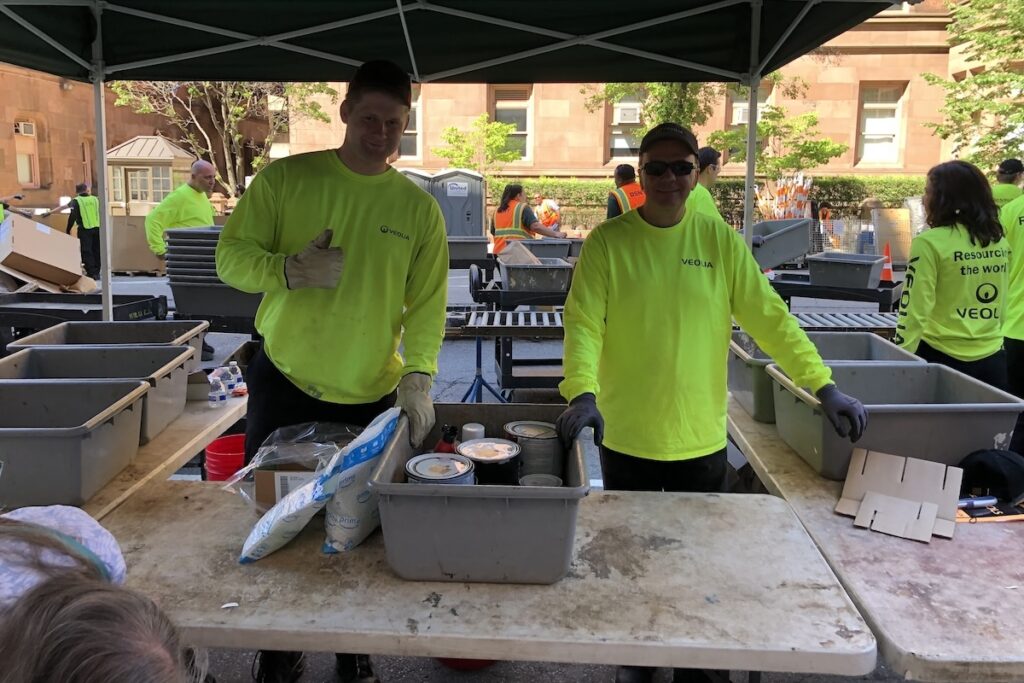
You will see multiple tents at the site. Staff and volunteers guide participants on where to drop off each type of item. Smoking or open flames are strictly prohibited for safety reasons.

The DSNY team also provides information pamphlets and eco-friendly shopping bags made from recycled materials. If you want to responsibly dispose of leftover paint, chemicals, or electronics, this is the perfect opportunity.

Don’t Throw Electronics in the Trash!

Throwing away computers or batteries in your building’s trash area can result in fines.
These must be dropped off at SAFE events or through official recycling programs.
After collection, electronics are sent to facilities like ERI for proper dismantling and refurbishing.

NYC’s Goal: Zero Waste to Landfill by 2030

For decades, New York City sent its trash to the Fresh Kills landfill in Staten Island.
After it closed, waste was redirected to other states like New Jersey, leading to environmental issues such as water pollution and unpleasant odors.

Now, NYC is working toward its ambitious “Zero Waste by 2030” goal.
Participating in programs like SAFE Disposal is a vital step toward a cleaner, greener city.

For Business Owners: Tax Benefits

If you operate a business in NYC, you can benefit from city-sponsored sustainability programs such as:

These not only support the environment but may also provide tax-saving opportunities.

Summary

Properly disposing of hazardous waste is crucial for keeping New York City clean and safe.
The SAFE Disposal Event only happens twice a year, so mark your calendar early and don’t miss it!

Unlike Japan, New York’s waste disposal rules are more relaxed, so it’s up to each resident to act responsibly. Together, we can help NYC move closer to a zero-waste future

Back to Home

Apple Card 2025: Features, Savings, APR, and How to Open an Account

Apple Card 2025: Features, Savings, APR, and How to Open an Account.

Apple Card isn’t just a credit card — it’s part of Apple’s growing financial ecosystem, created in partnership with Goldman Sachs. In 2023, Apple launched its Apple Card Savings account, offering competitive interest rates for iPhone users. As of January 2024, the APY reached 4.5%, higher than typical U.S. bank savings accounts.

In this guide, we’ll cover everything about Apple Card in 2025: credit card features, Daily Cash, APR, savings account setup, pros/cons, and practical tips for maximizing interest and rewards.

Key Updates for 2025

  • Variable APR: 18.24%–28.49% depending on creditworthiness (check Wallet app for your exact rate).
  • Apple Card Savings APY: 4.5% as of early 2024; slightly lower than peak 2023 rates but still competitive.
  • Issuer news: Goldman Sachs continues to issue Apple Card; JPMorgan Chase has been reported in talks to potentially take over the portfolio, though nothing is finalized.
  • Regulatory matters: Apple and Goldman Sachs have faced CFPB enforcement actions regarding transaction and dispute handling.

Apple Card Features

Daily Cash

Cash back is credited daily depending on the merchant and payment method:

  • 3% on Apple purchases
  • 2% with Apple Pay
  • 1% on physical card purchases

Apple Card Monthly Installments (ACMI)

0% APR financing for eligible Apple products. Taxes/shipping may not be included. Standard APR applies if not using ACMI.

Family & Co-ownership

Share an Apple Card with up to five family members, allowing credit building and limit management.

How to Open an Apple Card Savings Account

Apple Card holders in the U.S. can open a savings account with up to 4.5% APY, FDIC-insured via Goldman Sachs. Here’s a step-by-step guide:

1. Requirements

  • Latest iOS version (16.4.1 or newer)
  • Apple device
  • U.S. residency

2. Daily Cash Selection

  • Open Wallet → tap Apple Card → More Options → Daily Cash → next screen.

3. Setup Screen

  • Tap Set Up → Continue → Agree to Terms and Conditions
  • Answer tax-related questions correctly

4. Linking Bank Accounts

  • Add cash from linked bank account
  • Withdraw to any U.S. bank no fee

5. Deposit Limits

  • Single deposit: $10,000
  • 7-day cumulative: $20,000
  • Max balance: $250,000 (excluding Daily Cash or earned interest)

6. Interest Growth

  • Interest compounds monthly
  • Daily Cash can be automatically deposited into savings
  • Small deposits can add up to substantial interest over time

FDIC Coverage

Goldman Sachs membership ensures deposits are protected in case of bank failure.

Pros and Cons

Pros

  • Seamless Apple ecosystem integration
  • Daily Cash is convenient
  • No annual or foreign transaction fees

Cons

  • High APR for carried balances
  • Savings APY decreased slightly in 2025
  • Regulatory and issuer uncertainty

Practical Tips

  1. Use ACMI for eligible Apple products to enjoy 0% financing
  2. Pay balances in full to avoid high APR
  3. Deposit Daily Cash into Apple Savings for compounding interest
  4. Monitor deposit limits to maximize interest growth

Who Should Get Apple Card

Best for: iPhone users who pay their balance in full, value Daily Cash, and want excellent Wallet integration.
Not recommended for: People who carry balances and want the lowest APR or balance transfer options.

Summary

Apple Card 2025 combines a modern credit card with high-yield Apple Savings, Daily Cash rewards, and strong ecosystem integration. While Japanese users cannot open accounts yet, U.S.-based Apple users can enjoy convenience, FDIC protection, and competitive interest rates. Use Daily Cash strategically to build savings and maximize rewards over time.

Kura Sushi in Newport, Jersey City – A Convenient Spot for Downtown and Brooklyn Residents

Kura Sushi in Newport, Jersey City – A Convenient Spot for Downtown and Brooklyn Residents

Hello! This is Maegami from the blog Goddess’ Bangs. Following my visit to the Fort Lee branch of Kura Sushi, I decided to explore another location close to New York — this time in Newport, Jersey City.

[word_balloon id=”1″ size=”M” position=”L” radius=”true” name=”” balloon=”talk” balloon_shadow=”true”]

I was wondering how the new one?

[/word_balloon]

Kura Sushi in “New York” Is Actually in New Jersey

Alt="A picture of Kura Sushi Newport in a shopping mall"

Although people often call it “New York Kura Sushi,” the restaurant has been expanding across New Jersey. The Newport branch is technically the second Kura Sushi location in the area.

For those who live in Brooklyn or downtown Manhattan, this branch is much easier to reach than Fort Lee. If you’ve been missing sushi while living abroad, this is a great place to satisfy your cravings. Just note — you’ll need to take the PATH train to get there.

The Atmosphere at Kura Sushi Newport

Newport is a modern waterfront residential district filled with brand-new high-rises. The Kura Sushi here is located right under a shopping mall.

The entrance almost feels like you’re stepping into a game arcade — fun and casual, very much like the Kura Sushi experience in Japan.

How to Get to Kura Sushi Newport

To visit, take the PATH train, which is a different line from the MTA subway. You can catch the PATH from either World Trade Center or Penn Station.

The nearest station is Newport, and once you exit, the restaurant is just a short walk away.

This makes it especially convenient for people living in downtown Manhattan or Brooklyn.

Comparing Fort Lee and Newport Locations

Alt="A picture of conch sushi at Kura sushi newport"

Kura Sushi first opened its U.S. East Coast location in Fort Lee, New Jersey, right across the George Washington Bridge. That location is more convenient for people living in uptown Manhattan, but for Brooklyn and downtown residents, it feels quite far.

Demographics around each branch also differ:

  • Fort Lee has a large Korean and Chinese community, along with some Japanese expatriates.
  • Jersey City (Newport) is more diverse, with many immigrants from India, Southeast Asia, and the Middle East, as well as professionals working in finance who live in the luxury apartments nearby.

Because of this, the menu items that are popular may vary. For example, Japanese curry is a surprising hit among Indian customers!

Quality of the Sushi

Between the two, the Fort Lee branch felt slightly better in terms of sushi quality — though of course, this is still within the “Kura Sushi standard.” Interestingly, even the plates differed between locations.

Still, if you’re craving sushi, the Newport branch offers a fun and satisfying experience.

Conclusion

If you live in Brooklyn or downtown Manhattan, the Newport branch of Kura Sushi is a convenient and lively spot to enjoy affordable sushi. While Fort Lee might still have the edge in sushi quality, both locations deliver the fun and casual experience that Kura Sushi is known for.

まとめ