Is New York Safe to Visit Now in 2023 for Japanese Travelers?

Is New York Safe to Visit Now in 2023 for Japanese Travelers?

The Pandemic’s Impact on New York City

The pandemic that began in 2020 turned New York City into a ghost town. Streets once full of people became silent, and crime rates rose sharply.
In 2021, the rise of Asian Hate crimes shocked the world. Many believed people who had shifted to remote work would never return to the city.

It’s true — working from home became common. Yet, surprisingly, Manhattan has once again filled with people. The energy of the city is back! In this article, we’ll explore the current safety and subway conditions in New York City as of September 2023 — my final safety report since the pandemic began.

New York Has Always Been a Dangerous City

New York has never been known as a perfectly safe place — it’s always had an edge.
When I lived in the Lower East Side in the early 2000s, however, the city transformed. Streets grew lively, neighborhoods improved, and safety increased dramatically.

This was largely thanks to city leadership at the time. Those struggling with mental health issues were moved to shelters, and criminals were sent to prison. You could enjoy a night out, ride the subway, or take a taxi home late at night without much worry.

But during the pandemic, prison and shelter systems became overwhelmed, and many people were released. Unfortunately, this led to a temporary decline in safety.

New York in 2023: Almost Back to Normal

Today, New York feels almost back to its pre-pandemic rhythm.
While occasional reports of Asian Hate still surface, the city overall feels much safer than in 2021–2022. You’ll still see some homeless individuals or people struggling mentally, but subway ridership has surged again — which naturally increases safety.

Police presence is strong across stations and streets, and visitors can feel a greater sense of security. In short, New York has regained much of its old energy.

Staying Safe in New York at Night

Some things never change — especially nighttime safety tips.
Always be aware of your surroundings when walking, and avoid deserted streets. When returning home late, it’s best to use Uber, Lyft, or a yellow cab instead of walking or taking the subway alone.

Remember: “Safe” in New York doesn’t mean risk-free. It means knowing how to move smartly.

Final Thoughts

This is my final update on New York’s safety since the pandemic. Many readers have shown strong interest in this topic, so I wanted to share one last look.

New York is never perfectly safe — and that’s part of its wild charm. Stay alert, but don’t be afraid to enjoy it. The city is alive again, and you can finally experience the vibrant, pre-pandemic New York once more.

Lost Items on the Shinkansen- visita Iida Bashi[飯田橋駅]

Lost Items on the Shinkansen

I left my e-book on the Shinkansen during my travels in Japan this summer while using the Japan Rail Pass. After a wonderful trip, I was carrying a lot of souvenirs, which made my hands full, and I must have forgotten the e-book on the train. I suspect that when I tried to put it into my bag, it slipped and fell out. I remember placing it into my bag, so I assumed it had fallen somewhere under the seat of the Shinkansen, which I remembered being in the 1st car. With that memory, I figured there was a good chance I could find it. Here’s how the e-book made its way back to me.

Registering Through the Chat

First, I visited the lost item notification page. Once there, I started a chat with the Shiba Inu mascot.

However, I found out that I couldn’t use the lost item chat from the U.S. (since I was overseas), so I had to explain the process in text instead. Here’s how the process works:

Lost Item Chat Description

The Shiba Inu mascot will ask you a few questions. First, you’ll need to provide the location and date you lost the item. Since I remembered the exact spot where I lost it, I gave the train type, date, and seat number, along with detailed descriptions of the item, including the color. You can select from available options, but I recommend writing the specific color in the input field. Even if the category doesn’t match exactly, it’s not a problem, as there’s a section for you to explain in your own words.

After Completing the Chat Registration

Once you’ve completed the chat, you’ll receive a registration number via email. It may take a few days for them to search for your lost item, as they are careful, especially if it’s a high-value item, to ensure they match it correctly.

JR Tokyo Station Lost & Found Center

If your lost item is found, you will be notified that something similar to your description has been located. The item will be moved to the Lost & Found Center at Tokyo Station. However, the items are only kept for a limited period, so if you are traveling outside Tokyo, you may not be able to pick it up right away. In my case, I couldn’t make it to Tokyo Station in time before the storage period expired.

Visiting the Lost & Found Center at Iidabashi

When the holding period at Tokyo Station expires, the lost items are transferred to the Iidabashi Police Station’s Lost & Found Center. It’s quite easy to get there: I took the JR Yamanote Line and got off at Iidabashi Station. There are large signs directing you to the Lost & Found Center.

What to Do if You Forget Your ID

Since I live overseas, my passport serves as my ID. Unfortunately, I forgot to bring it with me. However, I was able to use my credit cards as ID. The key is to describe the lost item as specifically as possible. In my case, it was an English-language e-book, which made it easier to identify since there weren’t many similar examples. For items like wallets or valuables, it’s best to bring your ID and be prepared to explain the contents and condition of the lost item.

Summary

In this article, I explained the steps for dealing with lost items on the Shinkansen. If you can’t pick up your item at Tokyo Station, you can go to the Iidabashi Lost & Found Center. Don’t give up if you lose something—head to Iidabashi to pick it up!

飯田橋遺失物センターの入り口の写真

Top Piano Competitions in New York for Kids: Perform at Carnegie Hall

Top Piano Competitions in New York for Kids: Perform at Carnegie Hall

If you’re looking for a piano competition in New York that your child can participate in—from young beginners to teenagers—there are wonderful opportunities available. I have personally entered three students in New York competitions, and they received First Prize, Third Prize, and Honorable Mention. All three were given the opportunity to perform at the world-famous Carnegie Hall.

For families who dream of building musical confidence, stage experience, or a strong artistic résumé, these competitions are a great first step.

Yes, Your Child Can Perform at Carnegie Hall

Carnegie Hall has three different performance spaces:

  • Weill Recital Hall — the small, elegant hall often used for competitions
  • Zankel Hall — a modern mid-sized hall
  • Stern Auditorium — the largest hall used by world-famous artists

For children’s piano competitions, performances are typically held in Weill Recital Hall or Zankel Hall. The two competitions I recommend are:

  1. Crescendo International Music Competition
    https://www.crescendocompetition.org/
  2. American Protégé International Piano & Strings Competition
    https://americanprotege.com/

Both offer the chance to perform at Carnegie Hall if selected.

Crescendo International Music Competition

This competition has several categories depending on age and level.
If your child recently started piano and shows potential, the Little Mozart Category is a wonderful entry point. There are also more advanced divisions for experienced players.

American Protégé Competition

Compared to Japan, the overall level in this competition is not extremely high, so strong Japanese-trained students often have a good chance of being selected. However, performing at Carnegie Hall requires a separate performance fee of about $500, in addition to the initial application fee.

This surprised me at first, but most parents were happy to pay since it’s a memorable and prestigious experience for their child. And of course—there are always some very talented young pianists who use this opportunity as a stepping stone to the next level.

Real Students Who Won

  • 6-year-old girl — placed 3rd with a Mozart Minuet (not a difficult piece, but she memorized well and played with expression)
  • 7-year-old boy — won 1st Prize with the 1st movement of a Mozart Sonata and performed at Zankel Hall
  • 12-year-old boy — received an Honorable Mention with a Bach Invention and still performed at Carnegie Hall

The first two were Crescendo Competition winners, and the third was selected by American Protégé.

Is Your Child Ready for a Competition?

Here are common traits of students who succeed:

  • Loves playing piano
  • Can memorize music
  • Can read music (and enjoys it)
  • Practices daily (even a little)
  • Has a stable mindset under pressure
  • Shows some musical expression

If this sounds like your child, they may be a great candidate. Think of it as a fun musical experience, rather than a stressful, high-pressure event.

Conclusion

In this article, I introduced two well-known piano competitions in New York that can lead to performances at Carnegie Hall. Recently, I asked one of my 9-year-old students if he wanted to try a competition. His answer was a very honest: “Nooooo!”

If your child is interested, talk with your piano teacher and explore the possibility. Being selected and performing at Carnegie Hall becomes a valuable memory—and a wonderful achievement for their future.

Best Pho in Queens: District Saigon in Astoria, New York

Best Pho in Queens: District Saigon in Astoria, New York

queens pho district saigon

Estimated reading time: 3 minutes

I recently found another pho restaurant in New York that I absolutely loved, so I had to share it. Last month, I visited a spot in Queens, and it instantly became one of my new favorites.

While most people think of Manhattan when searching for Vietnamese food, the truth is that Queens has far more authentic and higher-quality Asian restaurants.

The reason is simple: Queens is home to a large community of Asian immigrants, especially from Southeast Asia, including Vietnam and Malaysia. One of the most popular areas is Astoria, where today’s featured restaurant — District Saigon — is located. They even sell their own tote bags, and I sometimes spot people using them around the neighborhood. Cute and stylish!

Where is it located?

District Saigon is in Astoria, Queens, and it’s easy to reach by subway — just take one of the orange lines (B/D/F/M). I stopped by after visiting the Steinway Factory, and I was so glad I did because the food was amazing. The area is lively and filled with people, making it feel very safe to walk around.

A Modern Vietnamese Restaurant

The restaurant has a stylish, modern atmosphere — the kind of place you could go for a casual dinner or even a date. I find there are generally two types of Vietnamese restaurants: the old-school, traditional ones and the trendy, modern ones. District Saigon is definitely the latter.

Pho and Summer Rolls

Alt="Saigon District's summer roll"

I ordered my usual — a basic beef pho. The broth was rich and flavorful, with a deeper taste compared to other places. I also tried the summer rolls, which came with a dark peanut dipping sauce (most places serve a lighter, miso-colored version). The rolls were packed with shrimp, which made me really happy — and unlike many spots, there was no mint inside.

The total came to about $35 including tip, which is pretty average for New York.

Alt="A beef pho at Saigon District"

Conclusion

Once again, I ended up writing about pho — I can’t help it! Whenever I discover a delicious pho restaurant in New York, I want to share it. I’ll keep posting my top pho recommendations as I find them, especially in Queens and Astoria. If you love Vietnamese food, District Saigon is definitely worth a visit.

Return to Home

How to Move Forward If You Didn’t Secure an Artist Visa

How to Move Forward If You Didn’t Secure an Artist Visa

artist visa image

Estimated reading time: 2 minutes

What do you do when your visa application is rejected by the USCIS. Today I want to talk about artist visas. If you obtain one, you could extend your U.S. career by three years—but these days, obtaining it has become increasingly difficult.

The Reality of the Artist Visa and Its Challenges

There are many people around me who unfortunately couldn’t secure their artist visa. Reasons for denial include insufficient documentation or unsuccessful interviews, and no matter how much effort you put in, success is not guaranteed. The evaluation by the immigration authorities is especially strict, and once you get rejected, it can be emotionally tough.

Finding Success Even After a Visa Denial

Not getting the visa doesn’t mean the end. In fact, many artists return to Japan or move to Europe and continue their careers successfully. Some are even out-pacing me now. Even if you didn’t get the visa, there are infinite chances to carve out a new pathway elsewhere.

Rethinking What “Success” Means

What is success? It isn’t necessarily about being famous in the U.S. I believe true success is being able to pursue what you’re passionate about, freely working in your field, and steadily stepping forward. So if you didn’t get the artist visa, view it as the beginning of a new opportunity.

For Those Planning to Apply for a Visa: Go in with a Positive Mindset

If you’re considering applying for the artist visa (O-1) from now on, I say: apply with a “why not try” attitude. That way you’ll feel less pressure, and you won’t ride the emotional roller-coaster over the result. Be honest. Prove your achievements and future potential. And if the visa doesn’t come through, your path as an artist still has other routes. I’m cheering you on as you begin this new challenge.

Return to Home

My Rental Experience with Steinway & Sons

My Rental Experience with Steinway & Sons

rent a piano image

Estimated reading time: 3 minutes

Once upon a time, I rented a small piano in my small apartment in Lower East Side. I chose a studio-type upright from the Boston brand, which is owned by Steinway & Sons. I selected it because the sound quality is close to that of a grand piano.

At the time, I had no U.S. credit history, so I paid a cash deposit of about $900 and rented it for $97 per month.

Piano Showrooms on 58th Street

Most major piano showrooms are located around West 58th Street in Manhattan. Steinway’s showroom is now near Midtown, not far from Times Square. I looked and tried all upright piano on every stores on this street.

Types of Upright Pianos

Alt="types of upright pianos"

There are four main types of upright pianos:

  1. Spinet Piano
  2. Console Piano
  3. Studio Piano (the type I rented)
  4. Professional Upright

The studio upright has a richer, more resonant sound. It’s a great choice if you want something closer to a grand piano but don’t have the space. So I chose one of studio pianos from Steinway & Sons.

Piano Moving Costs

Steinway works with professional piano movers who carefully handle transportation. My move cost about $300 plus tip. If your building doesn’t have an elevator, expect extra fees—often charged per staircase step!

Affordable Option: Piano Piano

If you’re looking for a more budget-friendly rental, I recommend Piano Piano. You can rent a Yamaha piano for around $155 per month, which is a great value.

Conclusion

That was my experience renting a piano in New York City. If your child wants to start learning piano, I highly recommend renting a real acoustic piano rather than a digital keyboard. A beautiful sound helps develop finger strength, train the ear, and boost motivation.

Playing on a real instrument brings joy—and makes practice more inspiring.

Return to Home

What Is Sunrise Mart? A Look at New York’s Famous Japanese Grocery

What Is Sunrise Mart? A Look at New York’s Famous Japanese Grocery

What Is Sunrise Mart in New York?

When it comes to Japanese supermarkets in New York, Sunrise Mart is probably the most famous. Its first store opened in the East Village, though sadly that location has since closed.

Estimated reading time: 5 minutes

When I first came to New York in 2001, Sunrise Mart was a lively Japanese grocery where almost all the staff were Japanese. It truly sparkled as a symbol of Japanese culture in Manhattan.

Sunrise Mart After the Pandemic

Post-pandemic, the Japanese population in Manhattan has decreased significantly. As a result, many of the current staff at Sunrise Mart are international.

In the early 2000s, many Japanese workers were undocumented, but with today’s stricter visa rules, the situation has changed. Still, Sunrise Mart remains a beloved place for both Japanese expats and locals.

Where Is Sunrise Mart Midtown Located?

The Sunrise Mart I’m introducing today is located in Midtown Manhattan, a busy business district filled with white-collar workers.

Since I often visit the nearby New York Public Library, I frequently stop by Sunrise Mart for groceries or a quick bite.

👉 Read about the New York Public Library here

The Entrance of Sunrise Mart Midtown

日系スーパーサンライズマートの入り口の画像
サンライズマートの入り口の画像

Unlike before, the Midtown store is now divided into two spaces:

  • One for fresh groceries
  • One for prepared meals and dining

If you want to eat, head to the west-side entrance. If you’re shopping for groceries, enter through the east-side entrance. Both look quite similar, so don’t get confused (laughs)

Sunrise Mart Bento Boxes

During the 2022 inflation peak, bento prices skyrocketed, reaching nearly $18 per box. Thankfully, prices have come down a bit, though compared to Japan, they’re still shockingly high.

  • Salmon Bento: about $19 (¥1,900)
  • Mackerel Bento: about $16 (¥1,600)
サンライズマートの鮭お弁当の画像
サンライズマートの鯖弁当の画像
鮭弁当の画像
筑前煮と鯖の画像

In Tokyo, the same bento would cost around ¥500!

Nutritious and Thoughtful Bento Options

Despite the high prices, Sunrise Mart’s bentos are well-balanced. Alongside salmon or mackerel, you’ll find side dishes like chikuzen-ni (simmered vegetables) and isobe-age (seaweed fried items).

For students or busy professionals living alone, these thoughtful extras provide much-needed nutrition.

Café Space on the Second Floo

サンライズマートのカフェの画像

The Midtown Sunrise Mart also has a second-floor café-like space. It’s a cozy area where you can sit and enjoy your meal. While it doesn’t offer Wi-Fi, it’s still a relaxing spot to take a break.

Conclusion

In 2023, Sunrise Mart continues to thrive in New York, even though the Japanese community has shrunk since the pandemic. Once a supermarket catering almost exclusively to Japanese expats, it has now become an internationally loved grocery store.
Whether you’re craving a Japanese bento, shopping for imported groceries, or just curious about Japanese food culture in NYC, Sunrise Mart is a must-visit.

Hazardous Waste Disposal NYC: Event Details

Hazardous Waste Disposal NYC: Event Details

Estimated reading time: 4 minutes

Every year, New York City holds special events to safely collect hazardous household waste.

We are not allow to leave hazardous trash outside of your building. This article explains how to properly dispose of these materials through the NYC Sanitation SAFE Disposal Event, held twice a year.

What Is the SAFE Disposal Event?

The SAFE Disposal Event (Solvents, Automotive, Flammables & Electronics) is organized by the NYC Department of Sanitation (DSNY) twice a year. More Details


Every year, New York Residents receive a postcard notification about one month before the event.

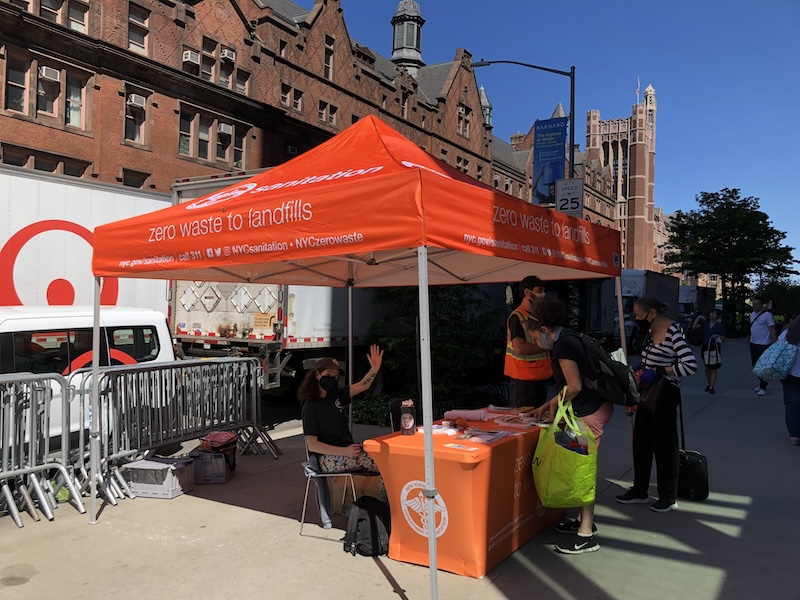
For example, if you live in Upper Manhattan, your event location might be near Columbia University’s Teachers College – but the location is changeable every year.

What Can You Bring?

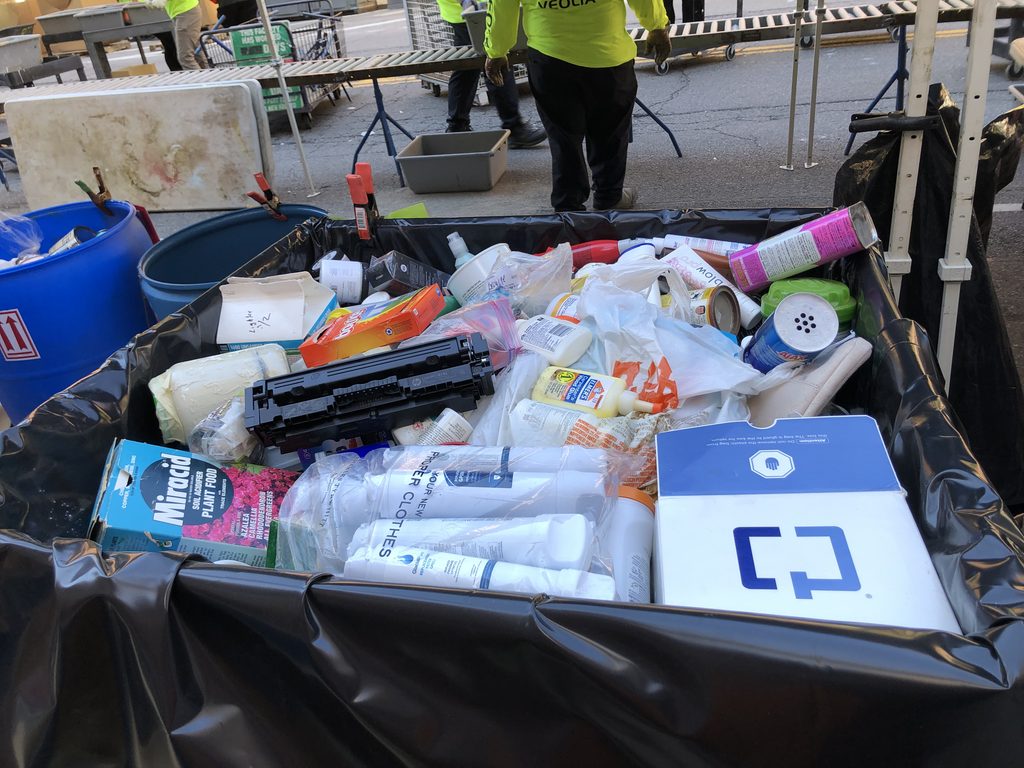
You can bring various household hazardous materials, including:

  • Automotive products: motor oil, transmission fluid, car batteries
  • Expired medicines or chemicals: including cosmetics and nail polish
  • Sharps (needles/syringes): place them in a labeled sharps container or a tightly closed metal can
  • Thermometers and batteries
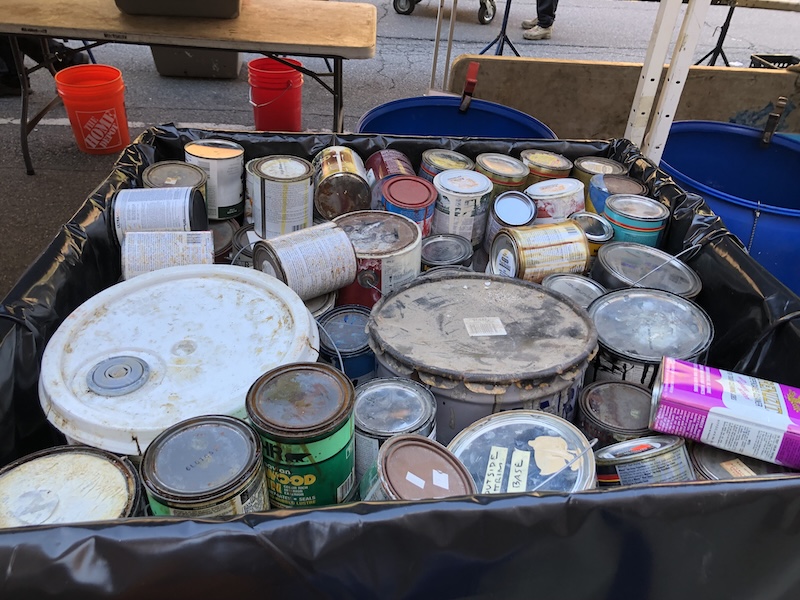
  • Household cleaners and chemicals: bleach, pesticides, paint, Ajax, toilet cleaners, etc.
  • Compact fluorescent bulbs (CFLs)
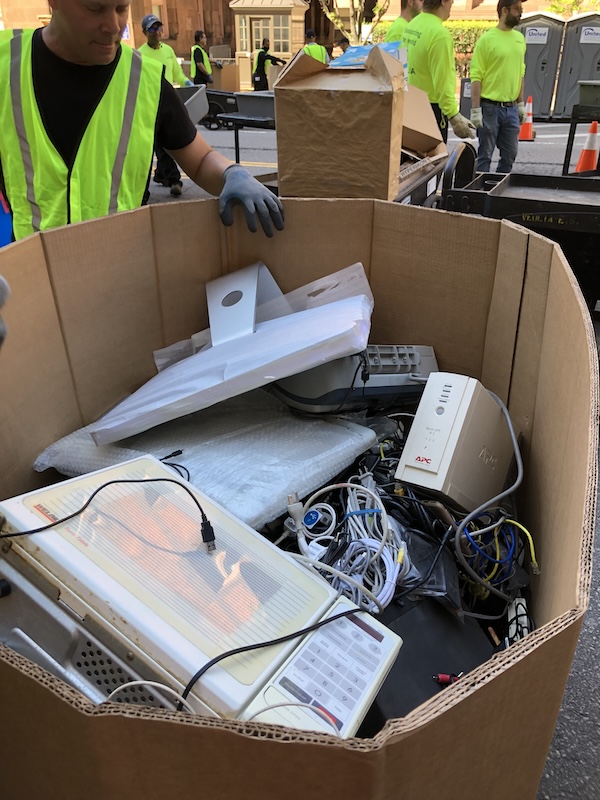
  • Electronics: computers, televisions, and broken devices

Important: Do not mix items together. Make sure that you make double-bagged with absorbent material like paper towels or newspaper.

What Happens at the Event

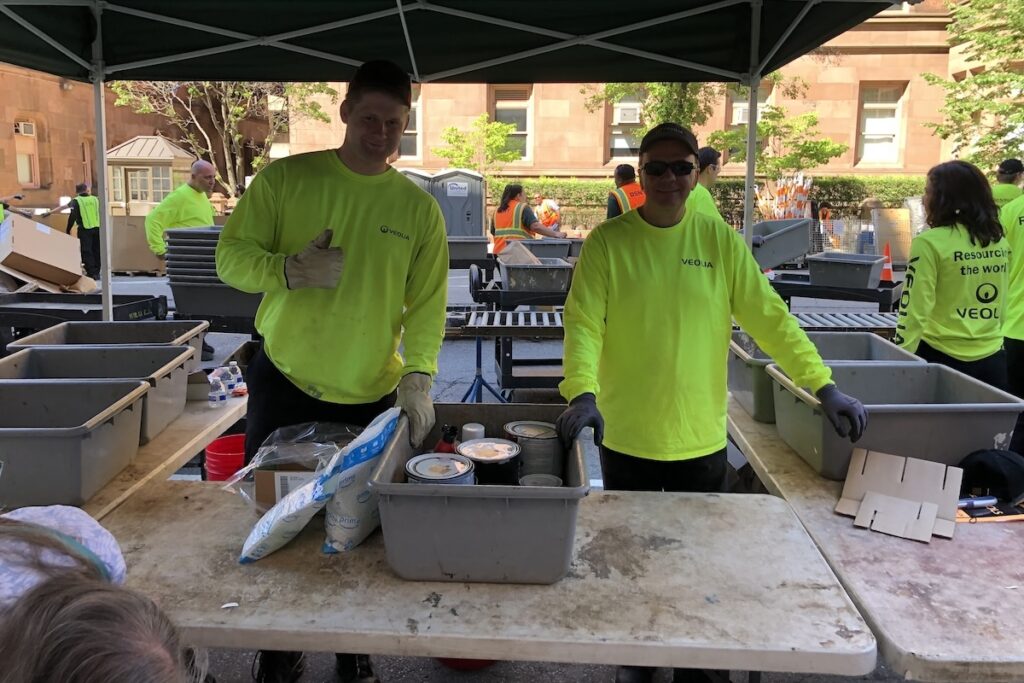
You will see multiple tents at the site. Staff and volunteers guide participants on where to drop off each type of item. Smoking or open flames are strictly prohibited for safety reasons.

The DSNY team also provides information pamphlets and eco-friendly shopping bags made from recycled materials. If you want to responsibly dispose of leftover paint, chemicals, or electronics, this is the perfect opportunity.

Don’t Throw Electronics in the Trash!

Throwing away computers or batteries in your building’s trash area can result in fines.
These must be dropped off at SAFE events or through official recycling programs.
After collection, electronics are sent to facilities like ERI for proper dismantling and refurbishing.

NYC’s Goal: Zero Waste to Landfill by 2030

For decades, New York City sent its trash to the Fresh Kills landfill in Staten Island.
After it closed, waste was redirected to other states like New Jersey, leading to environmental issues such as water pollution and unpleasant odors.

Now, NYC is working toward its ambitious “Zero Waste by 2030” goal.
Participating in programs like SAFE Disposal is a vital step toward a cleaner, greener city.

For Business Owners: Tax Benefits

If you operate a business in NYC, you can benefit from city-sponsored sustainability programs such as:

These not only support the environment but may also provide tax-saving opportunities.

Summary

Properly disposing of hazardous waste is crucial for keeping New York City clean and safe.
The SAFE Disposal Event only happens twice a year, so mark your calendar early and don’t miss it!

Unlike Japan, New York’s waste disposal rules are more relaxed, so it’s up to each resident to act responsibly. Together, we can help NYC move closer to a zero-waste future

Back to Home

Affordable Sushi in New York: Yasaka on the Upper West Side

Affordable Sushi in New York: Yasaka on the Upper West Side

Discovering Sushi Yasaka

Estimated reading time: 4 minutes

One of my favorite go-to sushi spots in New York is Sushi Yasaka. It has been around for years and is always popular—so popular that walking in without a reservation can be risky. Located just off 72nd Street on the Upper West Side, it’s less than a five-minute walk from the nearest subway station.

If you ever think, “I’m craving sushi tonight”, Yasaka is the perfect choice. The prices are incredibly reasonable, and the quality is much better than many chain restaurants—dare I say, even tastier than Kura Sushi, without breaking the bank.

Curious? You can check their official website for the latest menu and reservations.

Where Is Sushi Yasaka Located?

Sushi Yasaka is located on the north side of West 72nd Street, in Manhattan’s Upper West Side. The location is easy to access and makes it a convenient stop for sushi lovers in the neighborhood.

Yasaka’s Famous Affordable Omakase

Alt="sushi delax"

Before the pandemic, Yasaka offered a 12-piece omakase set with a toro-taku roll for just $45. After some changes, the restaurant now features a mini omakase at only $33.

Alt="sashimi delax"

Not only is the sushi delicious, but the appetizers served beforehand are also flavorful and thoughtfully prepared. The portion size is just right—satisfying without being overwhelming.

Fresh Fish, Tasty Appetizers, and More

Alt="small vegetable dish at Sushi Yasaka"
Alt="ankimo dish at Yasaka"
Alt="cooked mushrooms with butter"

On my last visit, I ordered more than I planned—sashimi deluxe, omakase, and several appetizers. The turnover here is quick, which means the fish is always fresh.

Alt="Shrimp tempra dish"

Compared to Kura Sushi, Yasaka might feel slightly pricier, but the quality is worth it. Of course, it can’t quite match the old-school Edokko-style sushi in Japan, but in New York, Yasaka definitely counts as one of the better and most satisfying sushi restaurants.

Alt="different flavor salt"

The only catch? Reservations are a must. Without one, you might end up waiting a long time.

And if you’re looking for another high-quality sushi experience in New York, add Tsumo Omakase to your list!

Final Thoughts

For fresh, affordable, and truly satisfying sushi in New York, Sushi Yasaka is a gem. With its cozy location on the Upper West Side, fair pricing, and consistently fresh fish, it’s no surprise the restaurant is always busy.

Whether you’re a local or visiting, Yasaka is the kind of sushi spot that will leave you happy, full, and already planning your next visit.

Why the U.S. I-94 Travel Record Matters: My Experience with Green Card and Visa Applications

Why the U.S. I-94 Travel Record Matters: My Experience with Green Card and Visa Applications

I-94 image cover photo

Estimated reading time: 3 minutes

Losing an I-94 Form Can Change Everything

Not long ago, a friend of mine was preparing her green card application when she realized something terrible—she had lost her I-94 Form, the U.S. entry and exit record. Even worse, it was from before 2015, back when the I-94 was a white paper card stapled to your passport.

Today, I-94 records are available online, but only for the past five years. Older records? You’re on your own.

In her case, there was even a gap in her travel history. She had to prove exactly when she had entered the U.S. Luckily, I had entered with her years ago. I wrote a detailed statement about that day, had it notarized, and mailed it to her as supporting evidence. I can only hope it helps her case.

This experience reminded me how important the I-94 truly is—not just a piece of paper or a digital file, but a document that can decide your future in the U.S.

What Exactly Is the I-94 Form?

The I-94 is an official U.S. Customs and Border Protection (CBP) record that shows:

  • The date you entered the U.S.
  • The country you traveled from (Japan, China, etc.)
  • Your authorized period of stay

Before 2015, the I-94 was a physical white slip of paper, often carelessly stapled into passports. After 2015, CBP moved the system online. Now you can retrieve your travel history electronically—but remember, the system only stores the last five years.

Why the I-94 Is So Important

You may be surprised how often this little record is needed:

  • Green card (permanent residency) applications – USCIS often asks for it.
  • Visa renewals – I personally had to provide copies of my old paper I-94s.
  • University procedures – students must show entry and exit records every time they travel abroad.
  • Proof of legal entry – if there are questions about your status, this record can protect you.

In short: without your I-94, you may not be able to prove you are in the U.S. legally.

How to Get Your I-94 Record

If you entered after 2015, the process is simple: go to the official CBP website, enter your passport details, and download your record for free.

But if your entries were before 2015, things get complicated. You may need to show alternative documents or provide sworn statements, like my friend did. That’s why keeping every document safe is so important.

Final Thoughts

Living in another country means respecting its rules—and keeping track of your records. The U.S. I-94 travel record may seem small, but it can have a huge impact on your future.
Whether you are applying for a student visa, an artist visa, or a green card, remember: your I-94 is proof that you entered the U.S. legally. Keep it safe, and know how to access it when needed.

Back to Home