5 Key Factors for Successfully Applying for an Artist Visa in the U.S.

5 Key Factors for Successfully Applying for an Artist Visa in the U.S.

Applying for an artist visa (O-1B visa) in the United States requires careful preparation. The following five factors are crucial to increasing your chances of a successful application.

Estimated reading time: 3 minutes

1. No Criminal Record

U.S. immigration law takes an applicant’s criminal history seriously. Any past convictions, from felonies to misdemeanors, can impact your application. Issues such as illegal stays, involvement in communist activities, or drug use may also be considered. If you have a criminal record, obtaining a visa may become significantly more difficult.

2. Strong Sponsorship

A reputable and legally recognized sponsor is essential for a successful artist visa application. The sponsor should not only be well-known but also hold credibility within the legal and artistic community. Choosing a sponsor carefully and building a professional relationship with them can greatly enhance your application.

3. Online Presence and Recognition

U.S. immigration officers will research your name online to verify your credibility and achievements. It is essential to have sufficient media coverage, including mentions in reputable websites, magazines, and social media. Keep in mind that recognition in Japan alone may not be enough—having a strong presence in the U.S. is particularly important.

4. Comprehensive Proof of Achievements

To establish your credentials, you need solid evidence of your artistic achievements. This may include concert programs, exhibition flyers, press releases, or reviews of your work. These materials must be factual and clearly demonstrate your professional contributions.

5. Genuine Letters of Recommendation

A minimum of six heartfelt recommendation letters from reputable individuals is required. These letters should be personal and specific, rather than generic templates provided by attorneys. Personalized letters that highlight your unique talents and achievements can make a significant difference in setting you apart from other applicants.

Conclusion

Meeting these five key criteria—having a clean legal record, securing a strong sponsor, building an online presence, compiling a robust portfolio, and obtaining genuine recommendation letters—will greatly improve your chances of obtaining an artist visa. Even if you are not yet widely recognized, fulfilling these requirements can help you achieve your goal of securing a U.S. artist visa.

Back to Home

Essential Documents and Step-by-Step Guide for O-1 Artist Visa Application

Essential Documents and Step-by-Step Guide for O-1 Artist Visa Application

Hello! This is Maegami from the blog “Megami no Maegami.”
In this article, I’ll walk you through the essential documents needed at the very beginning of your artist visa application process (O-1 Visa).

Estimated reading time: 3 minutes

Collecting the right materials is one of the most important parts of applying for an artist visa. Below are the three key documents that form the foundation of your O-1 visa petition.

1. Cover Letter

The cover letter is a crucial document for your application. It serves as an introduction to the U.S. Citizenship and Immigration Services (USCIS). Your sponsor (employer) or legal representative write for you.

It typically includes:

  • Overview of the Applicant’s Background: A concise summary of your professional achievements and qualifications.
  • Endorsement from the Sponsor: Why the sponsor wants to hire you and what skills or talents they value in you.
  • Terms of the Agreement: A brief summary of the job responsibilities, timeline, and conditions of employment.
  • Signature: The sponsor must sign the letter to confirm its accuracy and legitimacy.

This document sets the tone for your entire petition and is usually prepared by an immigration attorney or paralegal. You can refer to sample formats once you have a professional version created.

2. Form I-129 (Petition for a Nonimmigrant Worker)

Form I-129 is the official petition submitted to USCIS when applying for a work visa in the U.S., including the O-1 visa.

This form includes:

  • Petition for a Nonimmigrant Worker: Information about your employment in the U.S., including sponsor details.
  • O and P Supplement: Additional details required for artist and entertainment visa categories.

Always make sure to download the latest version from the USCIS website, as the form is periodically updated. The sponsor must also sign in designated sections. If you are preparing your documents independently, it’s strongly recommended to have them reviewed by someone familiar with immigration law.

3. Contract

A legally binding contract between you (the artist) and your sponsor or employer is required as part of your visa petition.

The contract should outline:

  • Work Description: Details about the job responsibilities, performance dates, and locations.
  • Payment Terms: Salary, benefits, or compensation information.
  • Conditions and Obligations: Duration of the contract and any specific terms or restrictions.

Both parties have to sign this documents. Most applicants work with a legal advisor to draft a contract that meets USCIS standards and avoids potential issues during the review process.

Summary

To recap, the three essential documents you must prepare for your O-1 artist visa application are:

  1. Cover Letter
  2. Form I-129
  3. Contract

You must carefully prepared and submitted them on time. I recommend you to ask the assistance of a legal expert to check your documents. Starting early and staying organized will dramatically improve your chances of a successful application.

Back to Home

Applying for an Artist Visa Under the O-1A Category

Applying for an Artist Visa Under the O-1A Category

If you’re considering applying for an artist visa under the O-1A category, this guide will provide you with essential information. Unlike the O-1B category, which is primarily for artists, O-1A is more academic-focused and applies mainly to educators and researchers.

Estimated reading time: 3 minutes

What is an Artist Visa?

The O-1 visa is a U.S. work visa designed for individuals with extraordinary ability. It is divided into two main categories:

  • O-1A: For individuals in the fields of science, education, business, and athletics.
  • O-1B: For individuals with extraordinary ability in the arts or those working in the motion picture or television industry.

This article focuses on the O-1A category, especially how a piano educator successfully extended their visa under this classification.

Key Features of the O-1A Categor

The O-1A category is designed for educators and researchers, making it different from the artist-focused O-1B. Below, we’ll explore a real case where a piano teacher successfully applied for a three-year extension under the O-1A category.

Case Study: O-1A Extension for a Piano Teacher

A friend applied for a three-year extension under the O-1A category but received a Request for Evidence (RFE) from USCIS. I assisted in preparing additional documents, and eventually, the extension was approved.

Handling a Request for Evidence (RFE)

USCIS’s RFE letter clearly outlined areas for improvement. To respond effectively:

✔️ Carefully analyze the request to determine exactly what USCIS wants.
✔️ Provide specific, well-documented evidence rather than general explanations.
✔️ Organize documents professionally to clearly demonstrate achievements.

Documents Required for an O-1A Application

Unlike O-1B applicants, O-1A applicants don’t need extensive performance experience. Instead, a strong teaching and academic background is key.

Examples of Submitted Documents

✔️ Records of Masterclasses and Lectures
✔️ Experience and achievements in group piano lessons for children
✔️ Publication of original piano teaching methods
✔️ Invitations to international music education conferences and lectures
✔️ Proof of students winning competitions

These documents should be categorized and presented logically, demonstrating both past achievements and future career plans.

Key Differences Between O-1A and O-1B

FeatureO-1AO-1B
Main FocusEducation & ResearchPerformance & Artistic Impact
Required DocumentsTeaching credentials, academic research, conference participationConcert programs, reviews, awards
Who Should Apply?Educators, researchers, scholarsPerformers, actors, musicians

Even without an extensive performance history, you can still qualify for O-1A by highlighting achievements in music education.

The Importance of Media Exposure

Regardless of whether you apply for O-1A or O-1B, media coverage is essential. Public recognition through:

✔️ Newspaper and magazine articles
✔️ Interviews and features in industry publications
✔️ Social media presence and professional website

helps demonstrate your influence and credibility.

Conclusion

In this guide, we explored how to apply for an artist visa under the O-1A category and highlighted key differences from O-1B. While the required documentation differs, both categories emphasize media exposure and evidence of influence.

If you’re considering an O-1 visa application, start building your portfolio and leveraging social media to boost your visibility.

Back to Home

How to Apply for an O-1B Artist Visa: A Complete Guide for Musicians & Performers

How to Apply for an O-1B Artist Visa: A Pianist’s Real-Life Experience

Estimated reading time: 2 minutes

The O-1 visa—often called the “extraordinary ability visa”—is a popular option for artists, musicians, performers, and other professionals aiming to work in the U.S. It comes in several categories, and in this article, I’ll focus on the O-1B visa, which I personally applied for and successfully received as a pianist and piano teacher. I’ll also briefly touch on the O-1A visa, which I helped a friend obtain.

What Is the Artist Visa (O-1)?

The O-1 visa is designed for individuals with extraordinary ability in their field. It is divided into several categories:

  • O-1A: For individuals in science, education, business, or athletics
  • O-1B: For individuals with extraordinary ability in the arts or motion picture/TV industry

There are also support and family visas related to O-1:

  • O-2: For essential assistants of O-1 holders
  • O-3: For the spouse and children of O-1 holders

In this post, we’ll go deeper into the O-1A and O-1B categories.

O-1A Visa Overview

The O-1A is for professionals with exceptional skills in science, business, education, or athletics. If that’s your field, I recommend consulting a detailed guide (or an immigration attorney) to determine eligibility and gather required evidence.

My O-1B Visa Application Story

As a pianist and piano teacher, I applied for the O-1B visa and was successfully approved. It’s important to present a well-rounded application that highlights both educational qualifications and artistic achievements.

Educational Documentation (approx. 15%)

  • High student success rate in piano certification exams
  • Sponsor’s cover letter highlighting my teaching credentials
  • Certificates of excellence from reputable institutions (e.g., a music school in Manhattan)

Artistic Documentation (approx. 75%)

  • Records of concert performances
  • Published videos of live or online performances
  • Original compositions or recordings used in films
  • Articles and press coverage in local New York newspapers

Building this portfolio takes time, so I recommend starting early and documenting every milestone.

Key Takeaway: Know Your Category

Success starts with knowing which category you fall under. In my case, the O-1B visa fit perfectly. If you’re unsure about your category or need help gathering the proper documentation, consulting an immigration expert or mentor in your field can be very helpful.

Back to Home

How to Apply for an Artist Visa Without a Lawyer

How to Apply for an Artist Visa Without a Lawyer

Applying for an artist visa in the United States can be done in two ways: through a sponsor or employer or with the help of an immigration lawyer. In either case, the petitioner submits the application to the U.S. Citizenship and Immigration Services (USCIS). I chose to have my employer file the petition on my behalf while collaborating on the application materials. My sponsor was an American citizen.

Estimated reading time: 3 minutes

Deciding to Prepare the Artist Visa Application Independently

Applying for an artist visa without legal assistance requires determination and careful preparation. For example, filling out Form I-129 must be error-free. Understanding the roles of the petitioner and beneficiary is crucial since the petitioner—not you—is the one formally submitting the application.

What Convinced Me That I Could Apply for an Artist Visa on My Own

Reviewing a Friend’s Application

A pivotal moment was when a pianist friend who was working with a lawyer shared her application materials with me. I noticed that she had prepared many of the documents herself. This reassured me that I could handle my own application.

Guidance from a Knowledgeable Friend

Another friend at my workplace successfully obtained an EB-1 (Artist Green Card) by gathering the necessary documents on his own. His guidance was invaluable, as he helped me review the contents of Form I-129 and other materials.

Taking Action to Prepare the Application Materials

Creating an Artist Website

Once I was confident in my ability to prepare the application, I took immediate action. I built a website showcasing my career, upcoming performances, and achievements. Though I lacked professional design skills, I structured the content effectively for an American audience.

Utilizing Skills from College

I applied the basic web development skills I had learned in college to create a functional and professional-looking artist portfolio.

Gaining Momentum Through Action

Once I started taking action, others began supporting me. A contemporary music composer asked me to perform his work, and a university acquaintance used my performance in a film scene. By establishing an online presence, I gradually accumulated more supporting materials for my application. This process continued for about eight months.

Collecting Essential Documents

One of the first documents I secured was the Written Consultation, which I obtained early in the process. Additionally, I reached out to individuals willing to provide recommendation letters and other supporting documents.

Organizing a Compelling Application File

Creating a Clear and Professional File Structure

  • Arranging documents in a logical order for easy review.
  • Highlighting key accomplishments and qualifications.
  • Providing a well-organized cover letter outlining the application.

Presenting Strong Supporting Evidence

  • Submitting authentic, well-prepared materials.
  • Including detailed letters of recommendation and evidence of artistic achievements.

Conclusion

In this article, I shared how I gathered and prepared my artist visa application materials independently. Taking the first step led to more opportunities and valuable support from others. If you’re considering applying for an artist visa without a lawyer, I hope this article motivates and inspires you to take action.

Back to Home

Artist Visa : Experience of Receiving Two RFEs

Experience of Receiving Two RFEs

Hello! I’m Maegami, the author of the blog Goddess Bangs. Today, I would like to share my experience of receiving an RFE.

Estimated reading time: 3 minutes

When applying for an artist visa in the U.S., if there are insufficient documents, you may receive a Request for Evidence (RFE). If you receive this letter, you’ll need to gather additional documents and submit them within the specified deadline. USCIS – Artist Visa information

What is a Request for Evidence?

A Request for Evidence (RFE) is a letter from the U.S. Citizenship and Immigration Services (USCIS) requesting additional documents. The letterhead typically includes information about the missing documents and the reason for the request.

My Experience: 2017 RFE

In 2017, when I tried to extend my visa for three years, I received an RFE from USCIS. The reason was that the documents I submitted were insufficient. At the bottom of the letter, a deadline for submitting the missing documents was indicated. Generally, you are given a few months from the time the letter is issued.

RFE Details

First Request

I applied to extend my visa from one year to three years, but I was notified that the necessary documents were insufficient. The RFE asked me to provide detailed evidence and plans for the next three years.

For example, while I had previously conducted one-on-one piano lessons, I needed to prove my future involvement with educational institutions or collaborations in the business field. It was also required to show career progression under the same employer, such as taking on roles like a manager or coordinator.

My Response to the First RFE

The first RFE was unclear about what exactly was missing. Despite the lack of clarity, I submitted additional documents with more detailed plans. However, I received a second RFE.

Second Request

The second RFE specified that I needed to clearly demonstrate the differences between my past work and my future work over the next three years. This time, it was easier to understand what was required.

My Response to the Second RFE

To address the second RFE, I created documents highlighting the differences between my past and future work. Here’s how I approached it:

  • Comparison Essay
    Using my knowledge from university writing classes, I wrote a contrast essay. I explicitly detailed how my future work would differ from my past activities.
  • Four Short Essays
    I created four concise comparison essays and had my sponsor (employer) sign them. The signature served as evidence that the content I provided was truthful. By submitting only these four essays, I successfully obtained my three-year visa extension.

Conclusion

Today, I shared my experience of receiving two RFEs from USCIS. Receiving an RFE can be incredibly stressful, but staying calm and responding appropriately will get you through it. I also appreciated the kindness and understanding of the immigration officers during the process. I hope this information helps anyone facing a similar situation.

 Back to Home

Introduction to Tara Westover’s Memoir – “Educated”

Introduction to Tara Westover’s Memoir – “Educated”

Hello, this is Maegami from the blog “Megami’s Fringes”. In today’s post, I’m introducing an essential read for anyone interested in stories about overcoming adversity and the challenges of education: Educated: A Memoir by Tara Westover. Published in 2018, this memoir has captured attention worldwide, even earning praise from figures like Bill Gates and Oprah Winfrey. If you’re looking for a compelling read, Educated will undoubtedly keep you hooked until the last page.

Estimated reading time: 5 minutes

About the Book

Tara Westover’s memoir Educated follows her journey from growing up in rural Idaho in a strict Mormon family to ultimately earning a PhD from the University of Cambridge. Her family’s isolated lifestyle – far removed from formal education- meant she had no access to school until much later in life. Despite this, Tara managed to break free from the constraints of her upbringing and pursue knowledge at all costs. This book not only covers her personal growth but also reflects on broader societal issues such as educational inequality and the polarization within America.

Book Cover and Design

The cover of Educated was designed by Patrick Svensson. The simple yet powerful design encapsulates the essence of the book, symbolizing Tara’s journey toward enlightenment in a world where knowledge and freedom were severely restricted.

Why I Decided to Read It

I first picked up Educated during the 2020 pandemic, just before the U.S. presidential elections. Tara’s captivating storytelling drew me in from the very first page, and I couldn’t put it down. Her writing is clear, evocative, and engaging, making her experiences come alive on the page.

Summary of the Memoir

Family and Early Life

The first chapter introduces Tara’s father, whose strong religious convictions and dedication to self-sufficiency shaped her entire childhood. Raised in the rugged mountains of Idaho, her life was dictated by Mormon teachings and her father’s extreme beliefs, which included avoiding mainstream education and medical care.

Educational Inequality and the Mormon Influence

Tara’s education was limited by her family’s strict adherence to Mormonism. Her parents didn’t allow her to attend school. Rather she had to learn how to work with her hands, focused on survival skills rather than academics. The book explores the tension between religious beliefs and the necessity of a formal education.

Tara’s Relationship with Her Brother

Tara’s relationship with her brother is important in this story. He played a key role in both her isolation and eventual escape from her family’s restrictive beliefs. As their paths diverged, so did their differing understandings of freedom and knowledge.

Tara’s Writing Style

タラ ウエストオーバーのプロファイル画像
Tara Westover’s website

Tara Westover’s writing is deeply poetic, yet clear in its explanations. She has the rare ability to evoke powerful imagery while still making the narrative accessible. Her descriptions of the isolated world she grew up in feel authentic and vivid, helping readers understand the stark differences between her upbringing and the world most of us know.

Educational Inequality and America’s Polarization

Reflections on America’s Political Divide

The book takes a profound look at the social divisions in America. Tara’s story allows readers to understand the deepening educational and ideological polarization that characterizes American society today. Her childhood in rural Idaho contrasts sharply with the liberal, progressive culture of cities like New York. Tara’s observations bring a new perspective on the cultural divide -particularly the tensions between rural conservatism and urban liberalism.

New York vs. Idaho: A Contrast in Perspectives

Tara’s upbringing in Idaho was worlds apart from the urban and cosmopolitan environment of New York City. While New York represents progressive, open-minded ideals, her childhood was defined by a closed-off, religiously-driven environment. Tara’s reflections on this contrast help us see how different environments shape one’s worldview—and how we may sometimes view the world through a narrow lens based on where we live.

Tara’s Perspective on Liberalism and Success

In an interview, Tara was asked whether she thought people from rural Idaho had a narrow worldview. Her response was eye-opening: “I think the narrowest-minded people live in New York.” She was referring to how those who live in liberal, successful circles may often lack an understanding of the struggles faced by people outside their bubble, which is a sharp critique of the elite’s understanding of broader societal issues.

Conclusion

Educated: A Memoir is more than just a personal story—it’s a profound commentary on educational disparity and the divide between America’s urban and rural populations. Tara Westover’s journey is one of resilience, but also a critical lens through which to examine larger societal problems. This memoir is a must-read for anyone interested in understanding the complexities of education, family dynamics, and the broader American experience.

If you’re interested in learning more about Tara’s story and the themes of educational inequality, I highly recommend picking up Educated today. You won’t regret it!

Back to Home

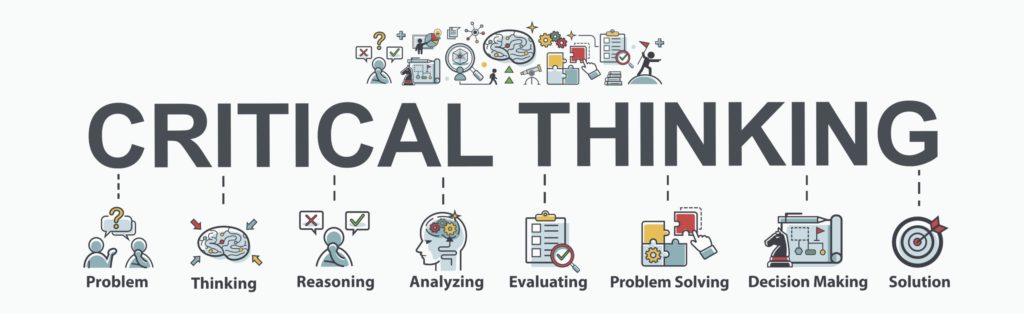
Understanding Critical Thinking in American Education

What is Critical Thinking? – A Key Skill in American Education

Hello, this is Maegami from the blog “Megami no Maegami.” Today, I will be diving into an important concept in American education—Critical Thinking. Have you ever heard of this term before?

Estimated reading time: 4 minutes

What is Critical Thinking?

Critical thinking is the skill of objectively analyzing a problem, evaluating its contents, and deriving conclusions based on logical reasoning. In this post, I’ll explain how critical thinking skill is good to have.

Critical Thinking in Reading Comprehension

In American university lectures, professors frequently ask questions about the readings assigned for that session. They expect students to understand the material thoroughly and explain it in their own words. We call it Summarizing. Summarizing involves condensing the main points of a topic into a concise form, which is usually done during the preparation stage for lectures.

Why is Training in Critical Thinking Important?

The more you practice critical thinking, the better your reading comprehension becomes. It enhances your ability to grasp the key points of any content. For example, summarizing a long article into just five lines is quite challenging. But with repeated practice, writing effective summaries becomes easier.

Critical Thinking in Essay Writing

Thesis Statement Creation

In essay writing, the first step is to develop a Thesis Statement—a single sentence that summarizes the main point of the essay. This task is often difficult because every point may seem important. However, to write a clear thesis statement, you must sift through the material and condense it into one focused idea.

For instance, “Excessive alcohol consumption leads to weight gain, heart disease, and liver complications, making it detrimental to one’s health.”

Proving Your Argument

Once the thesis statement is created, you must provide three reasons to support your argument. Students have to give good evidence, such as experimental data or scholarly references. Properly citing sources ensures the validity of your claims.

Differences Between Japanese and American Education

Challenges Faced

In Japan, much of the writing in high school is subjective. However, in American universities, the focus shifts to writing fact-based essays. American education places significant emphasis on training students to write well-researched and evidence-based arguments.

Importance of Debate and Discussion

Unlike Japanese education, which may not emphasize discussion as much, American classrooms offer abundant opportunities for debates and discussions. In these environments, critical thinking plays a crucial role. In New York schools, for example, debate classes and Rhetoric training are integral parts of the curriculum.

The Benefits of Critical Thinking

Application in Public Speaking (Rhetoric)

Critical thinking also proves beneficial in public speaking. In American universities, speech classes are mandatory, where students learn how to logically present their ideas to an audience.

Changes in Information Intake

When you develop critical thinking skills, your ability to assess and process information improves. You’ll no longer be easily swayed by misinformation, and you’ll start questioning the authenticity of the news and fake information on social media. This, in turn, can address some of the polarization in American society caused by educational divides.

Escaping Superstition and Spiritualism

With critical thinking, your perspective on superstitions and spiritualism also evolves. Understanding the scientific workings of the brain helps you comprehend psychological phenomena, making you less likely to be influenced by unfounded claims.

Conclusion

So, what do you think? Today, we explored the concept of critical thinking and its role in American education. While this skill can be cultivated in the U.S., it’s interesting to consider how it’s currently addressed in Japanese education. This is an area I would like to continue exploring.

Back to Home

Two Things to Keep in Mind When Applying for an Artist Visa

Two Things to Keep in Mind When Applying for an Artist Visa

Hello! I’m Maegami, the author of the blog Goddess Bangs. This blog provides helpful information for those who want to apply for an artist visa in the United States, particularly in New York.

Estimated reading time: 3 minutes

In this second article on artist visa applications, I will share two crucial points to keep in mind when applying. These tips will be helpful even if you are using an immigration lawyer.

Basic Knowledge About Artist Visas

What is an Artist Visa?

Once your artist visa application is approved, you will receive an “Approval Notice” letter. With this greenish, thick letter, you are permitted to stay in the United States. However, to actually obtain the visa, you need to leave the U.S. and attend an interview at a U.S. consulate in another country to get a visa stamp in your passport.

Artist Visa Validity Period

An artist visa is initially valid for three years. After that, you need to apply for extensions. Keeping this in mind, let’s proceed to the two essential points.

Point 1: Do Not Falsify Your Career History

This is a must. Fabricating information to obtain a visa will only cause trouble for yourself. Even the smallest details should reflect your actual experience.

Example: A Woman’s Mistake

One woman submitted falsified documents for her initial visa application, including fake concert programs and interview articles. While she was fortunate to receive her visa, she faced significant difficulties when applying for a renewal three years later. Ultimately, she obtained a green card through marriage. However, the marriage ended in divorce.

Why is Falsification a Problem?

Although fake documents may work for the first application, they often lead to trouble when renewing the visa or applying for a green card. Providing truthful documents is essential for long-term success.

List of Actions to Avoid

  • Creating fake concert programs or flyers
  • Claiming to have performed with famous artists
  • Fabricating interview articles
  • Collecting an excessive number of recommendation letters (too many may raise suspicion)

These actions are illegal. If discovered, you may be banned from re-entering the U.S. for ten years.

Point 2: Submit Clear and Organized Documents

To ensure a smooth review process at the U.S. immigration office, it’s crucial to create easy-to-read documents. A clear and well-organized application can significantly impact the initial impression.

Presenting Media Coverage Clearly

To demonstrate your prominence, carefully organize your media coverage section. Add tags, highlight your name, and format the content for clarity. This will help the examiner understand your qualifications quickly.

Conclusion

These are the two important points to keep in mind when applying for an artist visa. By following these tips, you can increase your chances of a successful application. Stay tuned for the next article!

Back to Home

Artist Visa in USA : how to apply it ?

Artist Visa in USA ?

artist visa image

Hello, my name is Maegami, and I write articles for the blog Goddess Bangs. I started this blog to help people applying for an artist visa in New York. The artist visa application process can be incredibly stressful and challenging. However, I hope to provide helpful information so you can succeed without giving up. Check USCIS website to grow your knowledge.

Estimated reading time: 3 minutes

What is an Artist Visa?

An artist visa is also known as an O-1 visa. Despite the name, it’s not limited to performers. Professionals with specialized skills, such as hairstylists or sushi chefs, can also apply for this visa. Please read what USCIS explains about O-1 visa and study well beforehand.

General Method: Hiring a Lawyer

Most artists hire immigration lawyers in New York or other parts of the U.S. to apply for their visas. The average fee is currently around $5,000. In 2024, a lawyer’s fee for someone I supported was also $5,000. (Unfortunately, that applicant did not obtain the artist visa.)

You will need to gather all necessary documents yourself. The lawyer will organize these documents, complete the application forms, and submit them on your behalf. Since legal terminology can be complex, a professional lawyer is usuful for saving your time.

Applying for an Artist Visa Without a Lawyer

I first obtained an artist visa (O-1 visa) in 2013 and renewed it multiple times over the next 10 years and did it all by myself. In 2020, I gained permanent residency in the U.S. through an international marriage. My initial application was done entirely on my own, and I continued to handle the renewals independently.

I carefully archived and organized all relevant materials to submit to the U.S. Citizenship and Immigration Services (USCIS). Now, I support others who are struggling to obtain their artist visas.

Pros and Cons of Self-Application

Pros

  • Cost Savings: You can save thousands of dollars in lawyer fees.
  • Better Understanding: You’ll gain a deeper understanding of the visa application process.
  • Flexible Process: You can proceed at your own pace.

Cons

  • Time and Effort: The application process is time-consuming and labor-intensive.
  • Lack of Expertise: Without legal knowledge, handling the paperwork can be challenging.
  • Risk of Errors: Mistakes or incomplete documentation may lead to a rejection.

Cost of Self-Application

If you apply for an artist visa without a lawyer, the estimated total cost will be under $1,000. Here’s a breakdown:

  1. Document Preparation Costs
    • Recommendation Letters: Any expenses for tokens of appreciation to friends or colleagues providing recommendations.
    • Translation Fees: Costs for translating Japanese documents into English.
  2. Application Fees
    • USCIS Fee: The fee to submit the O-1 visa application.
    • Visa Issuance Fee: The fee for issuing the visa once approved.
  3. Other Expenses
    • Mailing Costs: Fees for sending application documents.
    • Copying Costs: Fees for making copies of documents.

Conclusion

Applying for an artist visa requires significant effort, time, and patience. It can also be incredibly stressful. However, the decision to apply on my own saved me money and helped me better understand the process. I also experienced substantial personal growth. I hope this article inspire you to start preparing your visa application.

Back to Home